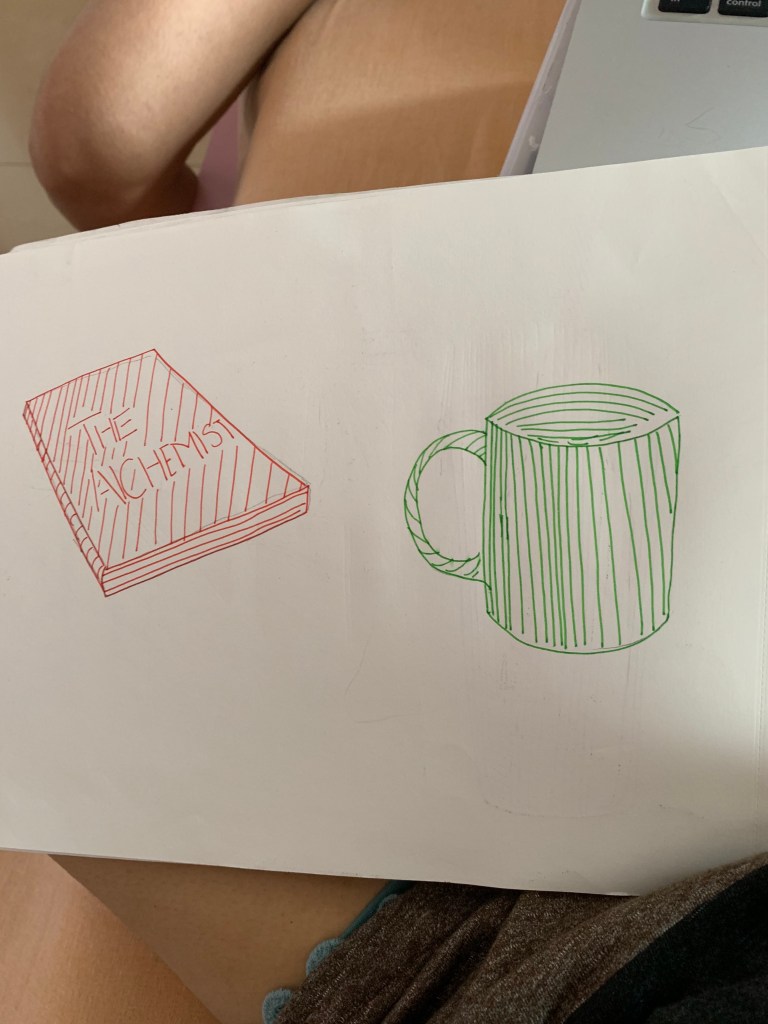
Drawing

Week 1 | 2nd August, 2019 | Isha / Jai Ranjit

“We cannot speak other than by our paintings”

Vincent van Gogh in a letter to his brother Theo

Loving Vincent
In week one of drawing class, we watched an oil painted animation called “Loving Vincent”. This film chronicled the events of the famous Dutch impressionist Vincent Van Gogh’s life through flashbacks and what drove him to commit suicide. It was made by over 100 artists who used Van Gogh’s impressionist painting technique to narrate his story and what happened after he died. The whole film was created with over 66,000 oil paintings with stop motion cinematography. I learned how Van Gogh’s paintings, peculiar for his time, changed the art world forever, as people started to realise that his style strayed away from the basic and realistic paintings of the late 19th century. The film had several elements of movement. I noticed how the different impasto strokes of oil paint positioned differently in each panel of the film created a sense of movement in the painting. I noticed how artists manipulated their paintings with different colour palettes and stroke thicknesses to give the illusion of light, texture and emotion.

For instance, in the image below, there is a sense of light and depth in Roulin’s beard created by thick and light impasto strokes as well as highlights on the left side of his face that give us a sense of where the light is coming from. The different shades of brown, black and yellow also add texture to his beard and contour his face, bringing it out more.
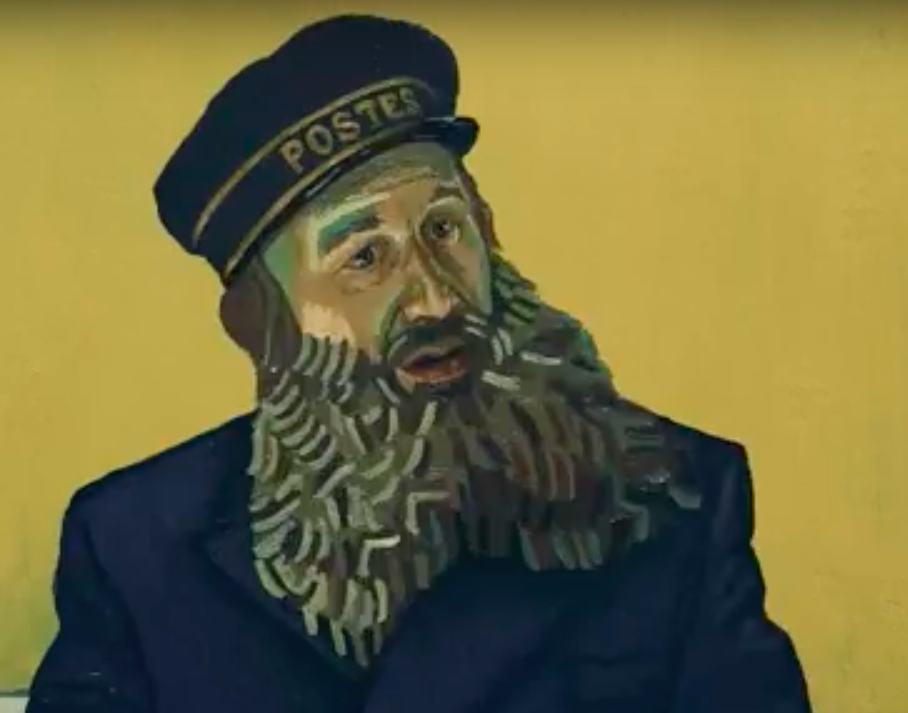
A screen cap of a character named Roulin from Loving Vincent
Loving Vincent Film screencap

Charcoal drawing (Activity)
For the second half of the drawing class we experimented with charcoal on news print sheets. We were taught to adhere to different charcoal thicknesses in order to bring out the effects that we wanted in our drawings. The softer the thickness, the darker and thicker the charcoal would be on the sheet. We could then choose to draw with charcoal for the rest of our class and complete the project at home.
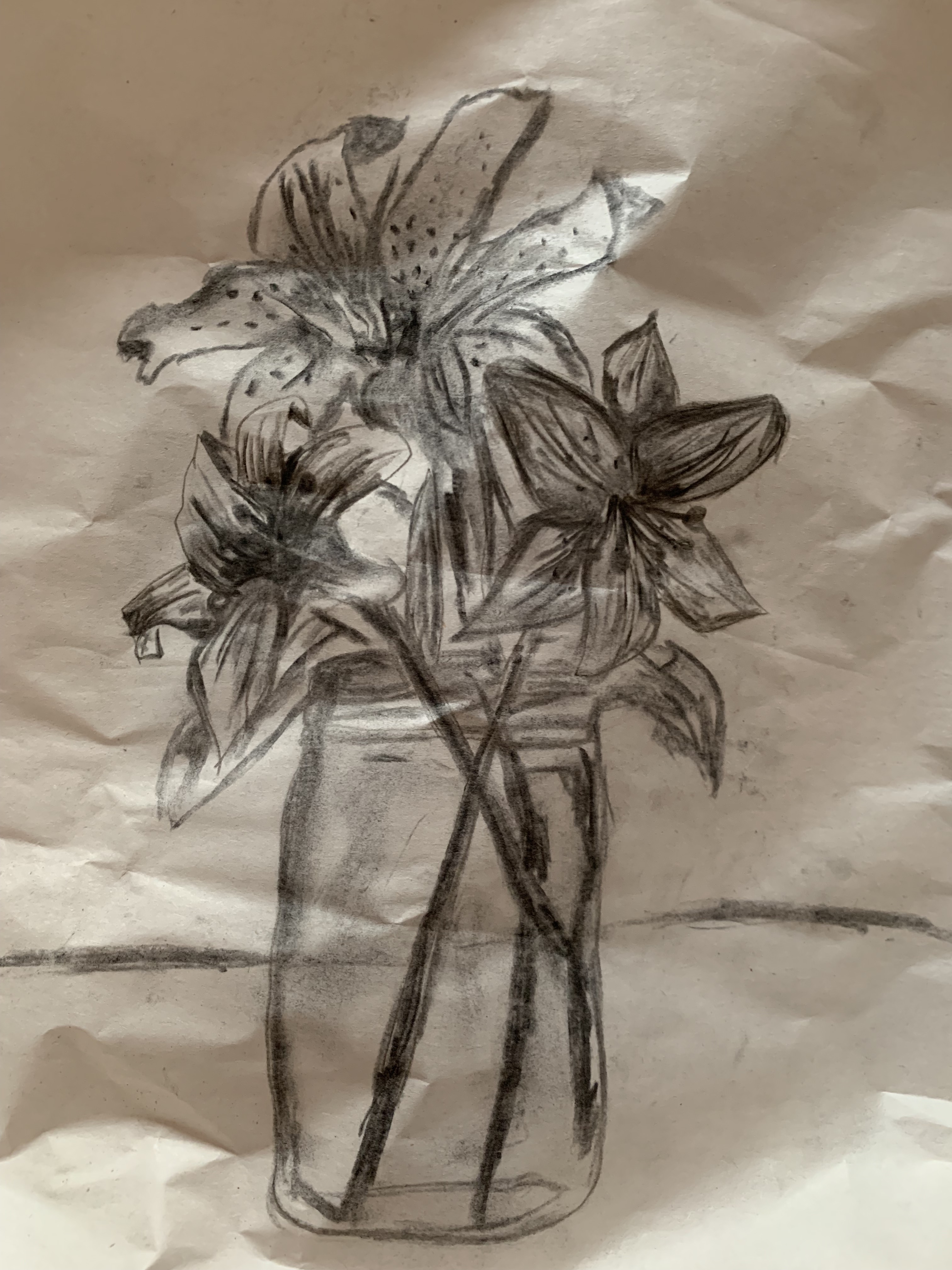
My charcoal drawing of a jar of flowers in my kitchen

This was one of my first times using charcoal, so I wasn’t really used to the feel of it in my hands and the unforgiving mess it is bound to create with one wrong stroke. This was mainly because I was used to drawing with pencils or paints, charcoal is a very intense medium. Despite that, I was able to teach myself of how the different thicknesses and softnesses of the charcoal create different effects on the newsprint sheets. I also learned how an eraser is significant especially when it comes to charcoal. It is a tool, I learned how to use it to create the illusion of light, texture and shadows, too.

Furthermore, I noticed that charcoal consists of bigger grains that create darker and richer tones, which is why it is easier to use for shading. Graphite on the other hand is harder to blotch which is why it can be tedious to use for shading.

Week 2 | August 9th, 2019 | Jai Ranjit

“One must always draw, draw with the eyes, when one cannot draw with a pencil.”

-Balthus

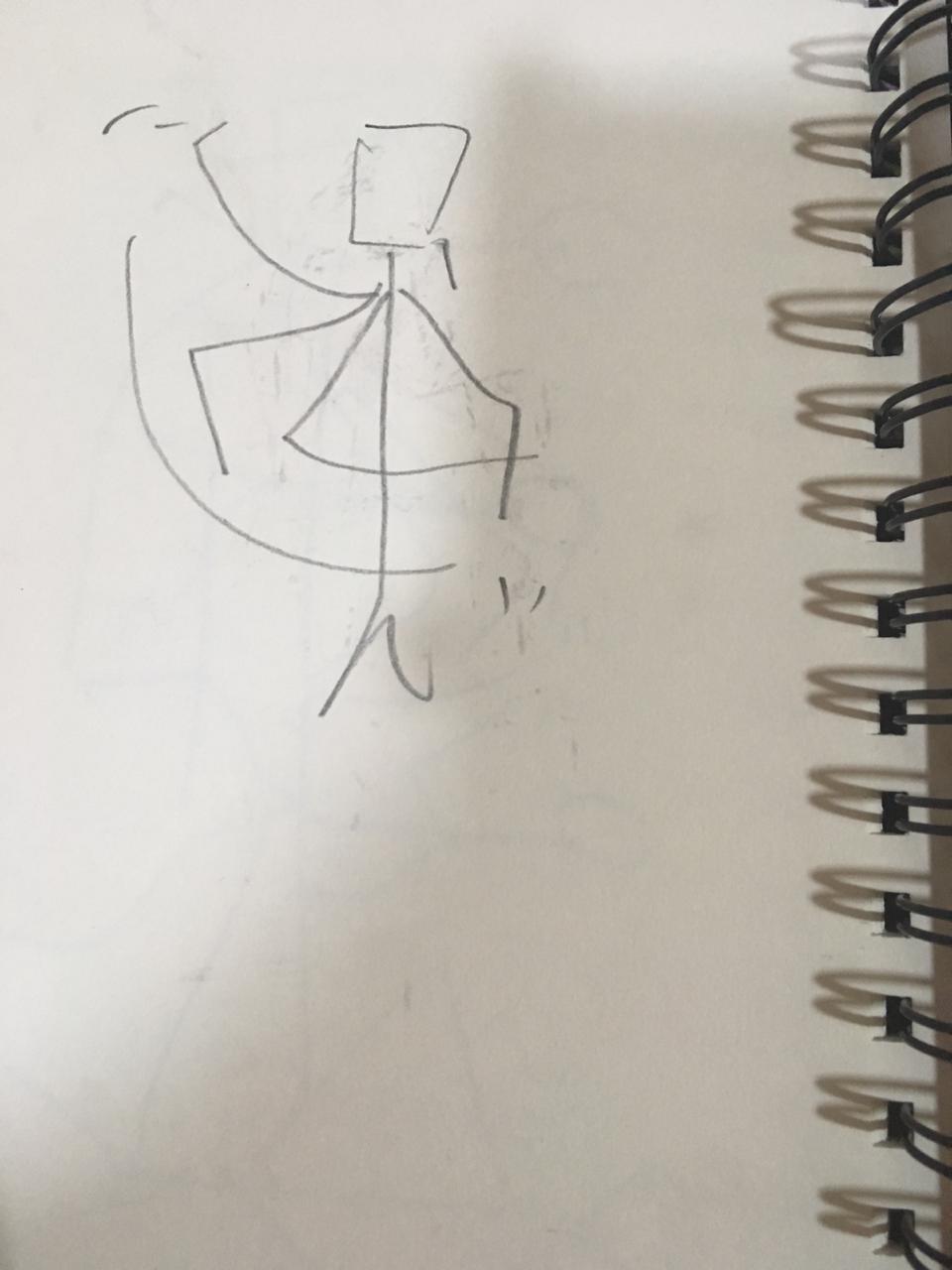
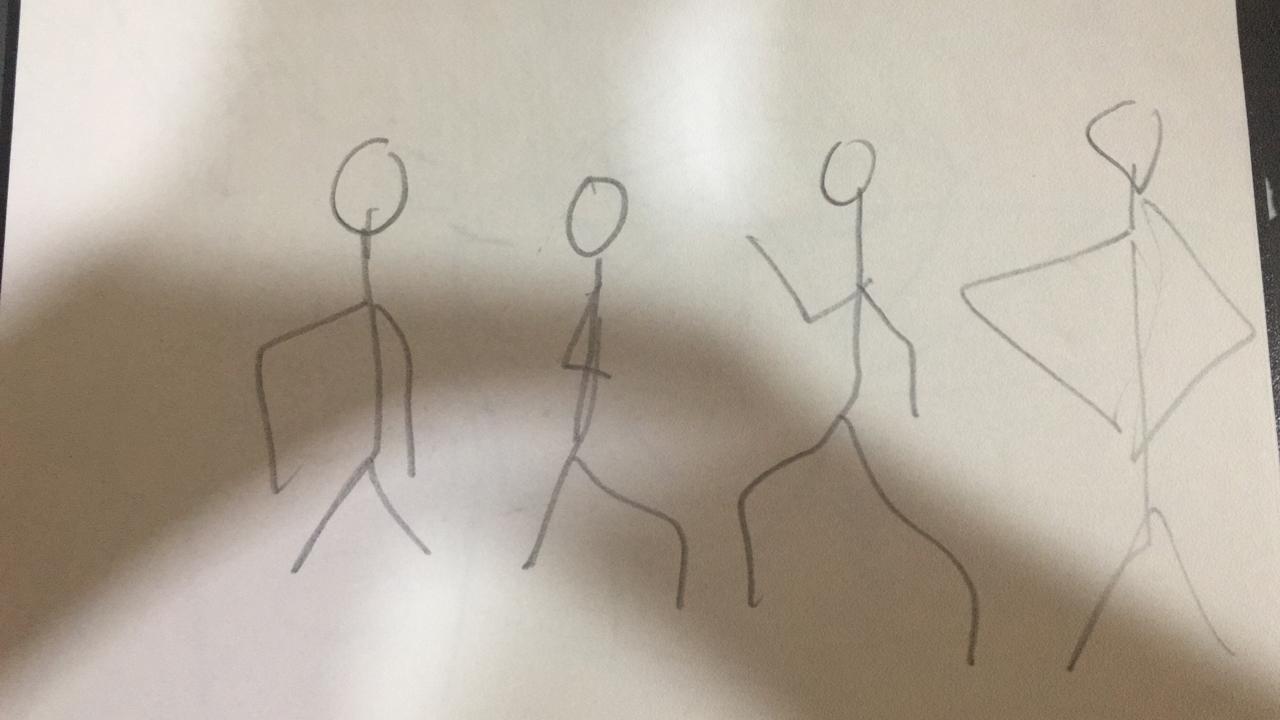
Today in Drawing class, we were taught gesture drawing. Gesture drawing focuses on the posture, figure and form of a subject. It does not quite focus on the detailing aspect of drawing but gives the artist a basic idea of the lines and directions they have to begin drawing in. It is the very base and foundation of drawing figures.
To start our activity in class, we were instructed to come up front in class, one by one and act out a pose. The rest of the class had 10 – 60 seconds to complete a gesture drawing. Each time lapse varied based on the amount of detailing we had to include. For example: the glasses, clothing, facial features, etc.

Our second activity included exploring the figures, space and objects across campus. Our group of four was assigned to explore the fourth floor fashion designing room, and gesture draw five scenes in a total of five minutes.
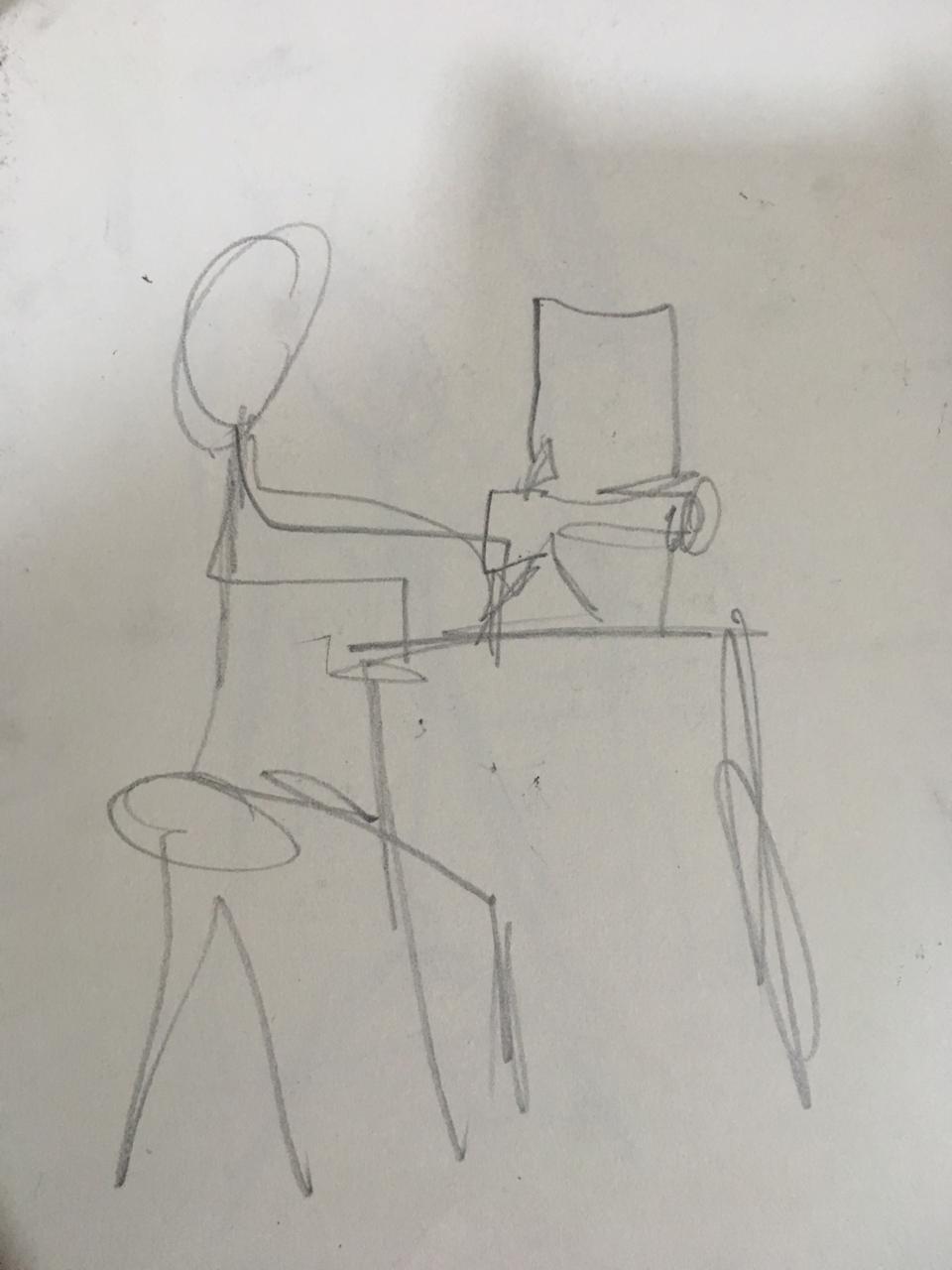
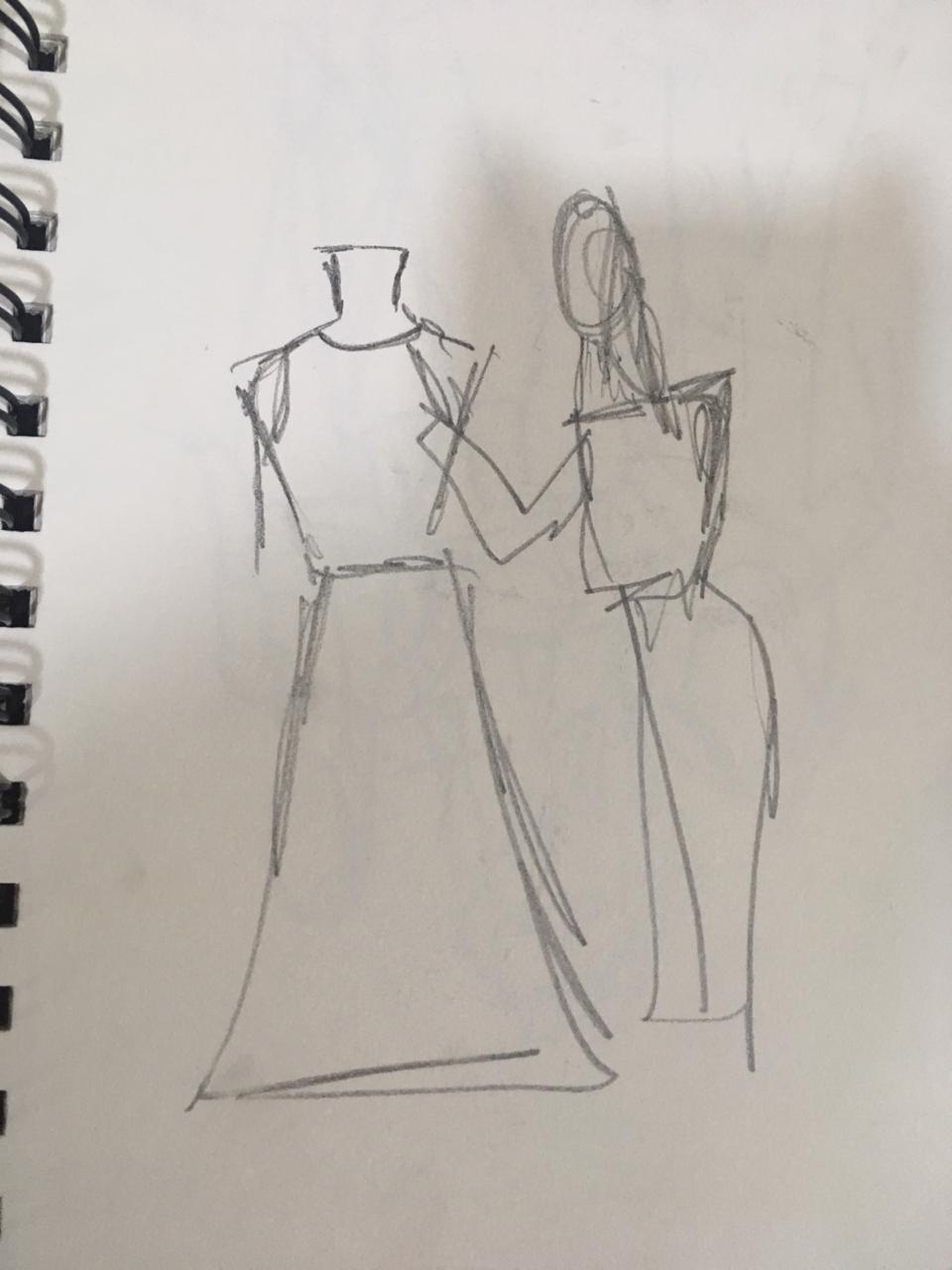
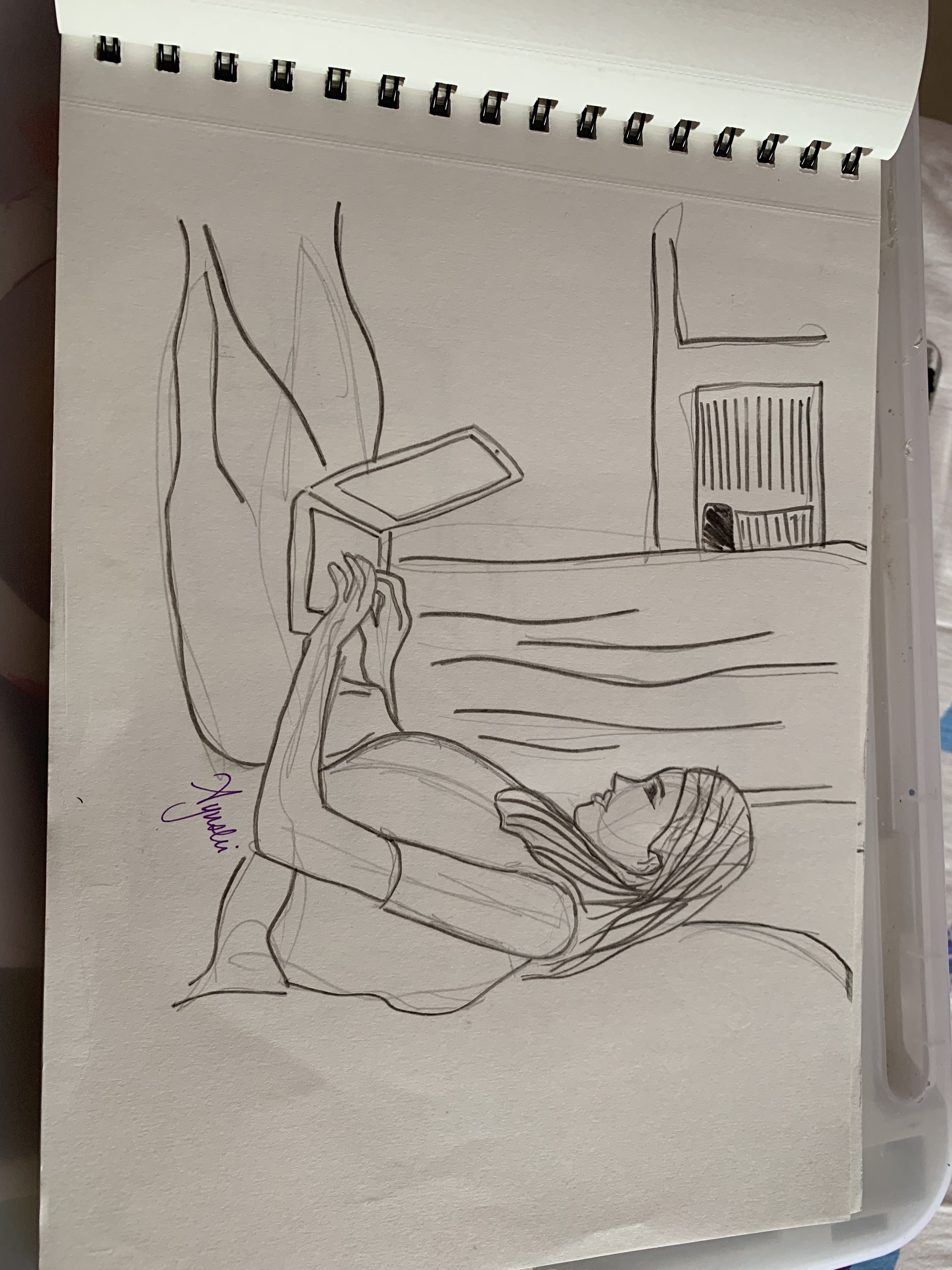
We were then told to refine one of the sketches by highlighting lines and features. This is my sketch of a girl sitting at a sewing machine:
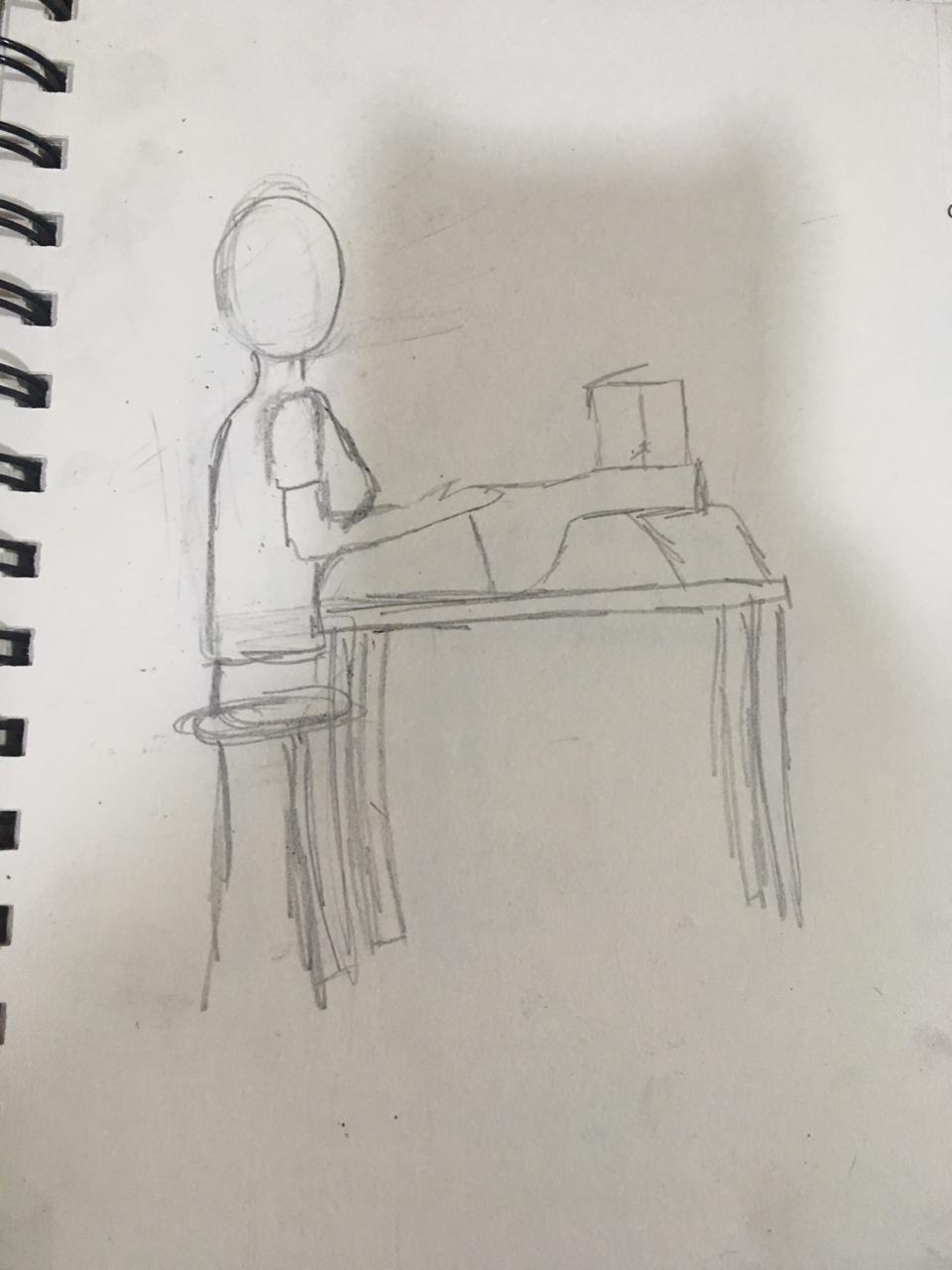
This activity taught me about the very basics of drawing. I had to unlearn the overwhelming idea that all artists who excelled at realistic figure drawings had a natural flow for it. I learned about how the very foundation of a figure drawing is a simple gesture sketch, this gives artists a rough idea of where to start and how to start.

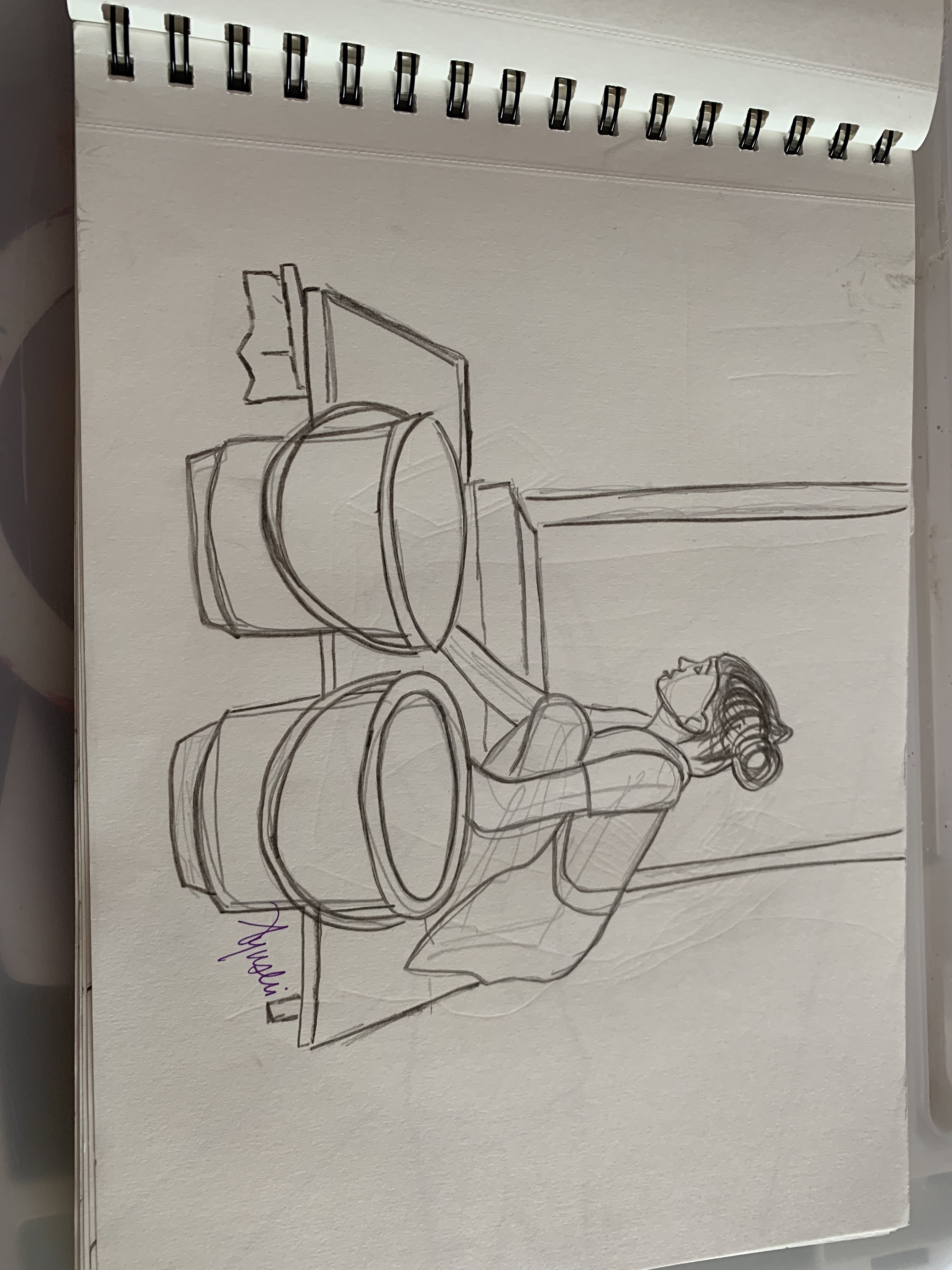
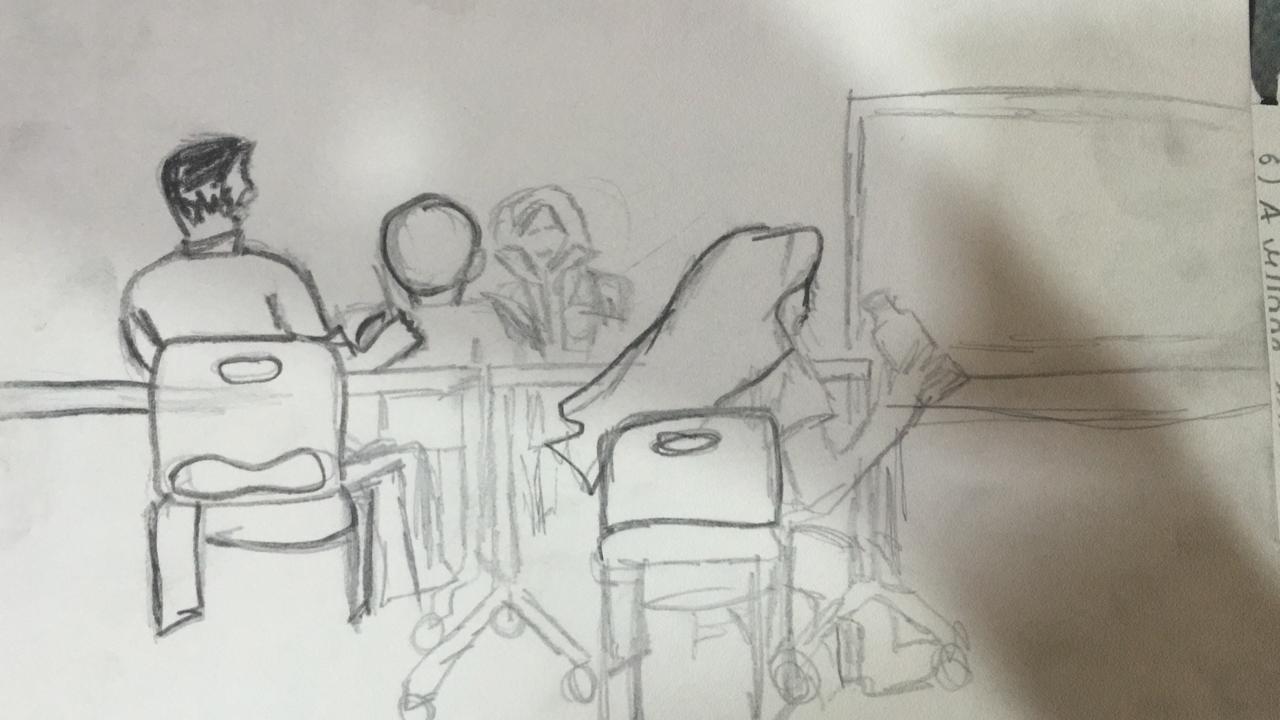
We then moved on to broader scenes. We explored the space around us in the classroom. We were told to sketch our classroom from a different vantage points. This activity helped me gauge a better understanding on how different objects and settings around figures create context and understanding in a picture. I also bettered my skills in freehand perspective and approximating where certain objects interact with each other in the drawing. These are the two sketches I did in class:

Week 3 | August 16th, 2019 | Jai Ranjit

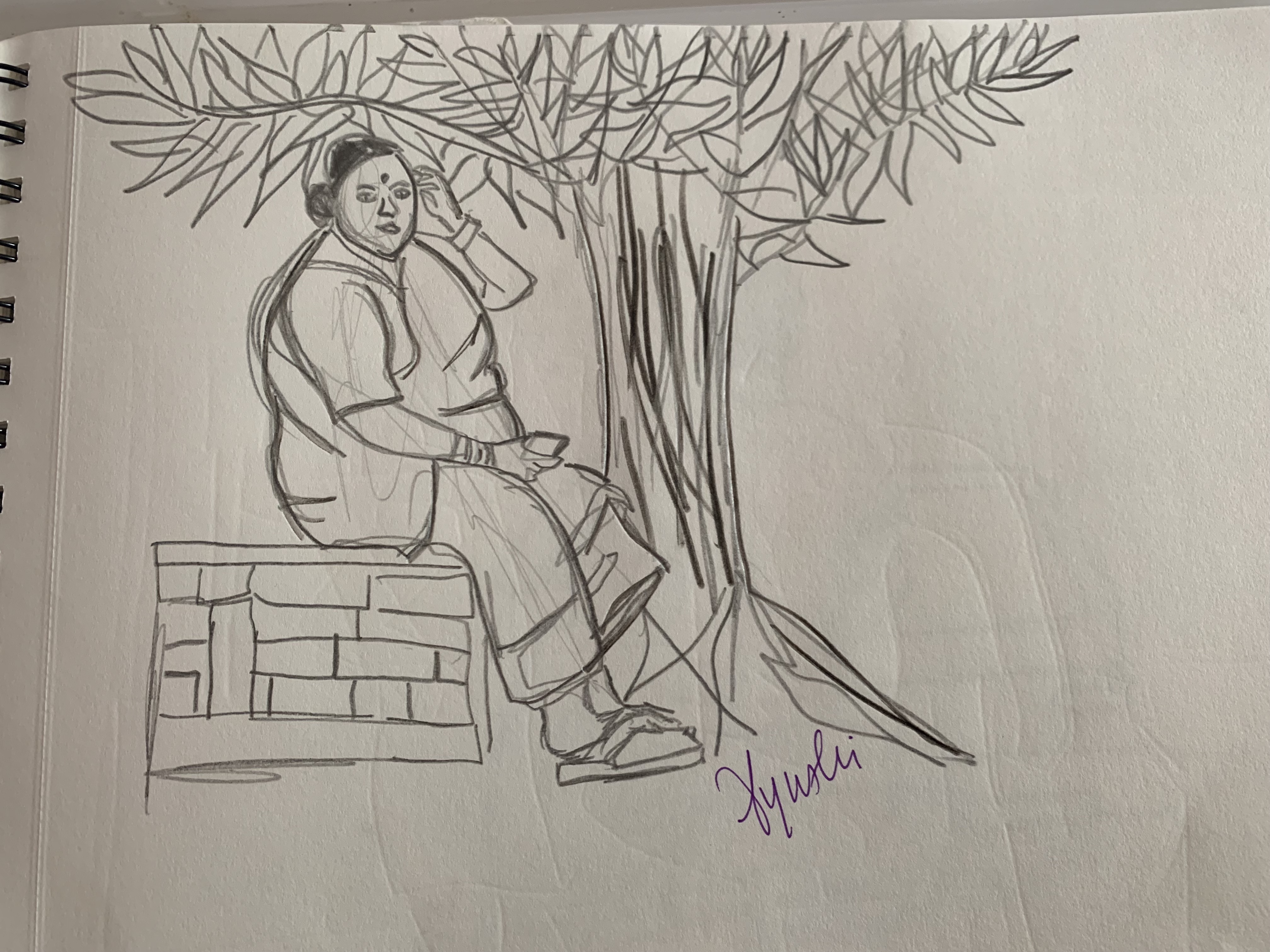
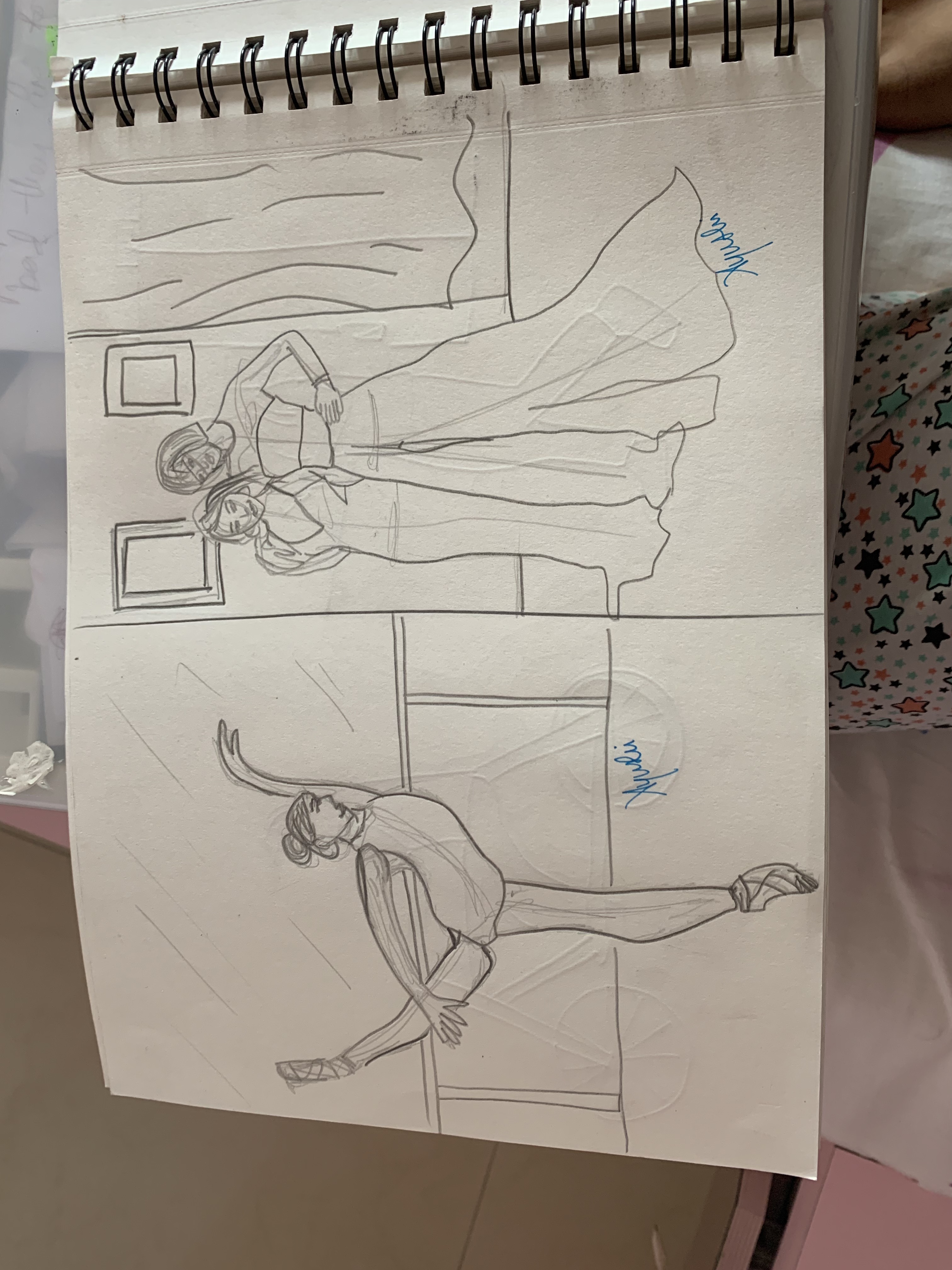
In the third week of drawing class, we were told to show the drawings we did at home for homework. I visited the slums near my house, old photographs, my sister’s dance classes and asked some of my family members to pose for me to sketch them. This was a really seminal experience and activity because i got more acquainted with different methods of drawing and got more comfortable with it.
a woman sitting by a tree

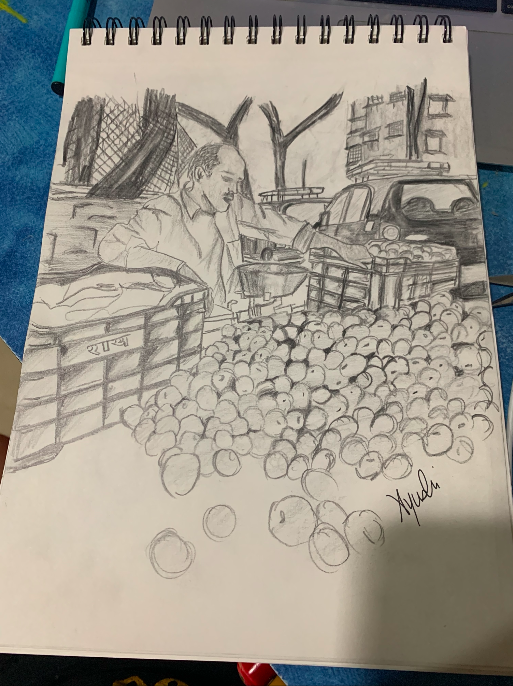
In the third week of Drawing class, we learned different sketching techniques to create depth, value, different tones, textures and a lot more when drawing. The techniques we learned were stippling, scumbling, hatching, cross-hatching and scribbling. We were then told to use these methods to create four sketches of photographs we got to take ourselves of different places. 2 sketches had to be of a place during the day and the other two had to be during the night. Below is a sketch I finished in class today:
These are the sketches completed at home:
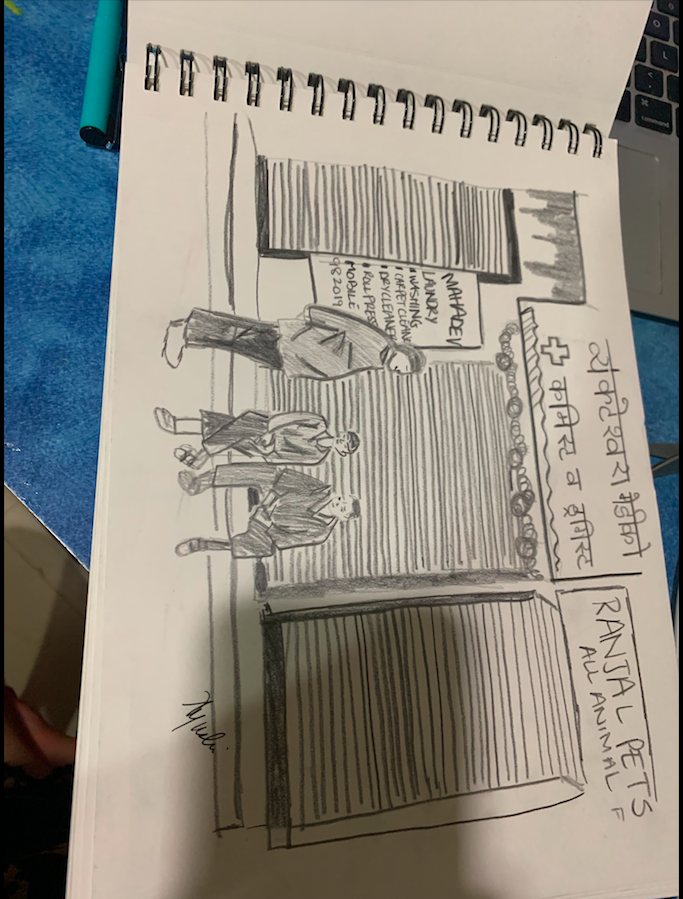
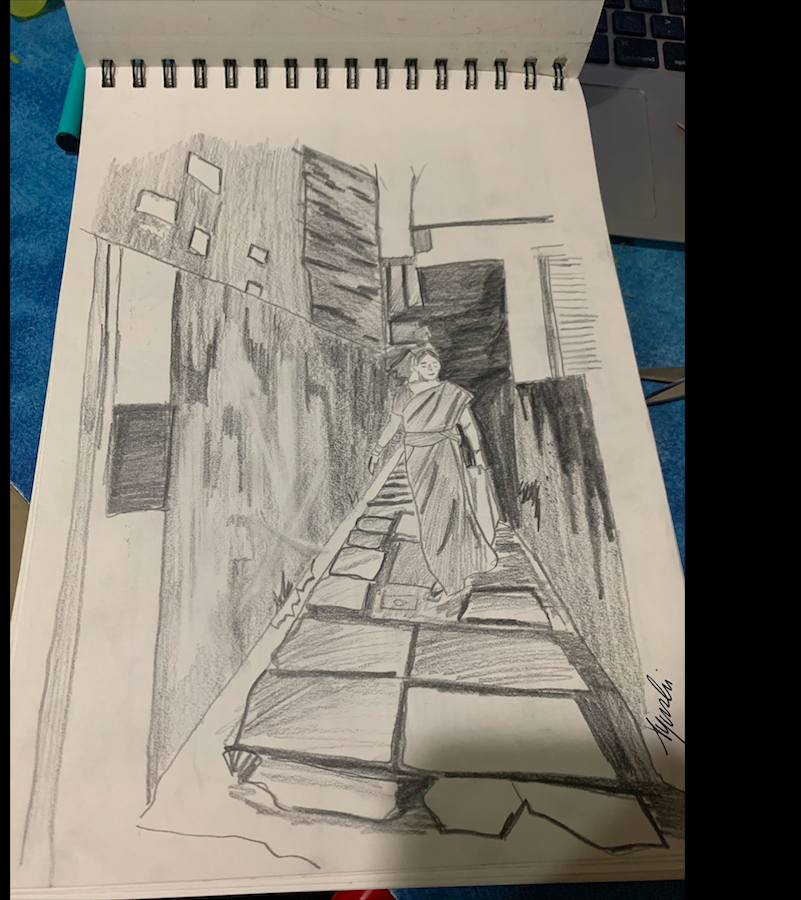
These are the sketches completed at home:
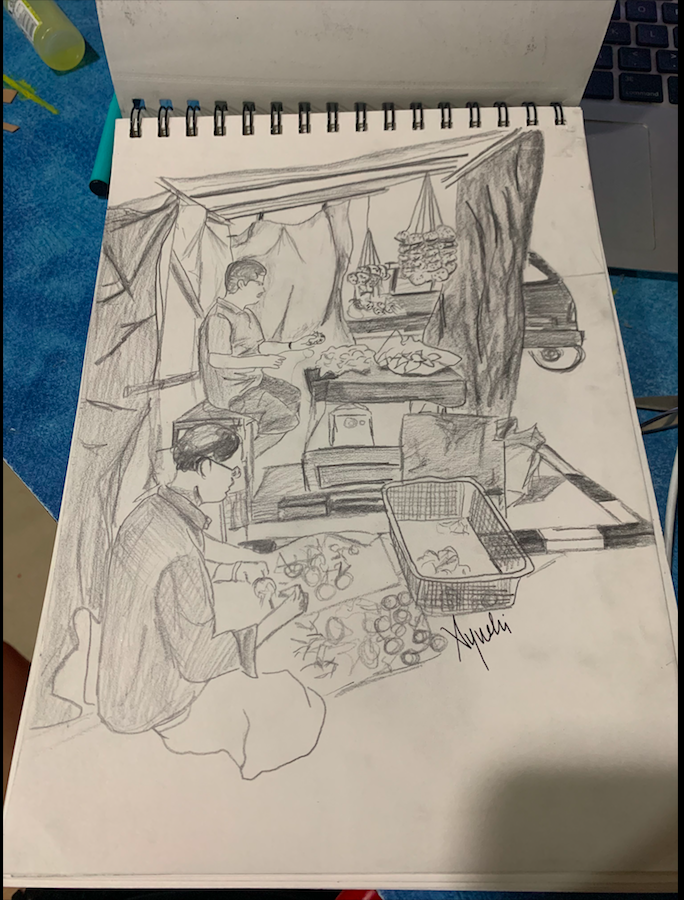
When sketching these sketches, I noticed how different drawing techniques that we learned in class can create different effects. While I still battle with creating the appropriate light effects in my sketches, I think I’m good at creating shadows and showing depth. For example, in the tomatoes, (the first sketch) I showed value in the gaps and spaces between the tomatoes and differentiated each tomato from the other using the “scribbling” technique. I could have made it more obvious that the fruit on the table was a tomato. Tomatoes seem to have a natural and polished shine in the light as opposed to other fruits. If I could’ve managed light in a better way, I think I could’ve brought out that effect.

In the fourth and final sketch, I think I managed using space to create an accurate amount of context, so that the viewer can gauge the environment and interpret what’s going on in the picture, something that I have struggled with in the past. However, I could’ve created a more realistic depiction of the hanging flowers by using the scumbling technique to showcase the complexity of the petals.

Week 4 | August 23, 2019 | Jai Ranjit

Since we were young, we all started out drawing with a single line. Whether it was making random lines on a piece of paper or writing words, everything started with a line. Today we learned how lines can be used in drawing to depict objects.
Line art or linear drawing is entirely made up of distinct curved or straight lines. These lines can be used to create direction, motion, value, tones, shapes and figures. They can depict two dimensional or three dimensional objects.

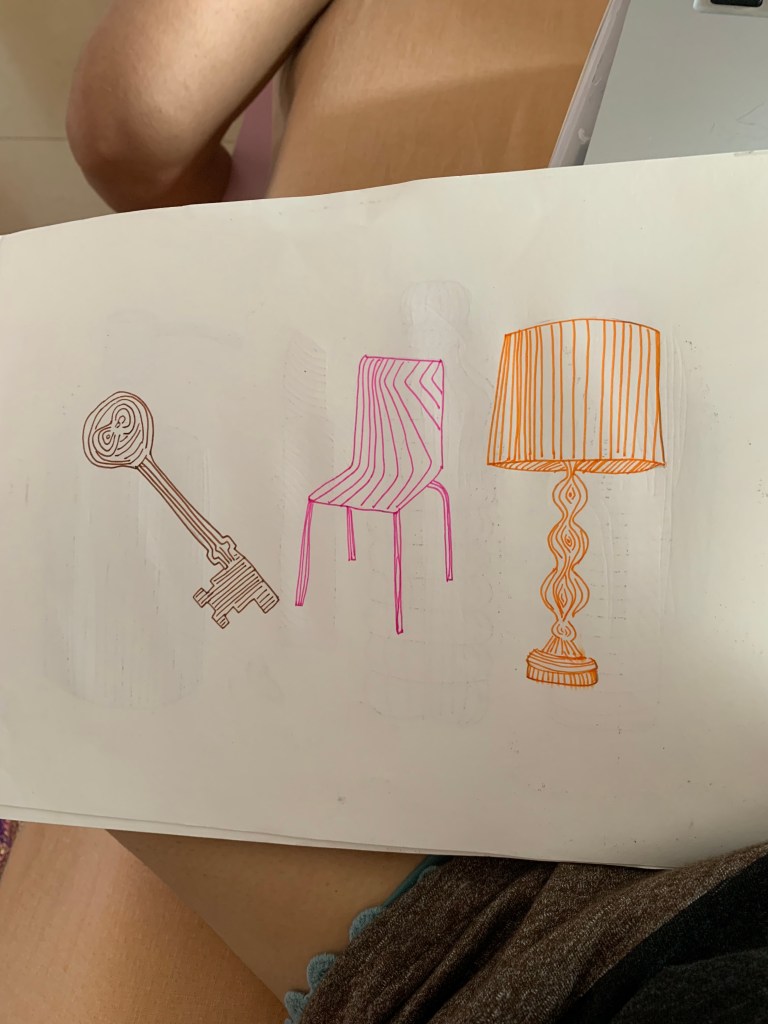
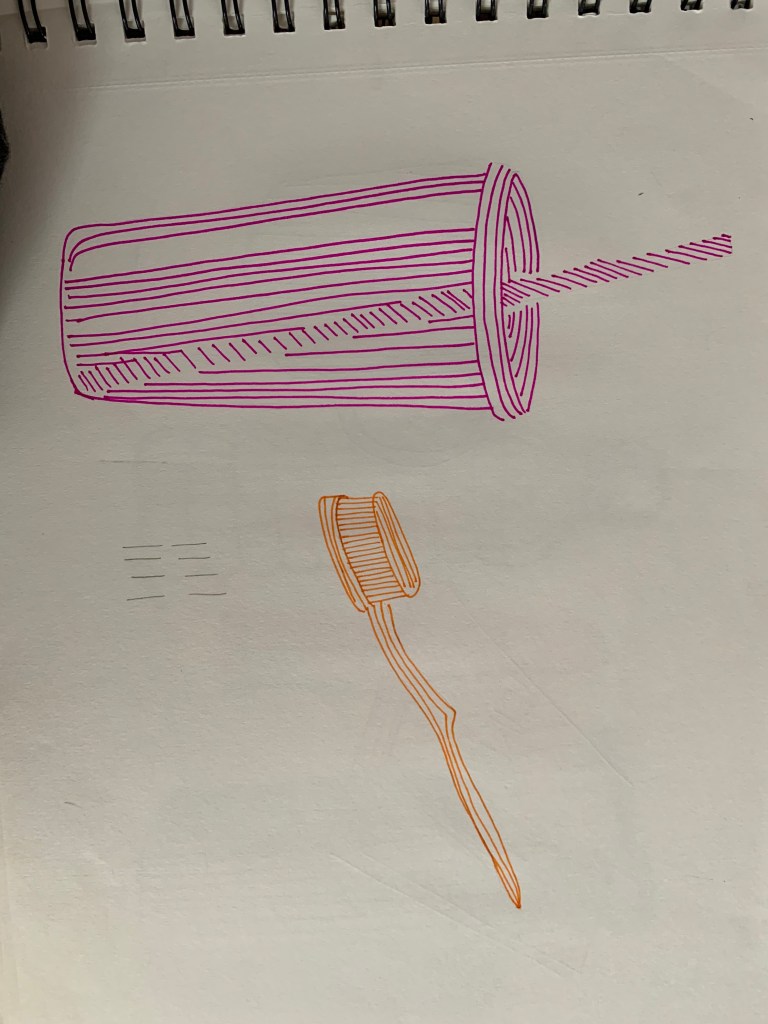
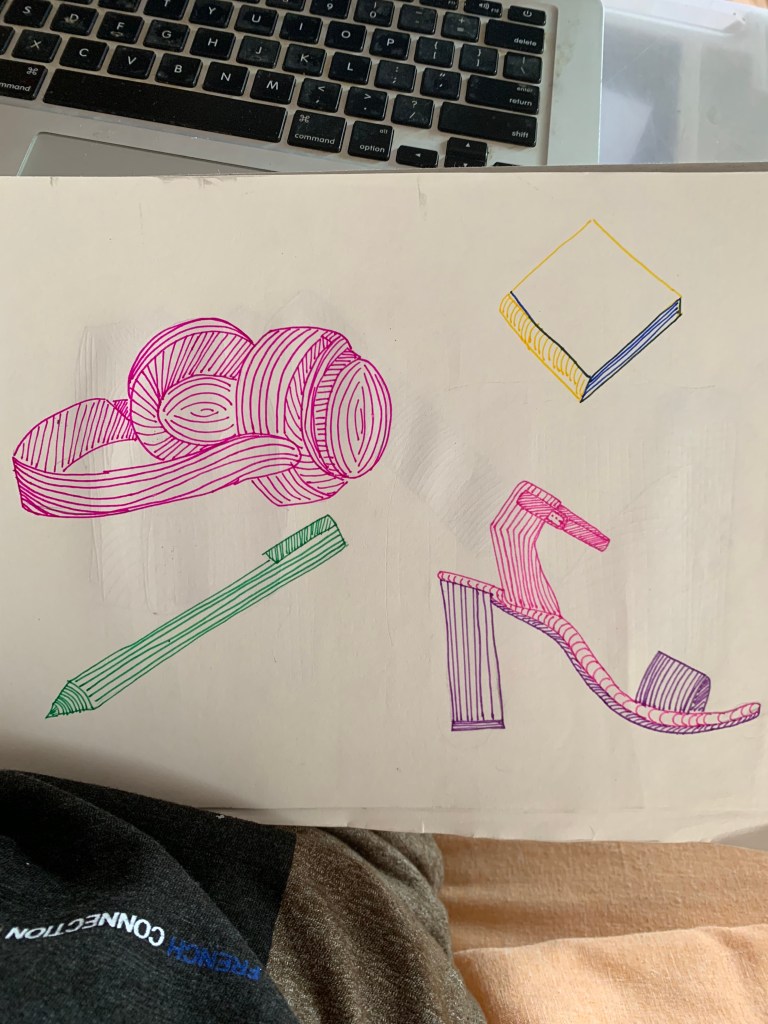
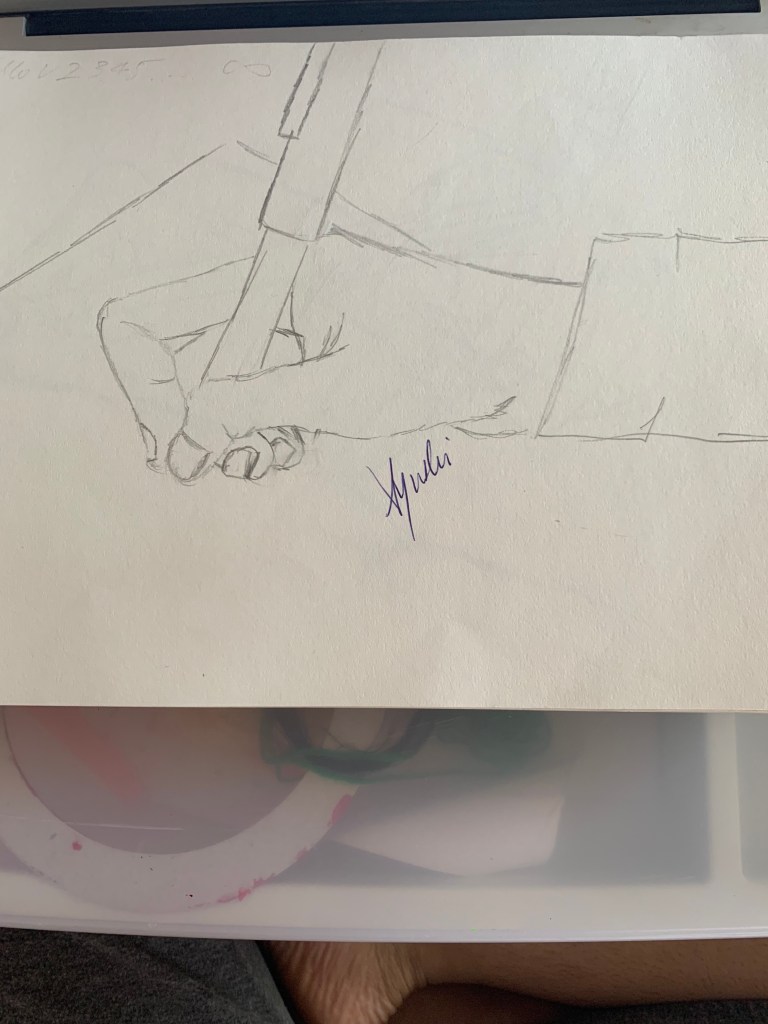
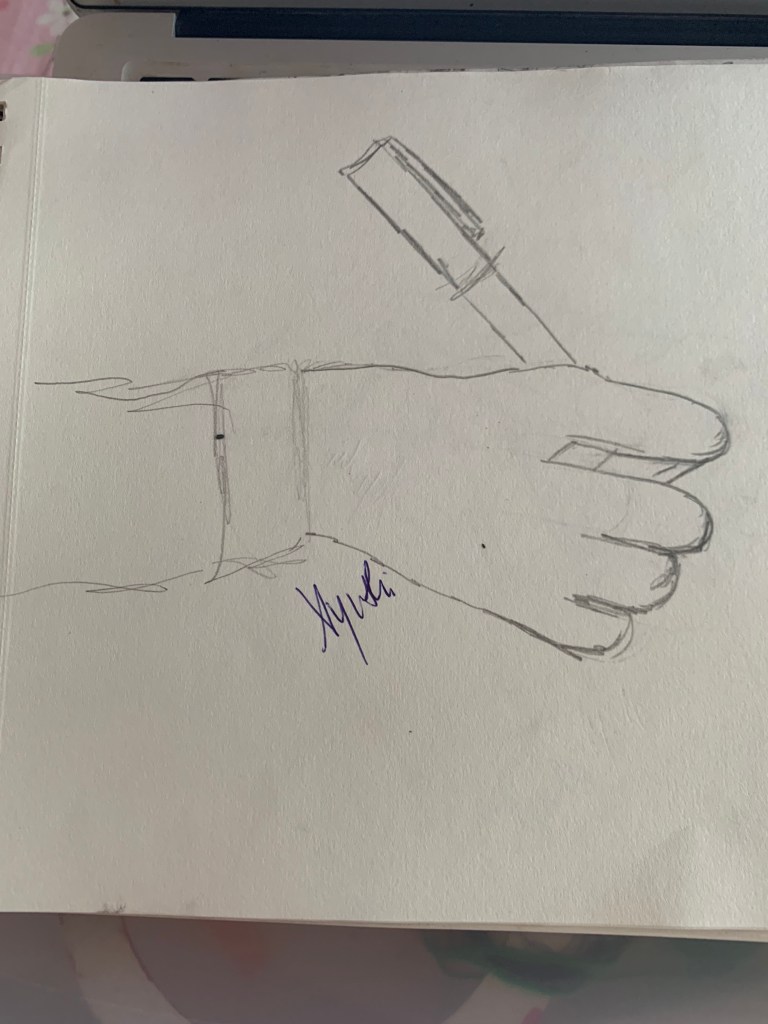
We got acquainted with linear drawing by drawing the very basics of things: our hands and then the objects around us. At, first I was really confused with the whole concept of line drawing. I thought it was all about filling out an object entirely with lines, which ended up making my first two drawings of my hand very chaotic and messy:
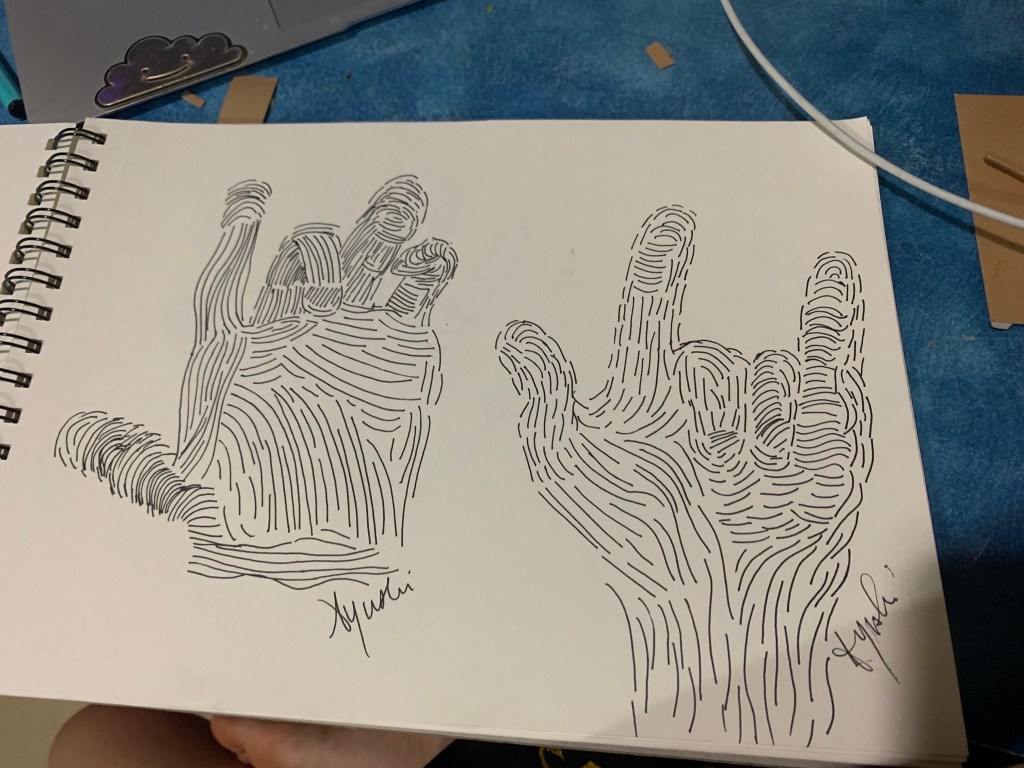
I then learned the key: which was to go with the flow, quite literally. I followed the curves and indents of my hand and depicted those instead of making a lot of chaotic marks. This made it easier to identify the fingers, palm lines and gauge where exactly different aspects of the hand start and end.

I struggled and made sure to make lots of mistakes, especially because we were told to use a pen. Despite the initial difficulty, through trial and error, I managed to figure out how to follow the curves and let the hand draw itself and not complicate the drawing.

I then went on to creating objects and faces:

Patience is Key
The good thing about drawing is that it enhances your patience. Especially when it comes to linear drawing, I learned that you need to be very specific with your lines, and the flows those lines create, because when you put them all together, they create a whole. Using an unforgiving medium such as a pen, was at first very difficult and frustrating for me. Nevertheless, after several tries, I could teach myself the different contours and curves of a face. I learned the ways in which the cheekbones curve from the ear to the nose for most people,(high cheekbones) and for some, the cheekbones go from the ear to the lips (low cheekbones). It takes patience to notice these attributes that each person carries (something I think I still need to work on) and its even more wonderful to see how it can all play out on paper with nothing but lines.

These are the linear drawings I completed at home:

Week 5 | August 30th, 2019 | Jai Ranjit

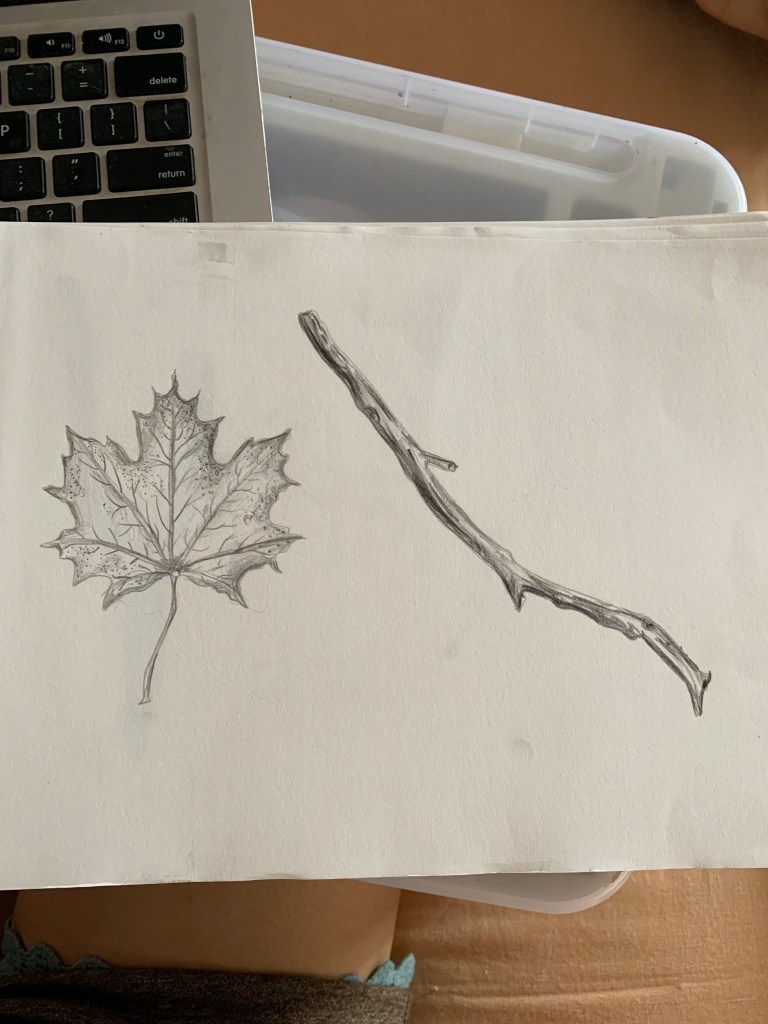
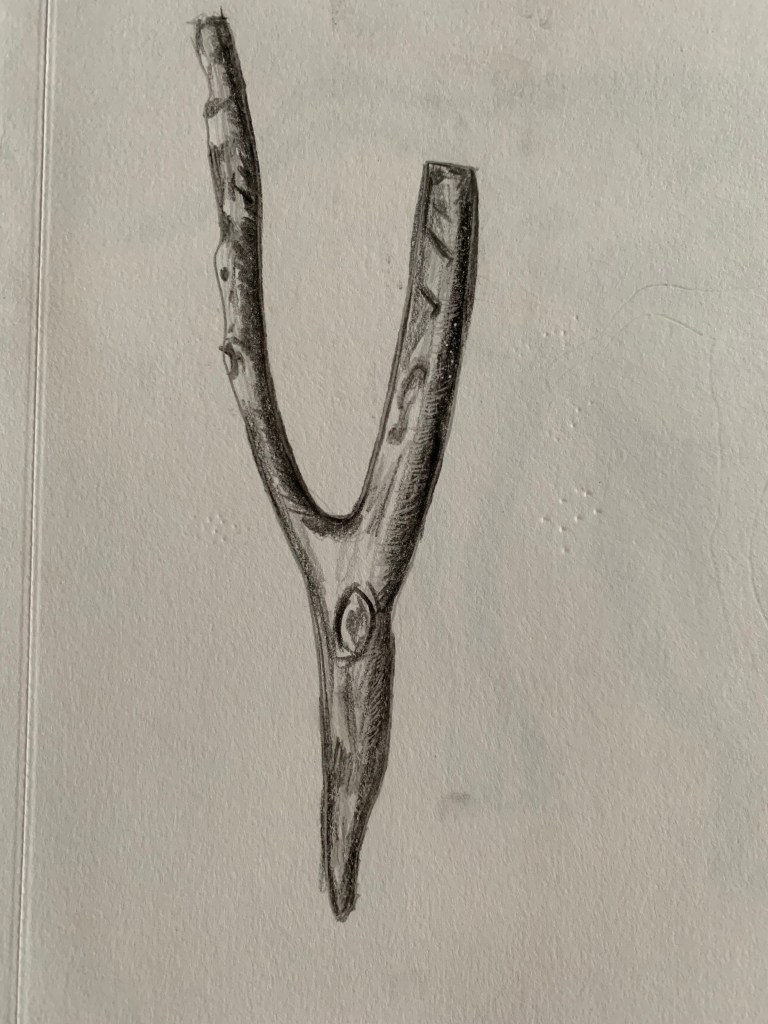
In Today’s class, we learned how to render drawings with graphite pencils. We were told to bring leaves, flowers, and stems to class, all in different states and draw them. These are the drawings I completed in class and at home.

I kept erasing and redrawing in order to experiment with different graphite shades, and ended up creating more shadows despite the abundance of light. I tried to better my skills at creating the illusion of light by using an eraser as a tool.

When I showed Jai sir my rose composition, I learned that I was rendering the shadows incorrectly. I also learned that roses have clear, delicate and smooth petals, I on the other hand made them sharp and a little too dark. Although, I learned how to use the eraser to my benefit and show the highlights in the roses.

Week 6 | September 6th, 2019 | Jai Ranjit

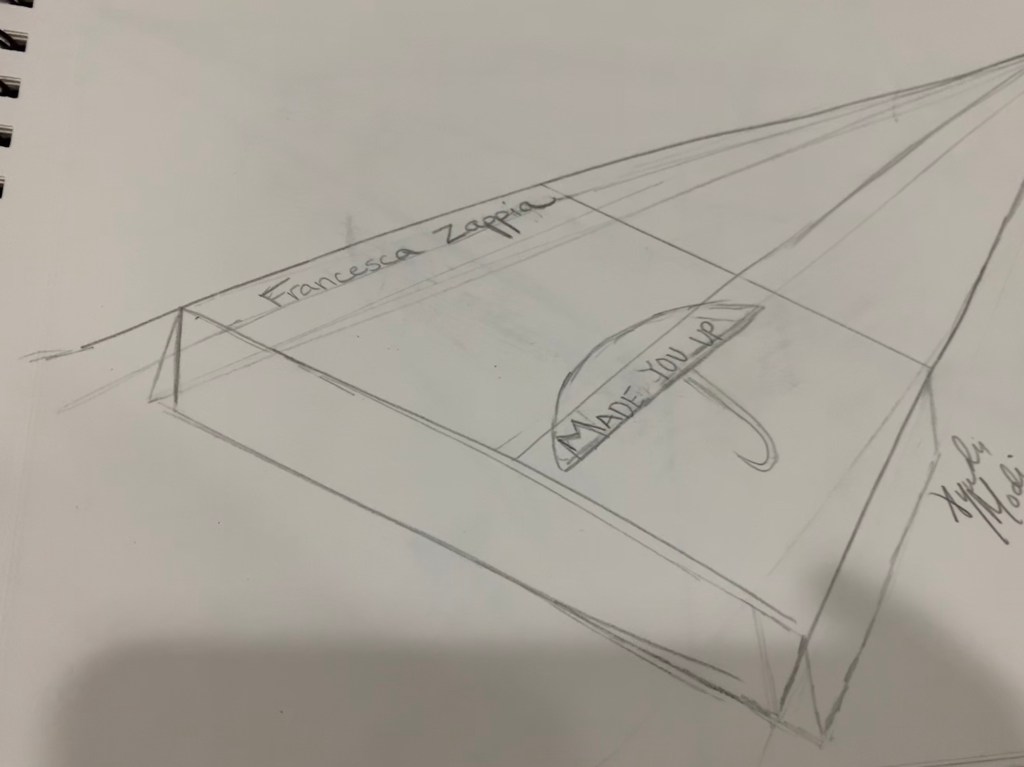
In week six of drawing, we learned one, two, and three point perspectives as well as the fish eye perspective. Perspective has always been one of the topics that I have tended not to be very comfortable with. I struggle with the accuracy aspect of it as well as dimensional aspects when depicting 3D artwork. These are the perspective drawings I worked on in class today:

As I got reacquainted with perspective drawing, I realised that I should cut it down to learning the basics first. Such as how the horizon line can help me gauge a better understanding of the eye level, and where my drawing begins and ends. Furthermore, I learned about vanishing points and how even though in real life parallel lines don’t meet, it seems like they can in drawings.

Fish eye perspective
As we were taught of the fish eye perspective, the first thing I thought of was a GoPro Camera. It’s designed to capture an almost spherical and panoramic picture. Similarly, I learned that artists use fish eye perspective drawings to portray a larger scene with a forced perspective.
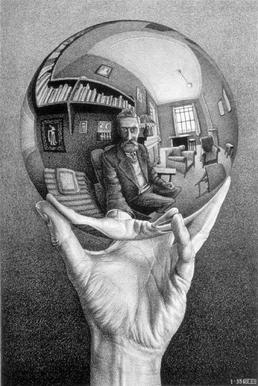
Hand with Reflecting Sphere by M.C. Escher

To help myself gauge a better understanding of the fish eye perspective, I searched up the self portrait (above) by M.C. Escher. In this self portrait, I understood how Escher makes himself the focal point of the drawing using the fish eye perspective and makes use of the background to add context to the final picture.

Learning from “detachment” as a designer
We ended the day on a bittersweet note. We discussed about how as a designer, it is crucial to let go of your art and part with it no matter how good or bad you think it is. By detaching yourself from your art, you can learn how to become a better designer.

So I went home, drew something I was quite proud of and decided to tear it:

Before:

After:

If I’d say that tearing apart my artwork didn’t absolutely kill me, I would be lying. But this felt more like a momentary heartache, than a monumental one. Yes, it was hard to tear apart something I worked hard on and would never have imagined tearing apart, but it honestly only hurt for five minutes. After those five minutes, it felt liberating. I learned that, as a designer, it is important to understand your worth, your limits and your capabilities. If I could draw it once, I can definitely draw it again, probably twice as better and twice as faster. So, in hindsight, I never really “lost” anything, I just bettered my learning skills as a designer.

Week 7 | September 13th, 2019 | Jai Ranjit

Foreshortening
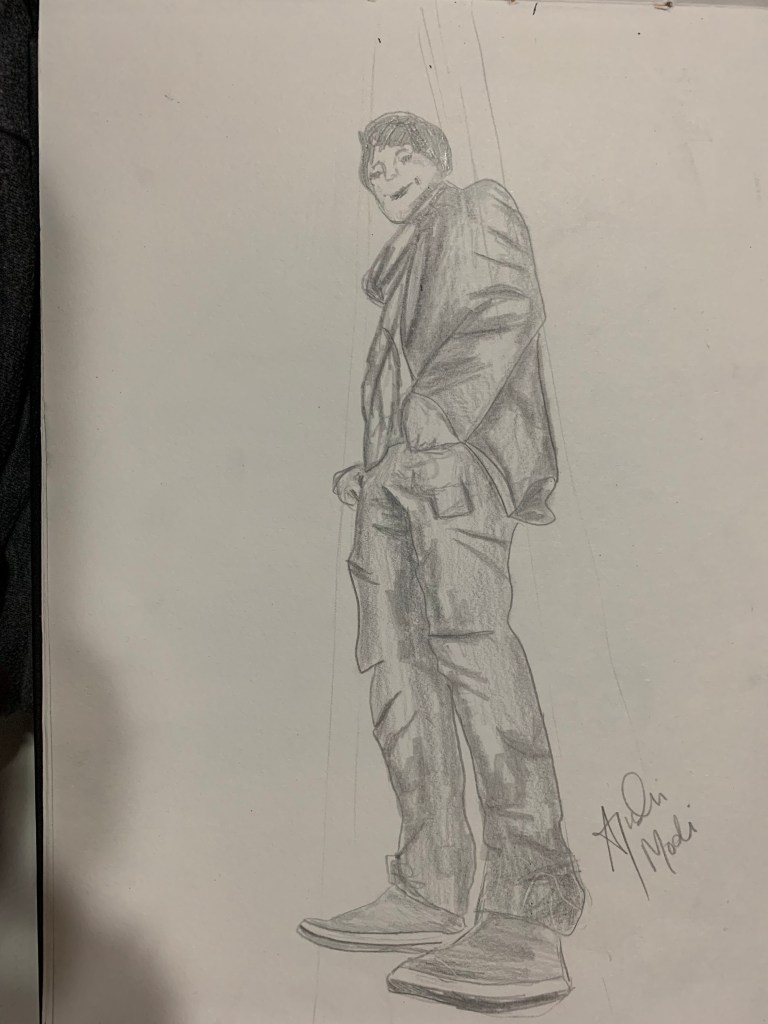
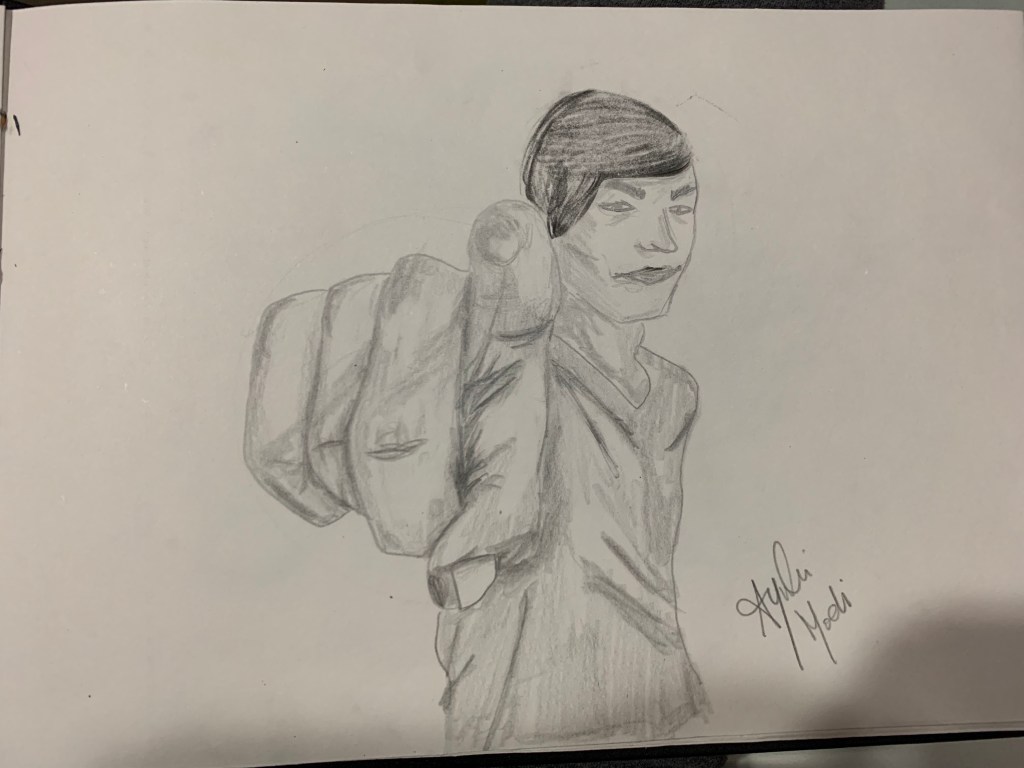
In this week, we continued learning perspective. Although in this class, we learned how to create perspective with human figures, by using foreshortening. I learned that foreshortening is when artists render figures in order to show depth to create an illusion of distance

Drawing of my friend showing a thumbs up by me

At first, the idea of drawing in perspective with human figures made me fret a lot. I had never done it before. However, I learned to break certain elements of my drawing down to the basics. I learned how to compare dimensions (like of the the size of the face when compared to the fist) and use the perspective guidelines to guide my dimensions and lines. I also learned how to start with basic shapes and then carry on to adding more elements to make my drawing look like a human figure.

Another lesson I learned today, is how gradation can also help in showing depth, space and distance, especially when drawing in perspective.

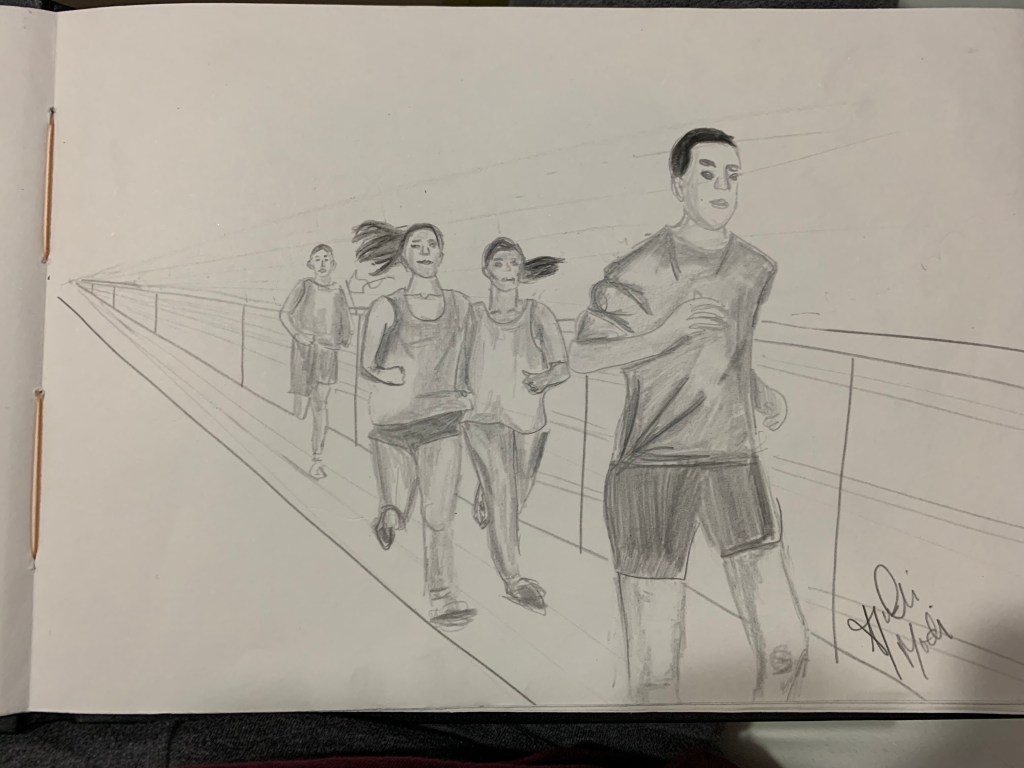
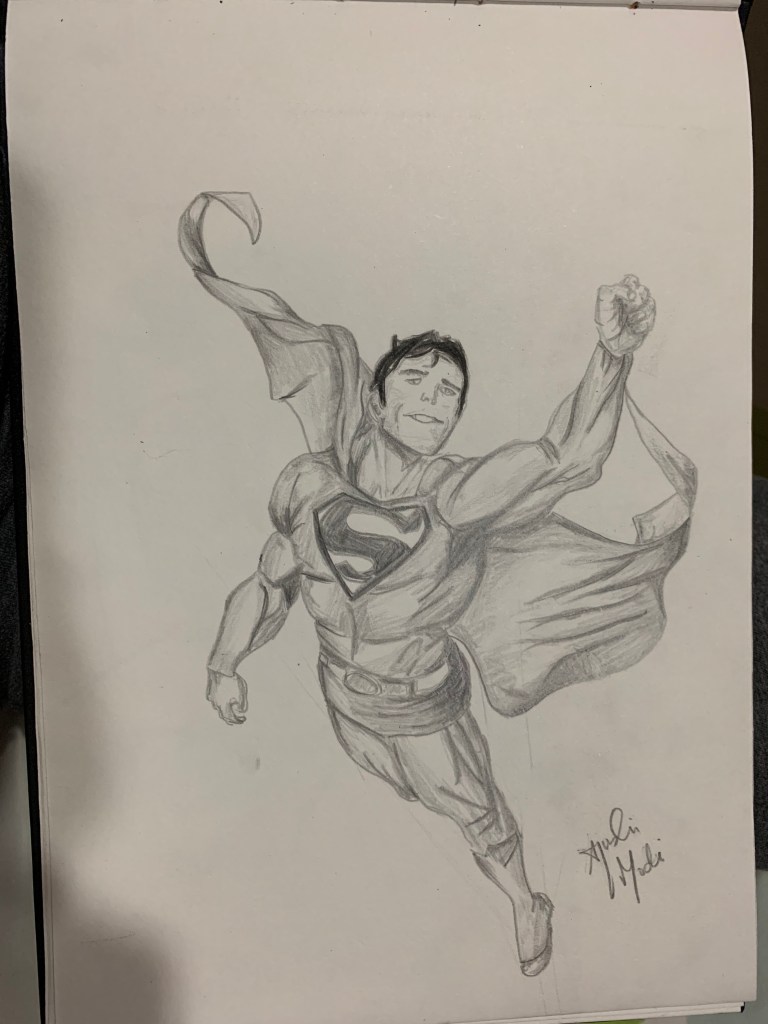
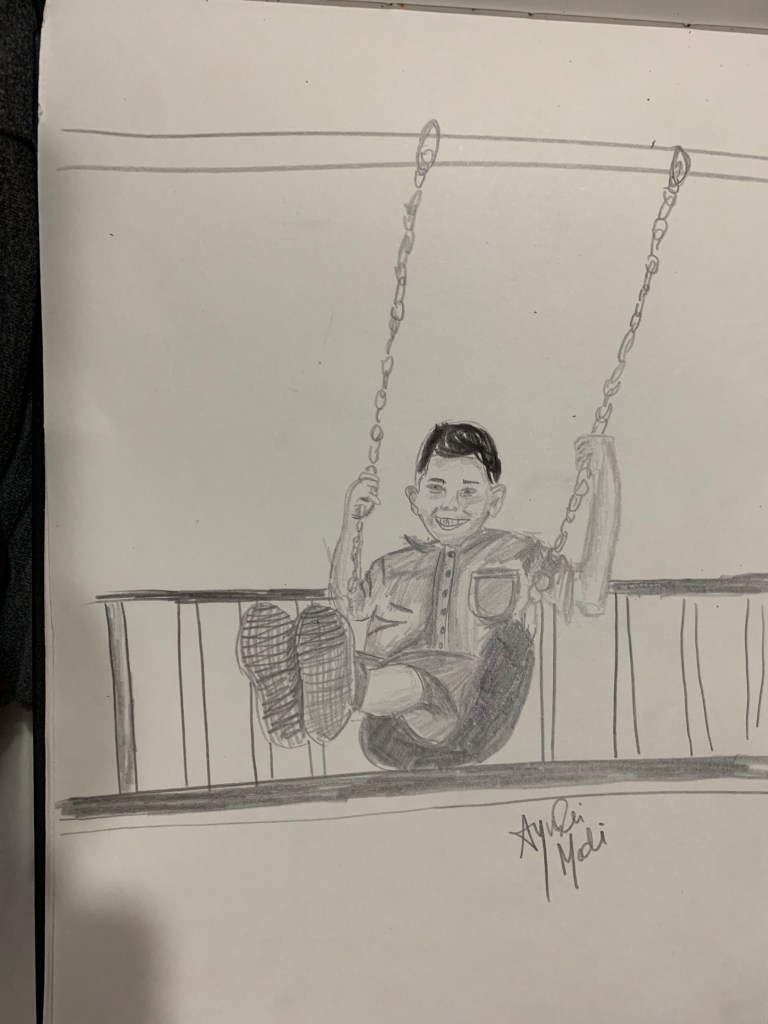
These are the illustrations I completed at home. As I practiced more, I gradually got more accustomed to using the perspective guidelines and create the human figures.

A starbucks coffee line

Week 8 | September 20th, 2019 | Jai Ranjit

This week, we learned about our next project: Creating a zine. I had known what a zine was when we were introduced to this topic, but I had never actually made one. So the prospect of making one excited me.

During our peer review, I learned and noticed how despite my classmates and I having made a few mistakes and not being that satisfied with our artwork in some cases, it still helped with our progress as artists and designers. I learned that trial and error is a necessary and crucial part in success and learning, especially when you’re a designer. As aggravating as it can be to initially not be so great at what you love to do in the beginning, with enough hard work, you will reap the benefits of your results. I also learned that I should be more confident when making my artwork and not compare mine to everybody else’s because it might hinder my own personal progress. This peer review was much needed because it really taught me how to cut myself some slack and give myself some time and room to improve.

Furthermore, I learned how to experiment with colour in this class, as that is what we’re going to be exploring for the next couple of weeks.
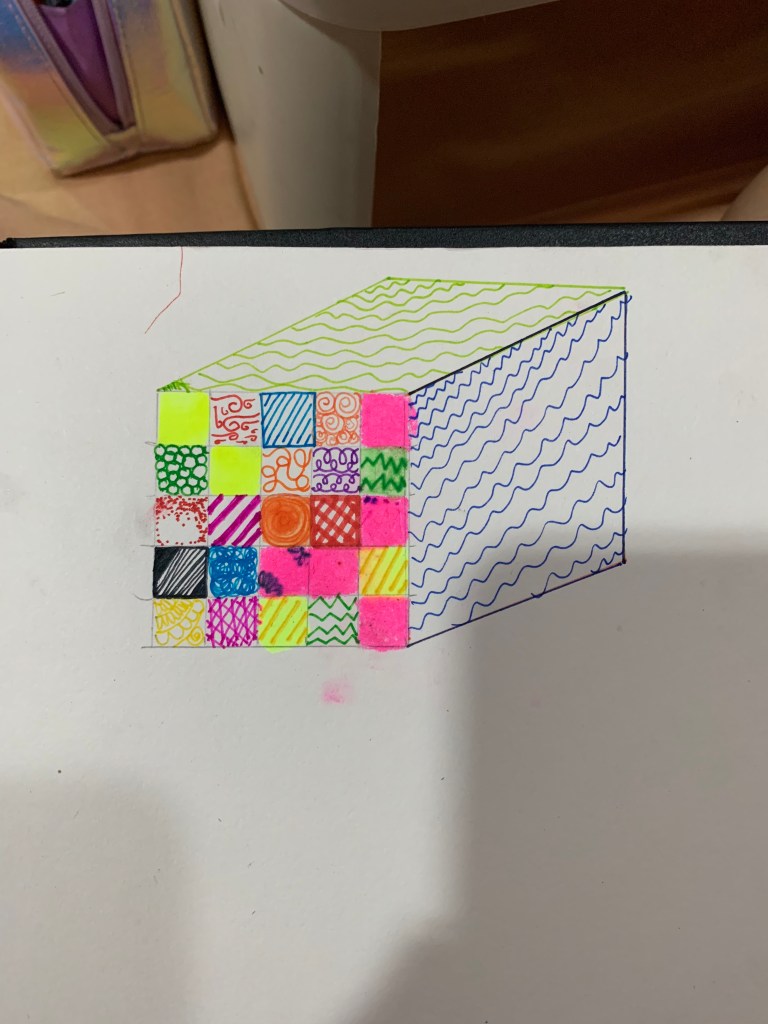
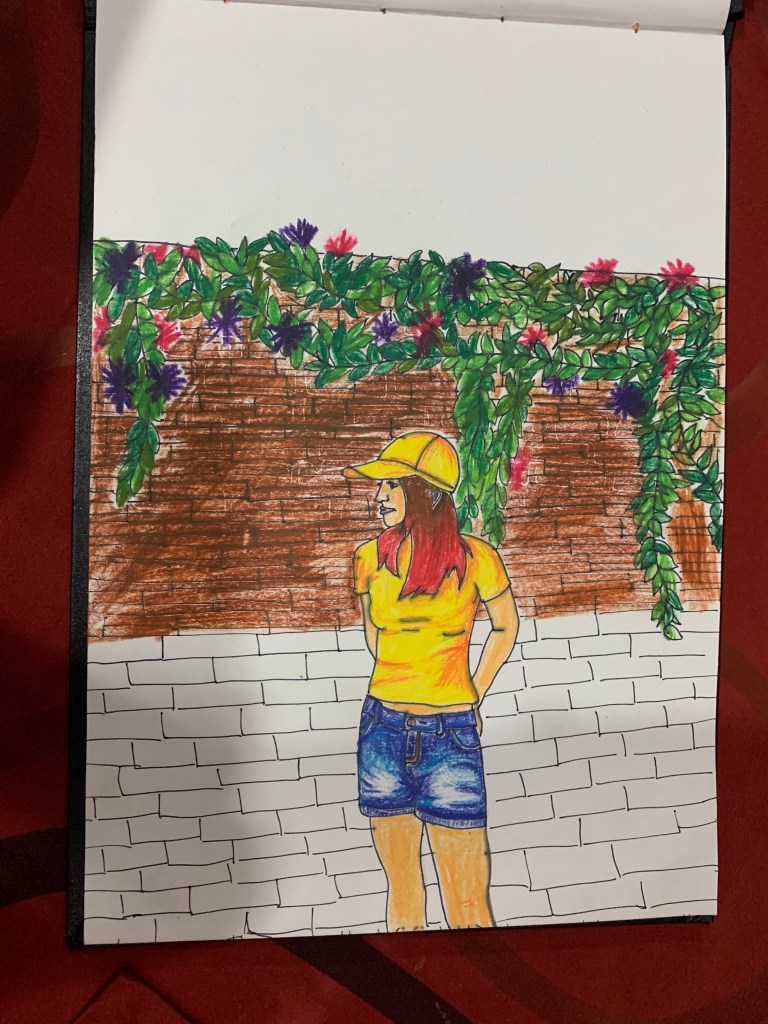
A drawing of myself with reference to the cube of colours.

Week 9 | 25th September, 2019 | Jai Ranjit

In this class, I learned how to map colours on a grid. This exercise helped me understand how to break down certain elements of a painting. In this case, the crucial key element is colour. At first, it was frustrating and nerve-racking to depict the picture using nothing but linear lines and a grid. However, as I kept continuing the exercise, I learned the objective of it: to practice color swatching and noticing aspects and colour related parts of a painting. I learned how to simplify a painting more and not focus on the details, but the bigger aspects that give it detail. This activity made me more observant and made it easier for me to spot significant tints and tones of a picture and distinguish the colours.

Below I made an attempt to depict a picture I took of a temple in Japan:

I chose to use smaller grids (1cm x 1cm) because the photograph had a lot of colour palettes and tones, so in order to depict it in a pixelated manner, I thought to add more boxes and make an A4 depiction.

Space and Materiality

Week 1 | 1st August, 2019 | Sonia Gehlot

Introduction to Space and Materiality
In the first space and materiality class, we were introduced to the equipment in the machine room along with their safety features. We were taught to handle the machine and told about the precautions to consider when working with the machines. We also learned about the different tools to use with different materials such as aluminium, copper, styrofoam, wood, etc.
There are two kinds of materials in this world: Engineered and Natural.

Understanding the use of different materials
Today, in class, we learned about different types of materials and their applications in the real world. Why can’t we make clothes out of glass? Or out of paper? What drives people to opt for certain materials when making their products than others?
An example of a useful material that we discussed today was leather. Leather is used to make shoes, bags, jackets, and plenty of other things. We learned that people put a significant amount of thought behind the products that they make. If it is a leather jacket, it can be impervious to water and even warm you in the cold weather, which is why certain people may opt to wear a leather jacket where it is often cold and rainy. Like leather, engineers and artists use different materials to craft different products appropriate enough to put to use.

Natural Material refers to any product that comes from the ground, animals, plants or the earth. Natural materials are often used for building other materials and manufacturing clothes. Examples of natural materials are:

-Copper
-Wood
-Natural Textiles
-Cotton
-Clay

Engineered Material refers to materials that are not naturally given to us by the earth. They are artificially made. Below are some examples of engineered materials:

– Glass
-Plywood
-Monel
-Plastic
-Paper

Homework:
To understand how to differentiate between engineered and natural materials and their properties, we were given a task to differentiate between the two on a mount-board, classifying each side as either natural or engineered and putting the physical material on the board itself.

Week 2 | August 8th, 2019 | Sonia Gehlot

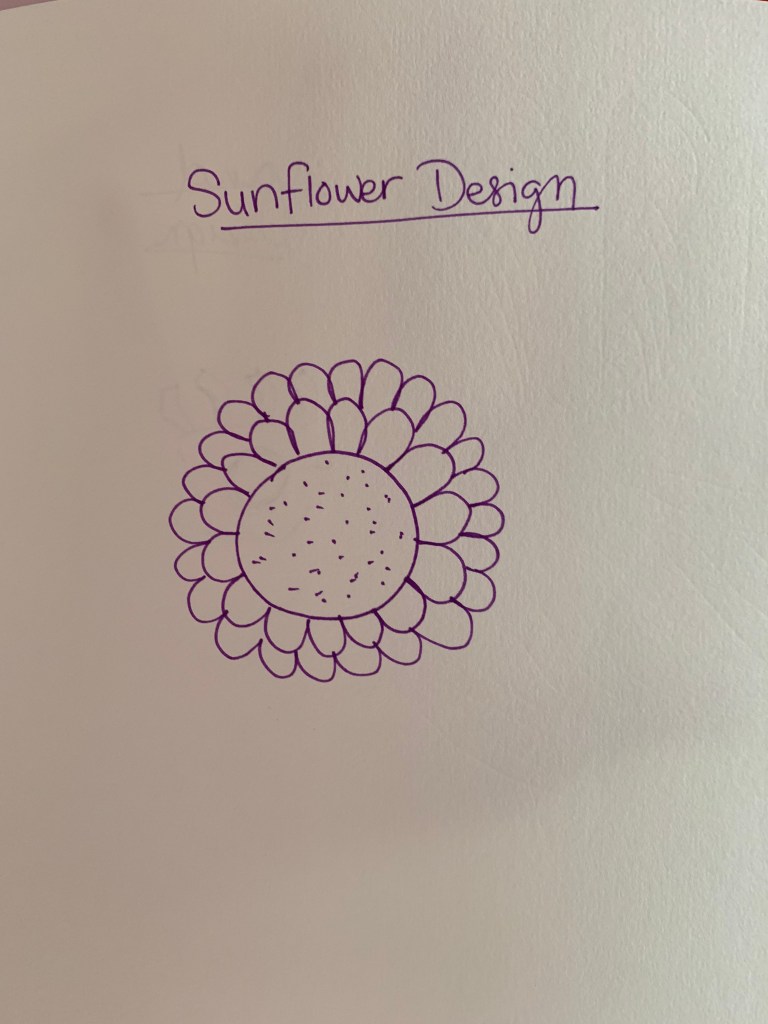
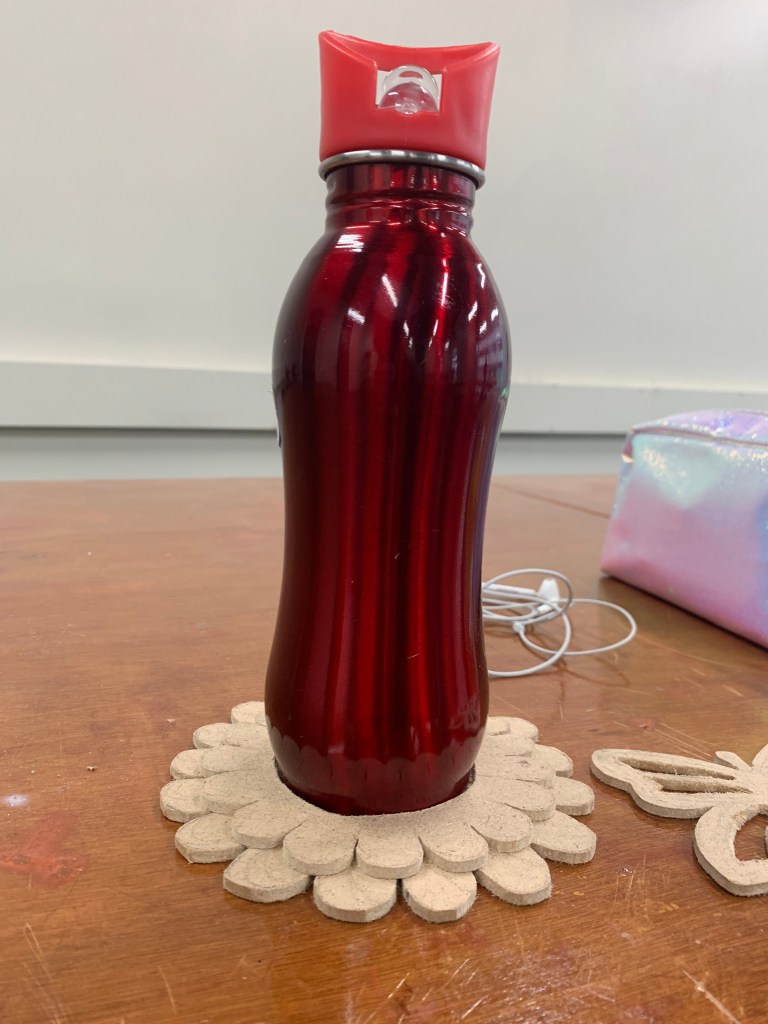
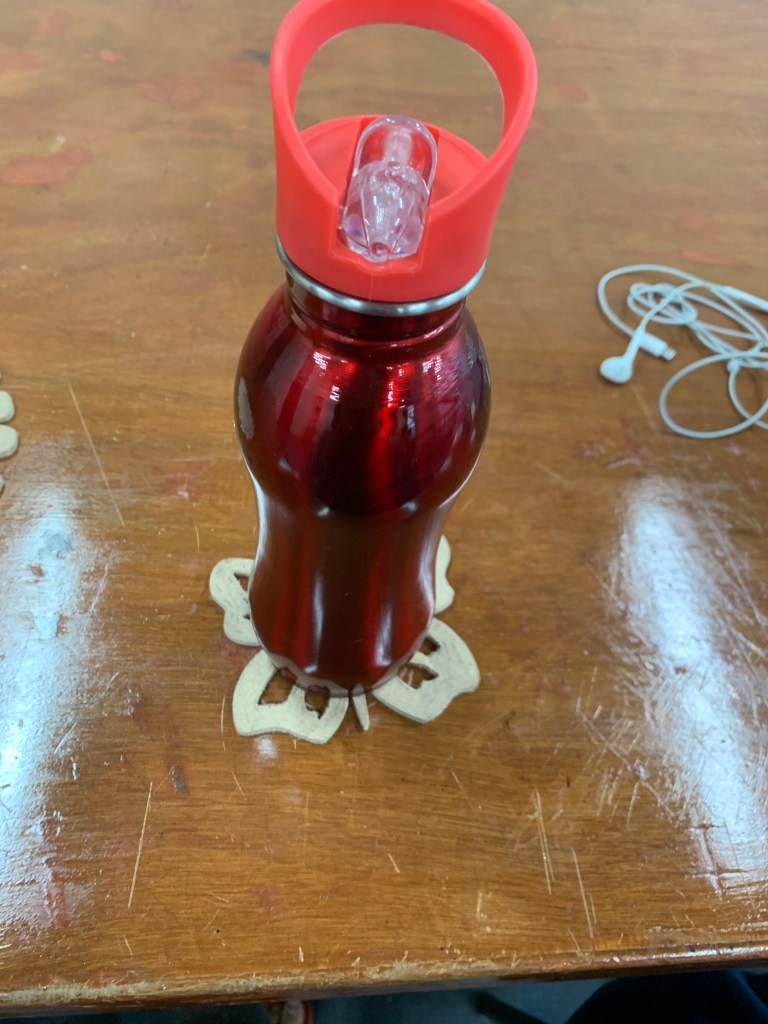
In week 2 of Space and Materiality, we reviewed natural and engineered materials and got feedback for our mount-boards. After that, we were introduced to our new assignment which revolved around the making of coasters. We had to make designs for our coasters, below are my two initial designs:

  1. Sunflower design: I wanted to stray away from the normative square shaped design for coasters and explore different styles and designs instead and be more creative.
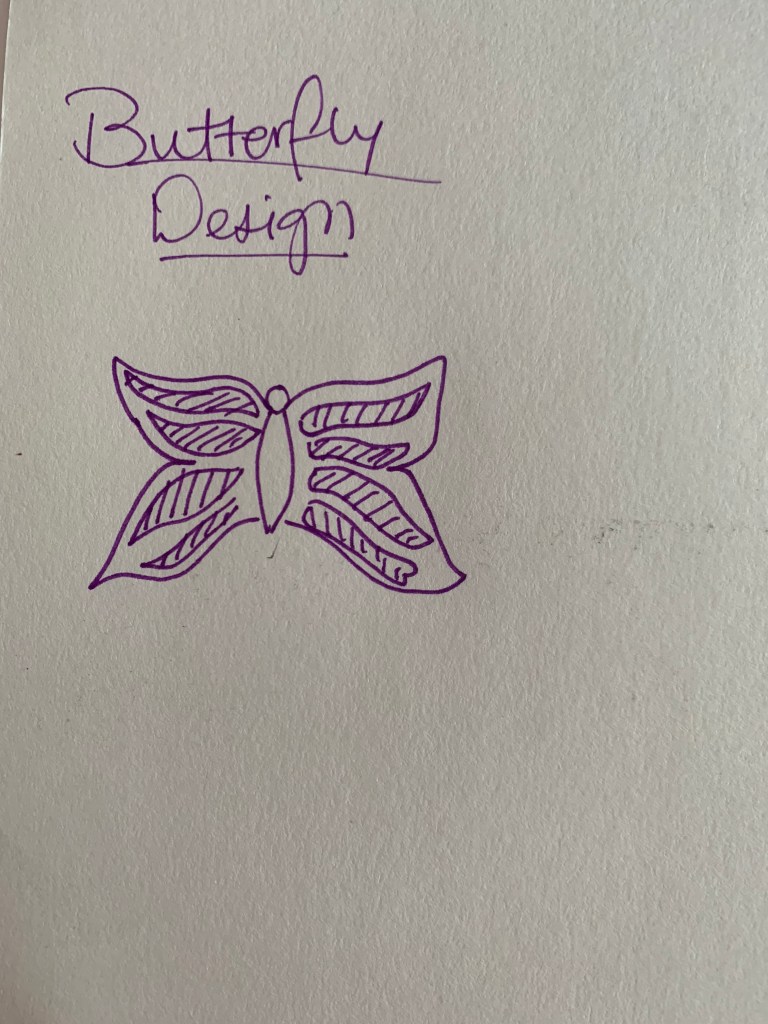
  2. 2. Butterfly design
    For my second coaster design, I chose to make a butterfly design.

Today, I got a hands-on experience with all the machines in the machine room. It was an exciting, a fun, and an educational experience. Despite the several complexities of the machines, I found them really easy to use after a couple of tries.

Because I had more time to finish my coasters, I decided to make a new design which consisted of a palm like coaster which would make it look like the palm was holding the bottle/glass/ jar that was placed in it. These are how my final coasters looked:

Since we dove right into making our coasters, I had to accustom myself to the machines very quickly too. I learned about how some machines smoothen the textures, whereas some thicken and roughen the plywood (the material I used to create my coasters).

These are how my final two coasters turned out. I’m quite happy with the result, however if I were to do it all over again, I would probably add more detail to the butterfly wings add more texture to the flower petals, because I think they look too plain. I would also be more accurate with my cutting, because since this was my first time working in the the machine room, I found it quite hard to be precise while using the machines. However, with patience and help from the staff, I managed to get my angles and cuts in the appropriate places.

Week 3 | August 15th, 2019

Despite having a holiday for our Space and Materiality class this week, I came in before and after classes to complete my coasters. I got more and more comfortable with the machines and the equipment in the machine room the more I got to use them. In the previous week’s post, I have displayed all of my coasters.

Week 4 | August 22, 2019 | Sonia Gehlot

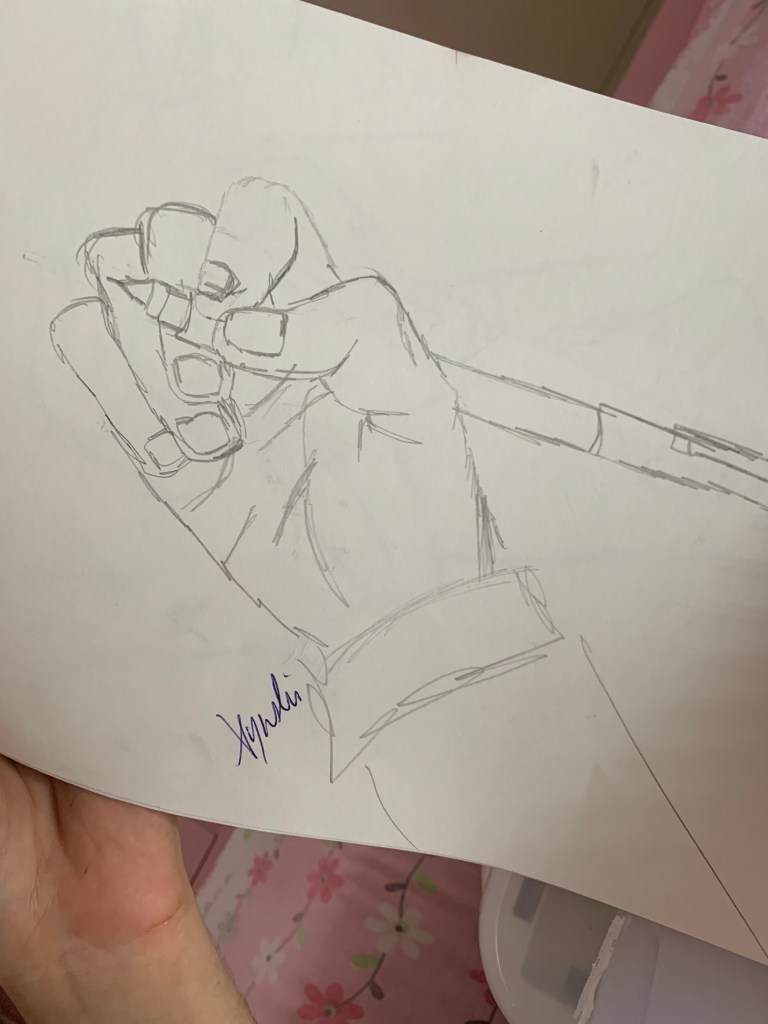
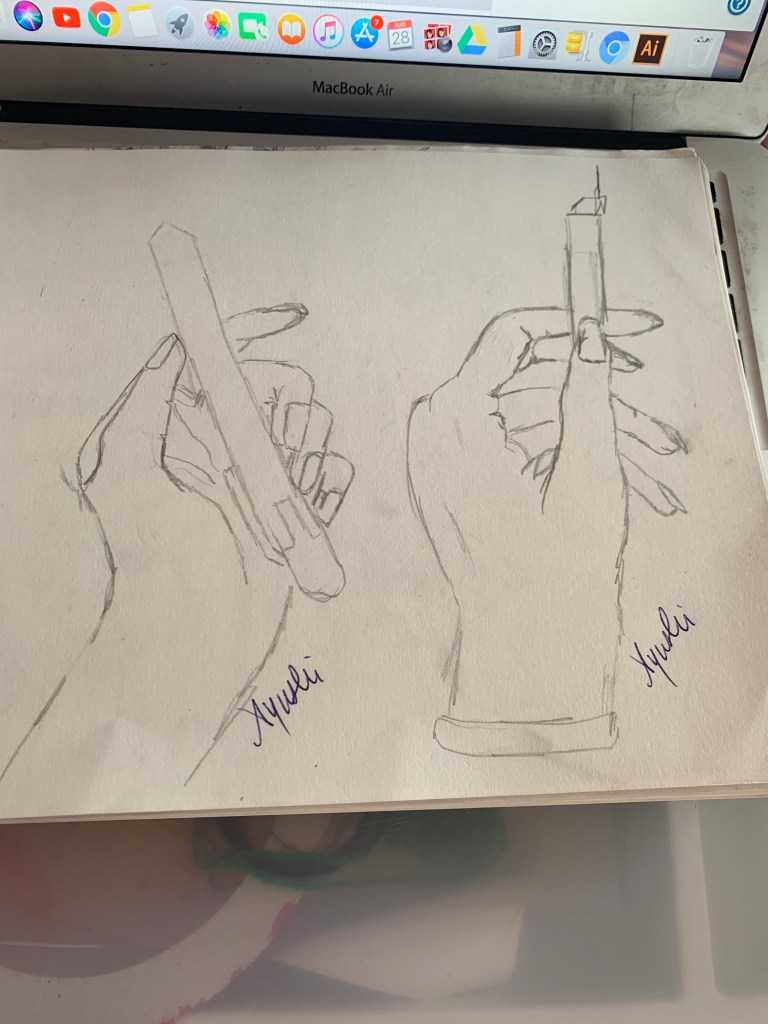
This week, we were taught about different grips. Our hands are accustomed to holding different objects in different ways depending on their size, texture and built. We then explored how these grips would look from different angles. We were told to take pictures of our hands holding different objects and take pictures of us holding that object from different angles. Then, we drew these different angles. These were the grips that I did in class of me holding a pen and cutter:

This exercise taught me how to take a step back and notice.

I noticed how one grip from different angles gives the viewer the same depiction and idea of how exactly the grip could look in reality. These grips not only helped me understand the objects, but also made me understand the object in relation to my hand. Another person’s hand would long different even if the grip is the same, and another’s hand would make the object in their grip look different.

Although I found it quite interesting to draw these grips from different angles, and it was quite easy for me to recreate the grips from different angles. I did, however, struggle with proportions and the different lengths of my fingers and how to make them not look distorted and disproportionate.

Week 5 | 29th August | Sonia Gehlot

As we got introduced to abstraction this week, I learned how abstraction over the years and centuries has changed in several ways. It changed the art world forever, and paved a new path for artists to express themselves. I learned how artist such as Salvador Dali, Vincent Van Gogh, Pablo Picasso use several different abstract art forms such as surrealism, impressionism and cubism to express themselves.

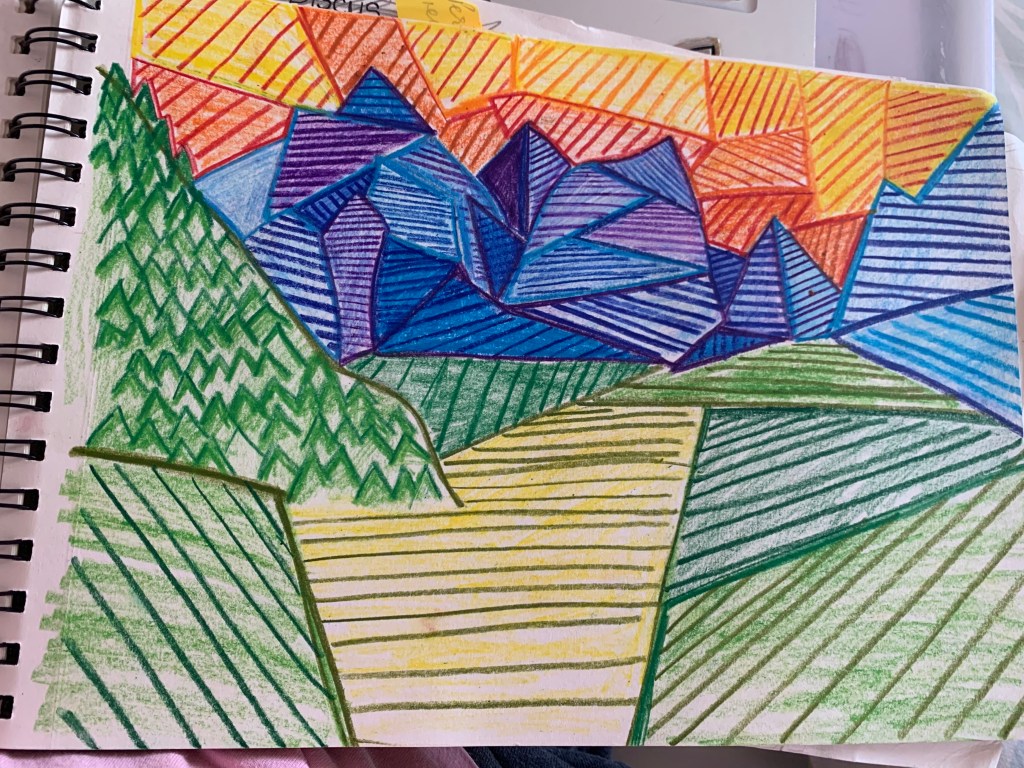
To gauge a better understanding of abstract art, we created a depiction of our favorite childhood memory using basic shapes. As a child, I traveled to Switzerland a lot and remember riding around in a train and seeing the ice capped mountains and green fields as the sun set gradually. This was my very first memory as a child and so I decided to draw it using colour pencils.

Furthermore, we began visualising our hand grips into abstract grips. I learned how to put myself in an abstract artist’s shoes and broaden my imagination in order to create a unique grip. The grip that I chose to replicate one that could hold a hanger for clothes.

I learned how to stray away from the typical hand gesture and be more creative with my grip by thinking of mimicking the same grip in different ways. Like this one:

Week 6 | 29th August 2019 | Sonia Gehlot

As we began exploring different ways in which we could portray hand grips, I got to finally create my first prototype after my technical drawing. I was quite content with my grip because I gave it a stable base and creative structure which did not in an way look like a hand.

The materials I planned on using were wood and LED lights. Below is the technical drawing of my hand grip.


In the workshop, I got to explore with several different machines and had a lot of trial and errors when creating my grip. Sometimes, the size were too small, the base was unstable, or the hook too heavy. In the end, although, I managed to create a proper design and prototype.

Week 7 | 19th September, 2019 | Sonia Gehlot

As we started making our final 3D hand grip, I noticed how wood as a material can be pretty sturdy to use, therefore, instead of using clay and wire (what I used for my prototype) I used wood, this would guarantee a more sturdy and strong grip. To add color and bring out the grip more, I decided to line it with coloured LED lights.

Week 8 | 26th September, 2019 | Sonia Gehlot

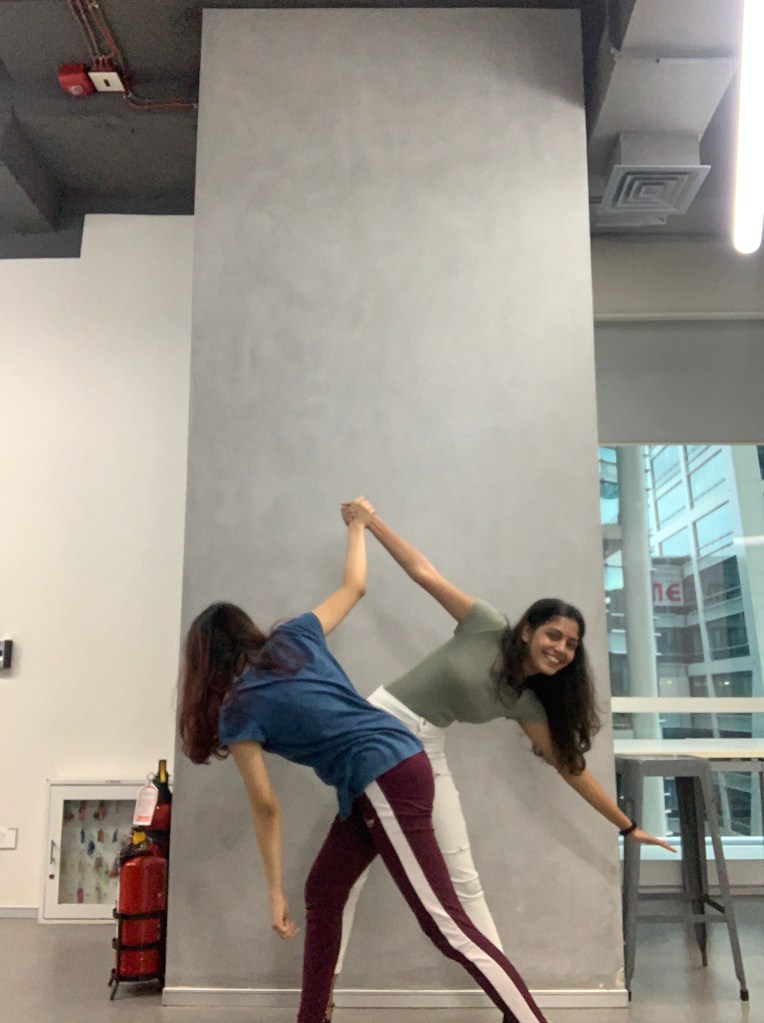
In the eighth week, I learned about the term “Interspaces”. This term means the space between two entities and the connection between them. We were then introduced to our next topic which revolved around this particular idea. In order to explore this concept, we thought of mimicking dance moves, yoga poses and a lot of creative poses to come up with creative ways to portray our final 3D product which connects two things.

The first position we finalised was an Indian folk dance called “Fugdi”.

We chose this position because not only is it really creative, but it also celebrates the Indian folk dance and the beauty of its unique dance moves.

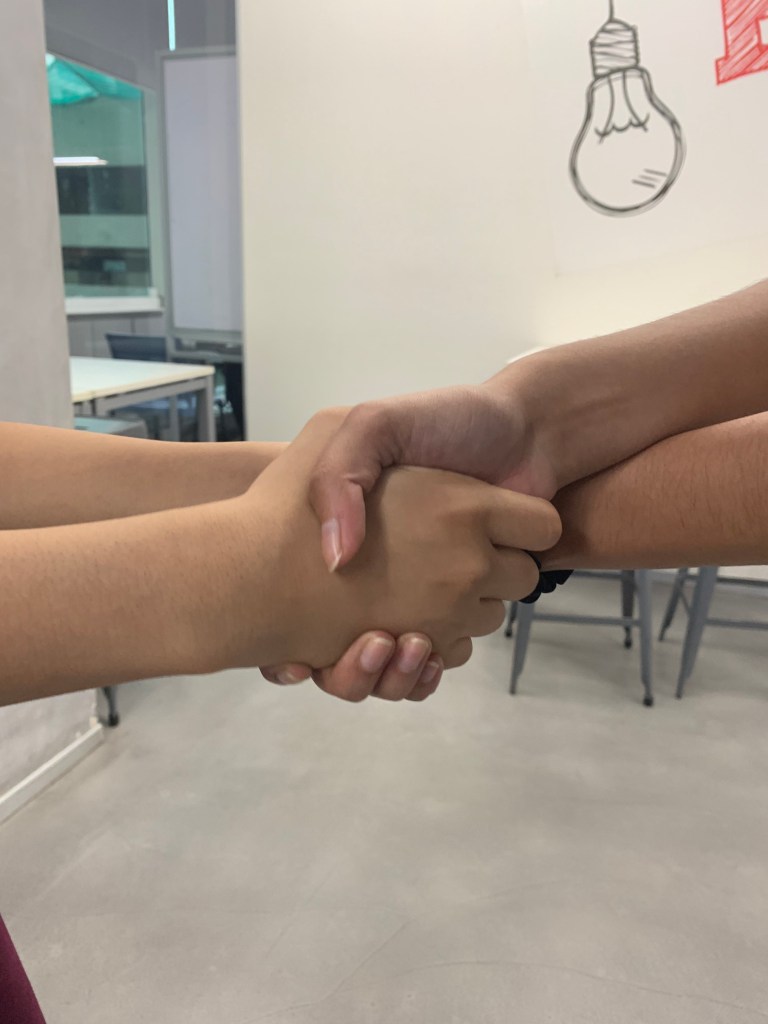
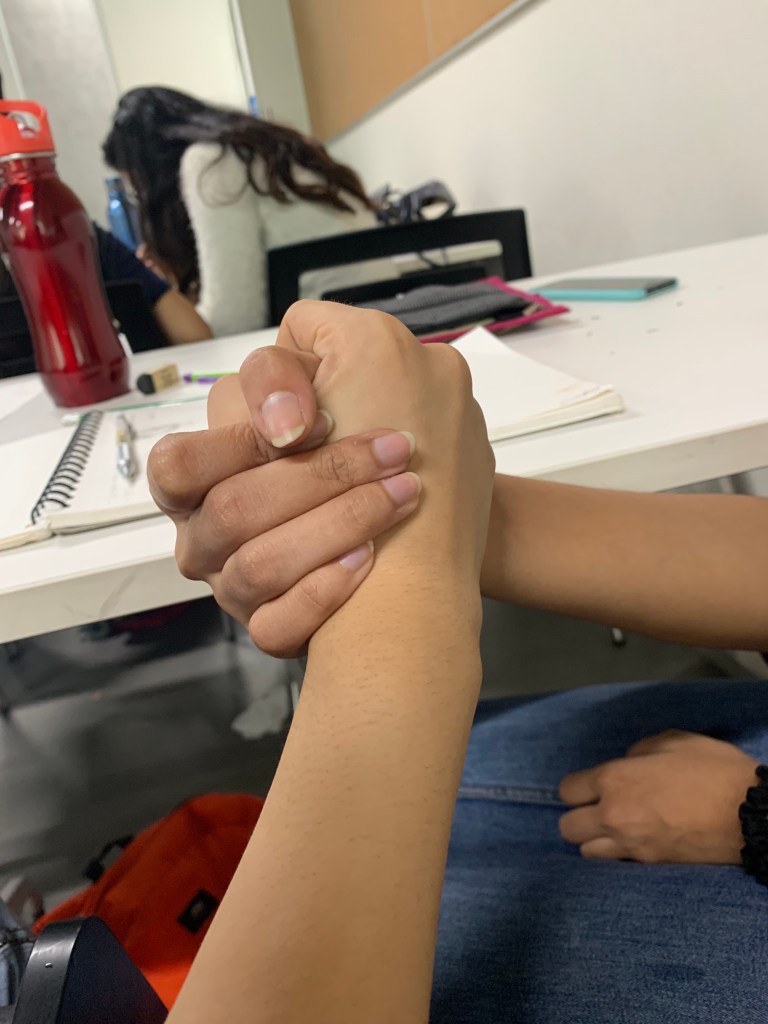
Above are the grips we chose to explore in this unit. We also chose a yoga pose to mimic, we took the position of our hands and the relationship between our legs into consideration for the grip.

A close up of the grip:

Introduction to Journalism

Week 1 | 31st July, 2019 | Orientation

This week, we had our elective orientation. I was given the chance to opt an elective from several different ones in the orientation. I specifically chose journalism as an elective because self-expression is a vital part of not only my artistic journey, but my life itself. I’ve always appealed to self-expression and writing about my art, even as a young girl and am looking forward to being introduced to journalism and several other components that come along with it.

Week 2 | August 7th, 2019 | Radhika Seth

In the first Introduction to Journalism class we went over everybody’s choices when it comes to interviewing a celebrity in the fashion world. I spoke about one of my favourite shoe and accessory designers, Sophia Webster. She invented the “Chiara” shoe design shown below among other unique shoe styles. I chose to research her as homework and look into how she creates her shoe designs and the processes she goes through to market her product throughout various social media platforms and magazines. Below is one of her many “Chiara” designs:

Click here to see the source I got this image from

After talking about our respective fashion celebrities, moved on to a more interactive activity which involved getting into groups to create a fashion magazine or magazine. Our fashion blog/magazine is supposed to have a name, logo, branding, roles (editor, writer, photographers, etc). I took the role of being the writer and the photographer. I have always been a voracious reader and writer and found the writing activity quite intriguing, same goes with photography. We discussed our roles, and shared our ideas about our magazines and fashion styles to include in them.

Week 3 | Radhika Seth

In our third elective class, I learned how to stop pay attention and listen to instructions. It is significant as an artist and a writer to follow instructions in order to comprehend what is going on around us. Without following certain instructions, we may lose focus or track of what is actually going on around us which might derail us into a series of mishaps. We performed an activity which instructed us to read 17 instructions first. As an avid reader and patient person, I read all the way through till the end and manage to understand the goal of the exercise: to pay attention and not be carried away and listen to instructions.

After this energising exercise, we were shown 7 ways in which information can be newsworthy:

  1. Impact
  2. timeliness
  3. human interest
  4. proximity
  5. the bizzare
  6. conflict
  7. and celebrity

These key elemetns taught me how to become a better, more efficient writer. To only include parts which are important when writing and not reporting certain unimportant details that might bore the audience.

Week 4 | Radhika Seth

In our fourth week of our elective class, I learned of an interesting term: SCOOP. I had read several scoops in my life before, but I had never realised that there was a name for it. I learned that in journalism a SCOOP is ” is an item of news reported by one journalist or news organization before others, and of exceptional originality, importance, surprise, excitement, or secrecy.” It is short, concise, brief and gets to the point, engaging the reader immediately.

When I got to write this a scoop, I explored ways in which I can use the same language as journalists and really broadened my perspective on journalism as a scoop, despite its brief length still has to be informative. At first, this was hard to do, but then later on, as I kept writing, I was able to comprehend how to express myself in similar terms.

Week 5 | Radhika Seth

Today’s lesson taught me how to be a more confident person and how crucial it is especially for a journalist to be confident when talking to people. The activity we did in the very beginning of the class (trust fall) taught be how to not only be confident, but be confident in other people by trusting them. A major part of becoming a journalist is being confident in who you are and portraying yourself to the world in a fearless way. You have to be quick, witty and smart. As a journalist, you have to indirectly be in control of the interview, never give the interviewee the control but still make them feel comfortable enough to carry on with the interview.

In order to gauge a better understanding of this, we watched on of the videos in which our professor was interviewing people in Singapore for the Red Dot awards. I learned how important it is to be confident when interviewing people, that your confidence that radiate a comfortable aura between you and the person you are talking to.

Week 6 | Radhika Seth

With our knowledge about everything we had learned in our journalism class, it was time to use that knowledge to create our own journalism article interview. I chose to use Stella McCartney as a subject. At first, it was overwhelming to write an article, but as I kept writing I found it easier to mould myself into a journalist’s voice, because I love writing and talking to people so much.

Here is the link to my final article: https://docs.google.com/document/d/1e_QVowlPBk5Wv44o8w3ZjWZZNbfYzpqcI5Ad1Q3Azjw/edit

Week 7 | Radhika Seth

In this class, we talked more about our next project: creating our fashion magazine. We had to do more hands on work in this class. I learned about team work, taking control over my tasks and communication. As we assigned our roles (reviewer, editor, rehash, etc) to each other, we discussed our magazine designs and worked more on elaborating our ideas. Communication was a key element that I learned in this class, it was important for our group to communicate despite misunderstandings and confusions.

Week 8 | Radhika Seth

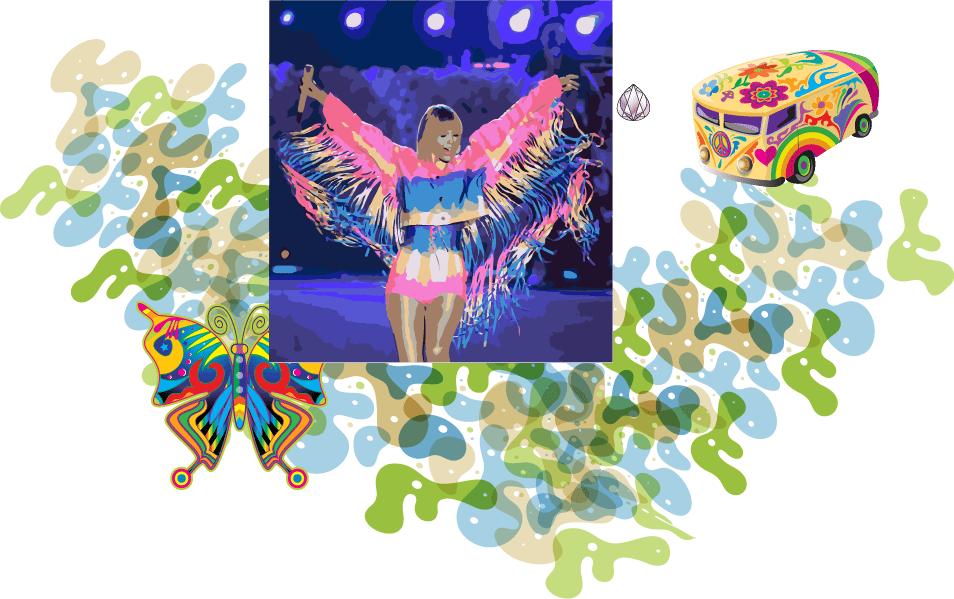
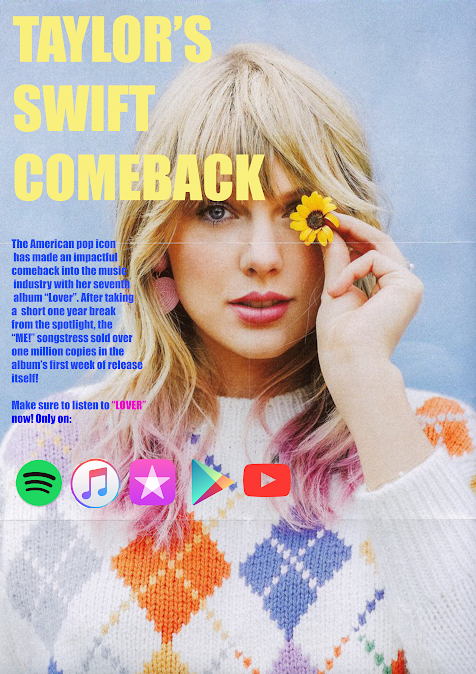
As we dove into our magazine making project, we decided upon coming up with a central celebrity theme, like all magazines have. The celebrity we chose was Taylor Swift. I decided to work on writing an article on her latest album and her career so far, as well as coming up with a look book that shows all of her styles and looks in the past era. I also decided to create an ad, promoting her latest album, Lover.

I decided to go ahead with my look book, encompassing the theme of shoes and rings that Swift has worn this past year. It showcases the brand and the prize as well as a picture of her wearing it. I decided to focus on accessories rather than just clothing to make the magazine as diverse and interesting as possible.

This topic was really fun to do as it not only improved my journalism and magazine making skills, but allow made me more adept at using photoshop.

Week 9 | Radhika Seth

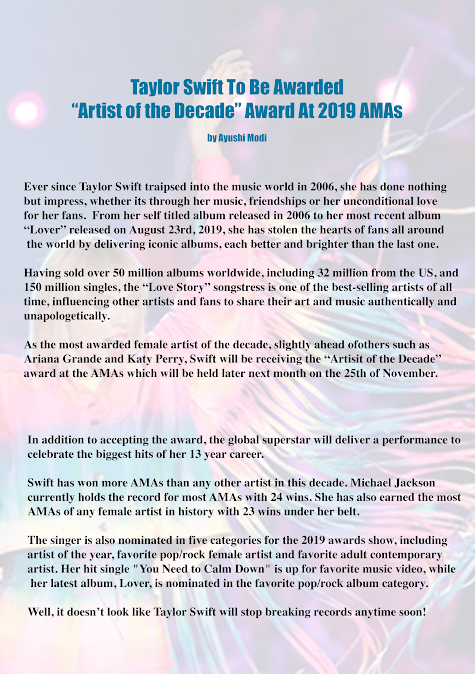
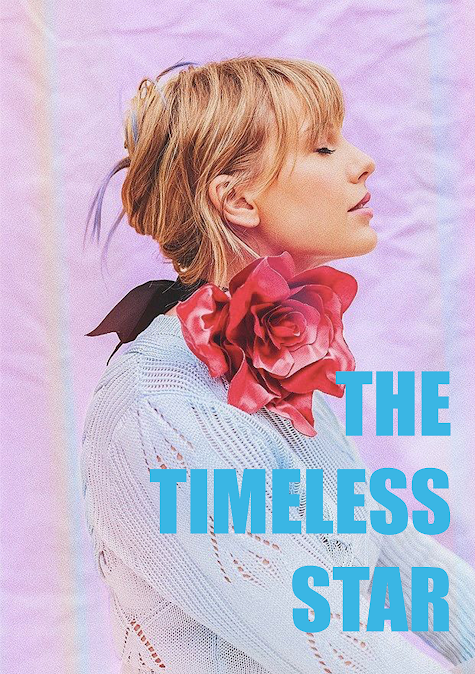
This class was dedicated to bringing everything we worked on together and formatting our magazine. I brought my finished Taylor Swift article. I found this article quite easy to make, because not only do I love to write, but also because Swift is one of my favourite artists. Writing about her came naturally. I created a cover page for her article called “The Timeless Star” referencing her rise to stardom at a very young age and her never-ending and successful career. I wrote an article about her most recent accomplishment – winning the Artist of the Decade award at the AMAs.

While writing this article, I learned a lot about how to format it even as I was writing. I realised that every article needs a hook to seize the audience’s attention, an introduction, a body and a concluding line to wrap it all up.

Week 10 | Radhika Seth

In our tenth week of our Journalism class, we wrapped our final finishing touches to our magazine and formatted it correctly to show our first draft. I learned a lot in these three weeks. The different writing styles i magazines and websites, like scoops, interviews, articles and reviews. I learned about how these elements come together in different ways to make a whole magazine. I also learned different aspects that make each writing style unique. For example, scoops are small and brief, interviews have questions and answers mainly asked by a journalist, an article has introductions, hooks, body with a lot of information, and a concluding line or paragraph to end it on a good note. Taking this course was really educative and informative, and I will carry the skills I learned in the past weeks with me to use in the future as a writer.

An advertisement I made about Taylor’s Lover album:

Imaging

Week 1 | 30th July, 2019 | Prasad Joshi

Rasters Vs Vectors
In the first Imaging class we contrasted rasters and vectors by teaming up and researching each one’s weaknesses and strengths.

Raster graphics consist of pixels, which are the smallest addressable elements on a screen. Most pictures we see on screen are raster images, such as GIFs, Jpegs, and PNGs. They make up movies, TV shows and photographs. The more detailed an image, the larger the file capacity. The resolution of these images is expressed in terms of the number of pixels in a column times the number of pixels in the row. For instance: 1920 x 1080 px.

Vector Graphics, however, consist of paths and lines, instead, and can be maximised and minimised upto 20% with the quality of the image still in check. They are constructed with mathematical formulae instead of pixels and can be used for graphics that require resizing. Vector graphics are used in PDFs, AIs, and EPS.

Adobe Illustrator Software
In the first imaging session we also learned the very basics of the Adobe Illustrator software. We explored what each tool in the tool bar can depict on the art board. We also learned shortcuts to access the tools. Such as “V” for the Selection tool, “A” for the direct selection tool, “P” for the pen tool, etc.

Week 2 | August 6th, 2019 | Prasad Joshi

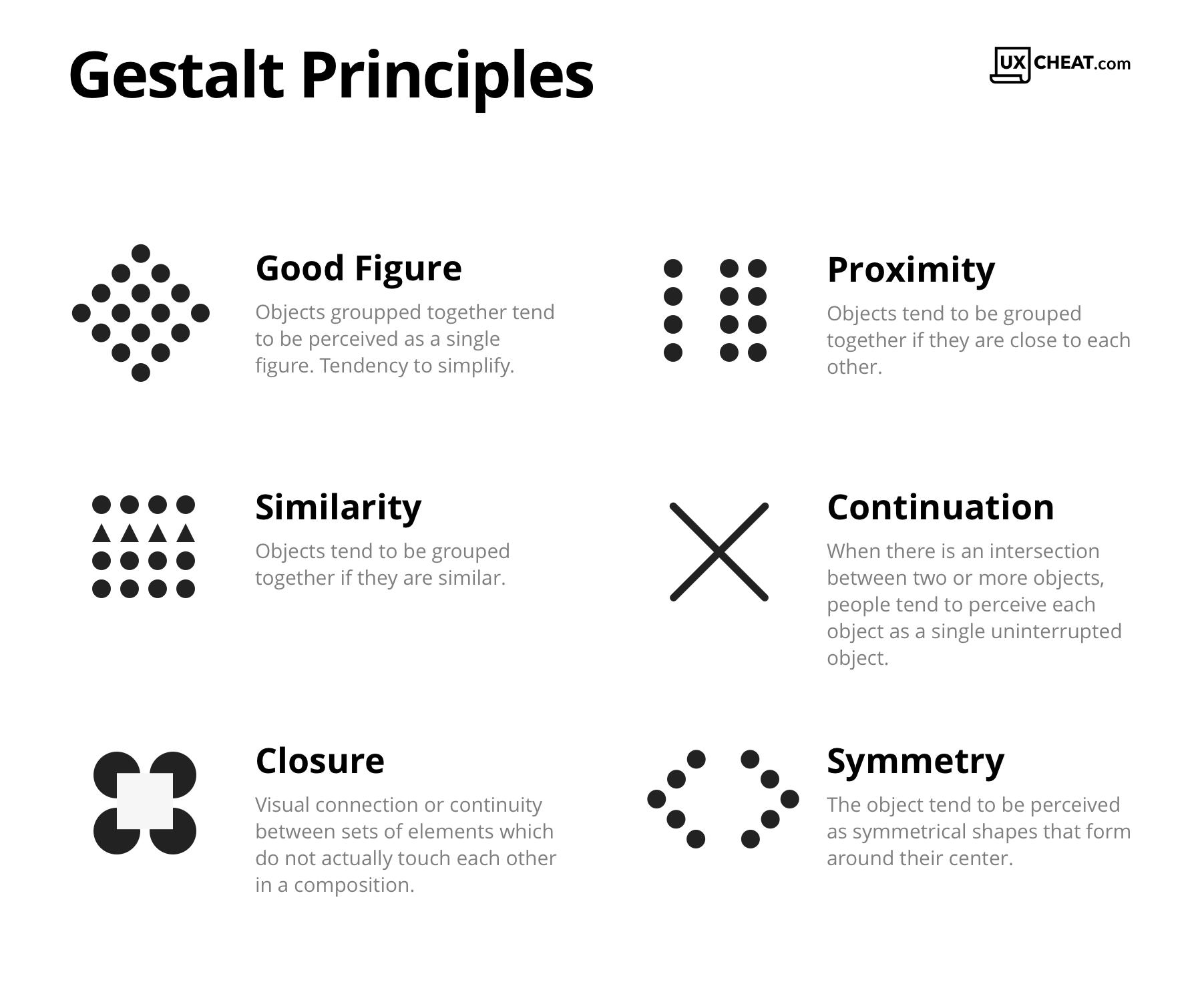
In the second week of imaging classes, we were taught of the Gestalt principles. Gestalt principles are a set of principles in psychology and in art that explore how humans perceive patterns and designs in compositions. There are six different gestalt principles:

Click here to see the source of this image

These principles in psychology overlap with with art. Humans have an inherent way of classifying patterns, objects, forms and figures without even realising it. These principles help artist convey ideas and make art and designs.

Homework:
We were told to explore Adobe Illustrator by creating a poster which explores at least one of the gestalt principles.

Week 3 | August 13th, 2019 | Prasad Joshi

In the third week of Imaging, we were told to present our posters, the ideas behind them, and the principles used to create them.

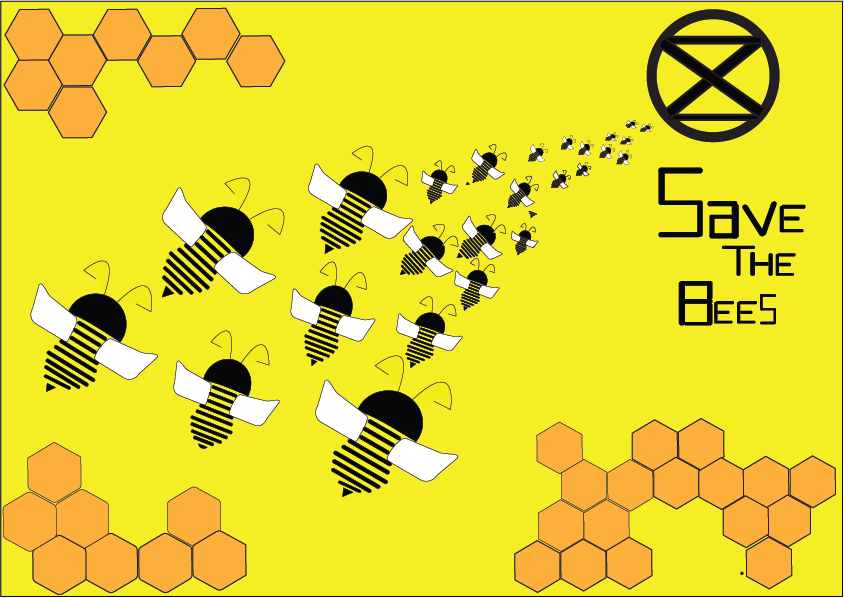
My Topic revolved around the idea of “Save the Bees”. Bees are under a huge extinction threat in the 21st century and it is important for us to save them, because they pollinate plants and create more vegetation for humans to survive. Without bees, there will be no humans. Therefore, I made a poster that revolved around the idea of bees slowly moving towards extinction to make the audience realise the severity of the situation.

My final Poster 1 Save the Bees

Gestalt Principles:
The principles that I used were closure (in the body of the bees), continuity (with the bees are moving towards the extinction symbol), repetition (in the bees and the hexagons), and symmetry (in the body of the bees).

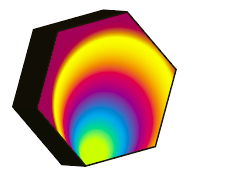
After presenting all of our posters, we were taught how to use the blend tool on Illustrator. I explored how it can be used to create several different designs and also took advantage of the colour wheel in the blend tool to create different effects. Below is a little bit of my experimentation:

Using the skills we learned in this class and previous classes, we were told to create a poster of our choice with these tools. I chose to explore these tools by creating a music album poster for one of my favorite artists: Taylor Swift:

In the background, I learned how to use the gradient window to create different gradient effects. I chose to use pastel and neon colors because that is the theme of the artist’s next album. I used the blend tool for the “AUG 23” writing, the rest was created by using the pen tool.

At first, I struggled while using the pen tool. I forgot to close the paths and therefore it was too late for me to fill color in different parts of the drawing.

Week 4 | August 20th, 2019 | Prasad Joshi

In week four of imaging we were introduced to more tools such as the image tracing tool, the clipping mask tool, the brush tool, ad the different symbols in our ilustrations. We were also taught how to make our own brush. This is how my exprimentation looked like in class:

I learned that the image tracing tool, can make things way easier for an artist to trace things, although the pen tool allows more control and dexterity.

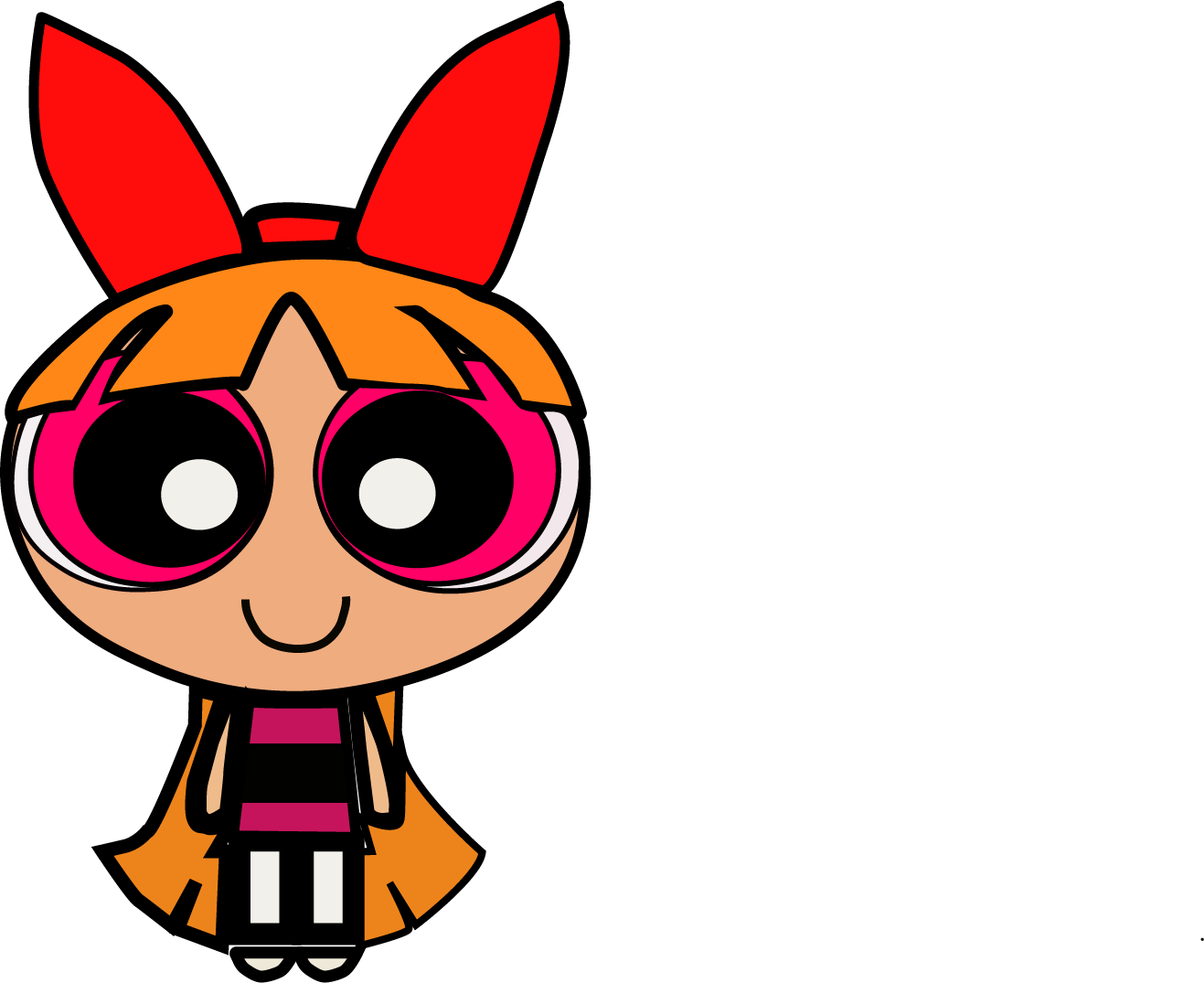
Blossom from the show Powerpuff Girls

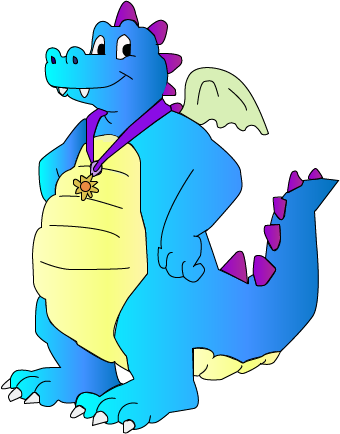
Since I enjoyed creating my first cartoon character, I went home and created two more. I traced Ord from Dragon Tales and Princess Ariel from The Little Mermaid. Recently, Disney casted a black woman as Ariel, and a lot of people had a lot to say about it. Some showed support, some showed hate. I chose to support this amazing casting for Ariel and decided to create a modernised and a more representative version of the Disney princess Ariel.

Princess Ariel
Ord from the show Dragon Tales

This time, I learned to close my paths, and make more layers to keep my illustration more organized, so that it’d be easier for me to fill in the body with colors. I am quite happy with how it turned out. I hope that in the future, when I learn more tools and get more accustomed to illustrator, I will be able to add more detail to my illustrations.

Later on, we learned how to use the clipping mask tool and create different effects. I chose to depict a different image that related to each word and painted a picture in the viewers mind.

As homework, we were told use the skills we learned in class today and create a third poster. I decided to create a movie poster for the upcoming Wonder Woman 2 movie.

Week 5 | 27th August, 2019 | Prasad Joshi

In order to put the tools we learned last class to use, (image trace, clipping mask and brush tool and text) I decided to make a movie poster on the upcoming Wonder Woman movie comping up next:

I found an image of the comic version of Wonder Woman online and image traced on illustrator, adding colours to the hair, body and face, the paint brush tool was also used to create the star in the background and the clipping mask tool for the text effect. The gestalt principles used in this poster were: closure and symmetry. The image trace tool made things quite easy to create, although using the pen tool would be more helpful to create accurate and precise depictions.

As we got to creating our fourth poster, we were told to incorporate all of the tools we had learned so far. This is the poster I made by the end of the class:

This poster was centred around the idea of women empowerment. The women in the middle are those who inspired me as a women to follow my dreams and be who I am – a designer. I tried to incorporate all the tools that we were taught thus far in class. The gestalt principles used in this poster were continuity, good figure, closure, and proximity.

Week 6 | 10th September, 2019 | Prasad Joshi

Today was our first day working with photoshop. We learned that the difference between photoshop and illustrator is that illustrator is based on vectors, whereas photoshop is based on pixels. Therefore, photoshop is used more when editing images and to create raster based artwork. Illustrator, however, is used more for creating logos, designs and graphics, instead.

When photoshop was first introduced, it was a little difficult to work with it because there was some difference between the tools, certain settings and functions. It was more varied and vast. However, once we delved into, I could easily work my way around it and figure it out. We were taught of the the basic tools again, such as the shape tools and free transform that can distort the images, create perspective, scale, rotate, skew, or warp and image.

Integrative Seminar

Week 1 | 29th July, 2019 | Meenal Sutaria

Design can be art. Design can be aesthetics. Design is so simple, that’s why it is so complicated.”  -Paul Rand

What is design?
In the first integrative seminar, we explored different approaches to defining the term Design. Amidst the contemporary, progressive and ever-changing world, the word design has developed several different connotations. It can be patterns, a way of self expression, graphics, or even mathematical algorithms that make up a website. Each definition is idiosyncratic to its perceiver.

So what gives us, as individuals, the agility to resonate with certain designs, but not so much with others? Why do some people prefer to wear retro outfits instead of vintage? Why do some people denote “kurtas” as formal wear, whereas others may think of a pantsuit as formal wear instead?

As we begin to observe how design reverberates in the world, we can notice how different cultures, ways of up-bringing, environments, societies and social groups can play a role in instigating varied perspectives in design, therefore making each definition relative to its interpreter. Design, unlike a mathematical solution or science, possesses different perspectives, like a kaleidoscope with different viewpoints.

Reaction Vs Reflection
During this seminar, the terms reaction and reflection were contrasted. A person’s reaction to something takes into consideration her feelings about a certain topic or idea wherein she is given the chance to evaluate it. Whereas a reflection, is a way to express what one learned from the topic and what can be taken away as knowledge to be applied in the future.

Design and Literature (Activity)
Design and literature can co-exist. Everything on the design spectrum from paintings, fashion trends, drawings, architecture, etc, possesses the capability to evoke emotion. In this activity, different poetic devices were explored, such as Haikus, limericks and 7 word descriptions. We were exposed to visuals such as photographs, ink wash paintings, and drawings and told to write about them through the poetic techniques learned in 60 seconds, with serene music playing in the background. This activity insinuated how certain depictions can invoke emotions, ideas and responses in the viewer. Furthermore, the music playing in the background also played an important role in interpreting a depiction. It created a more peaceful ambience which instilled rather positive emotions in the audience despite some tragical photographs and paintings shown.

Week 2 | August 10th, 2019 | Meenal Sutaria

In the second week of the integrative seminar, we explored the evolution of self-expression and communication. We discussed the means of communication and how they have changed overtime. For example, we contrasted emails and letters. Apart from the technological differences in the two different media of communication, there’s something about handwritten letters and the format of the medium that appeals to the tactile senses. We discussed how different tactile sense and cognitive thinking methods can resonate more with readers than emails which don’t hold any tactile emotional value. There is a strong sense of engagement and personalisation in handwritten letters which appeals to people’s emotions.
Similarly, twitter, one of the biggest social media platforms of the 21st century also holds significant power in communication. Despite its limitedness when it comes to words, politicians, celebrities and the general public use is to communicate with the world. Therefore, these different types of media give people platforms to reflect. Reflection, as discussed in our previous class is an important aspect of creating art, music, stories, etc. It helps us process information and understand it more.
Homework:
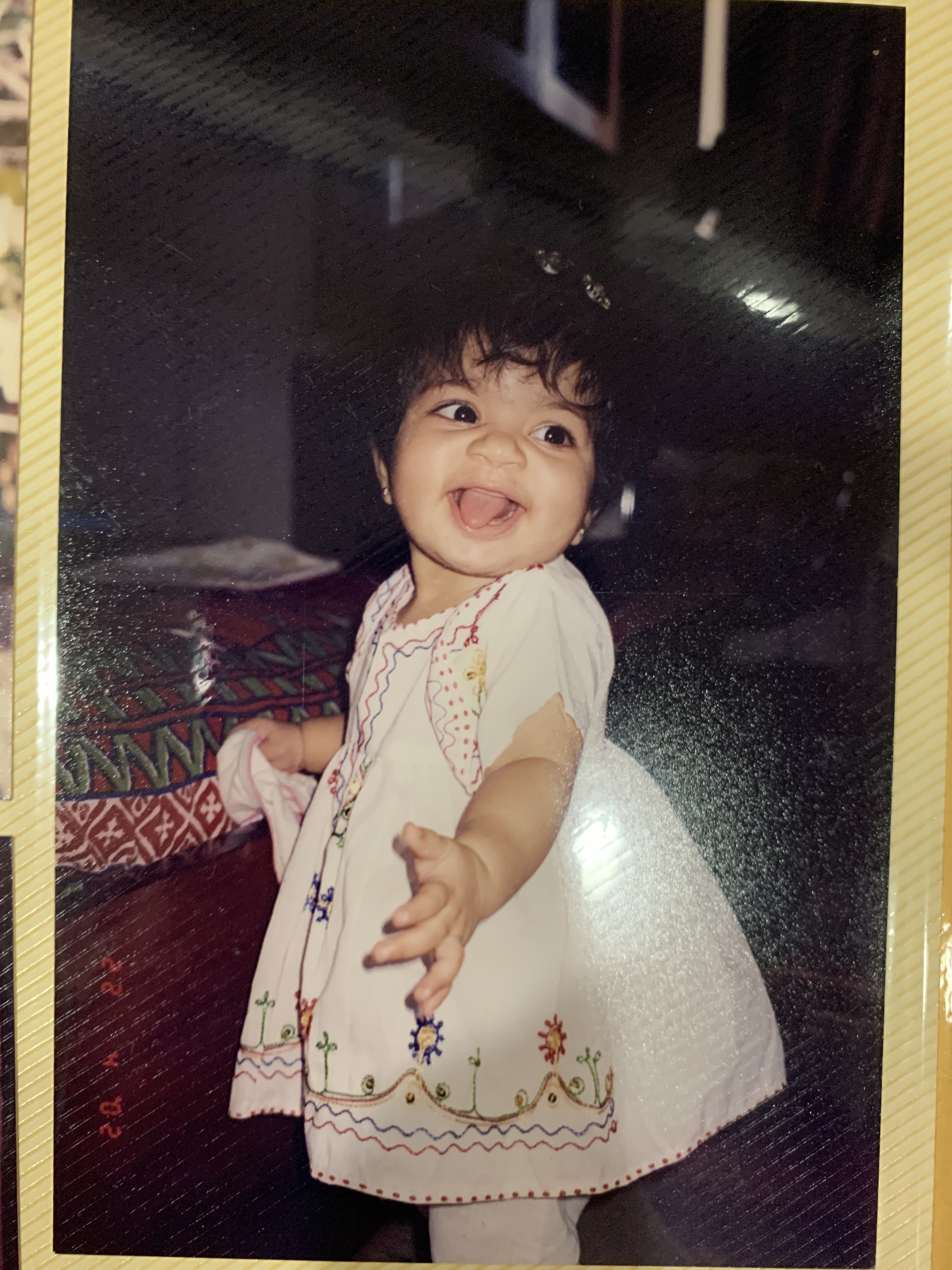
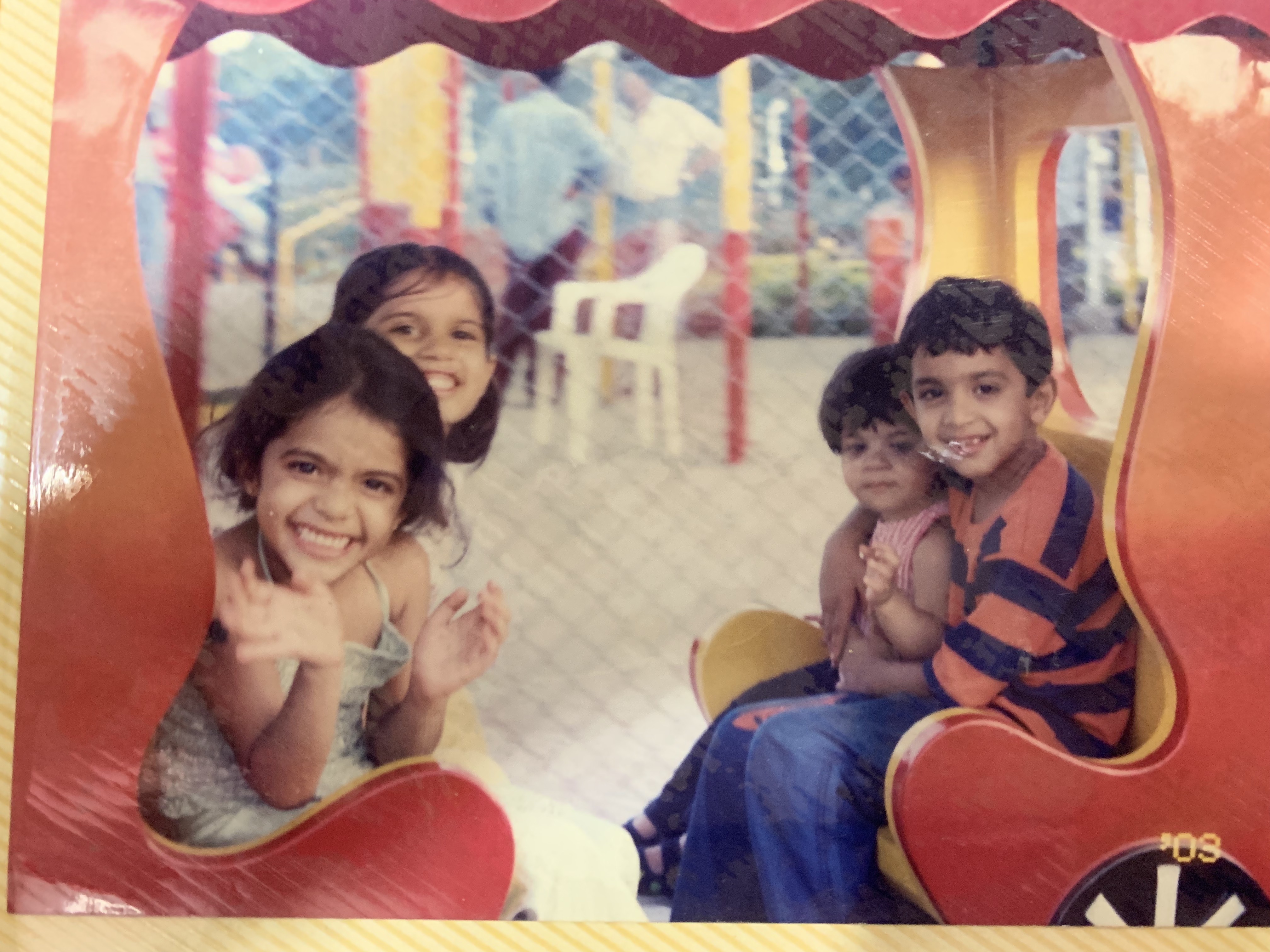
As homework today, we were told to pick three different pictures from our family albums and reflect on each one with the help of different writing styles or poetry styles. Below are my photographs and writings.

A 1 year old me

  1. A Simpler Time (Poem)

Wasn’t it simpler back then?
Looking at the world through a Masked lens
Shadowed by innocence and Cheerfulness?

Spinning like a girl in a little White dress
Not worrying about cleaning Up your own mess
Wondering what cartoon might come on TV next
Oh, wasn’t it just the best?

All your worries seemed lightyears away
Every morning brought a brighter day
Tell me, wasn’t it simpler that way?

Me with my cousins, circa 2003

2. Reminiscing (Haiku)

we play with toy trains
paper boats and paper planes
Splashing in the rain

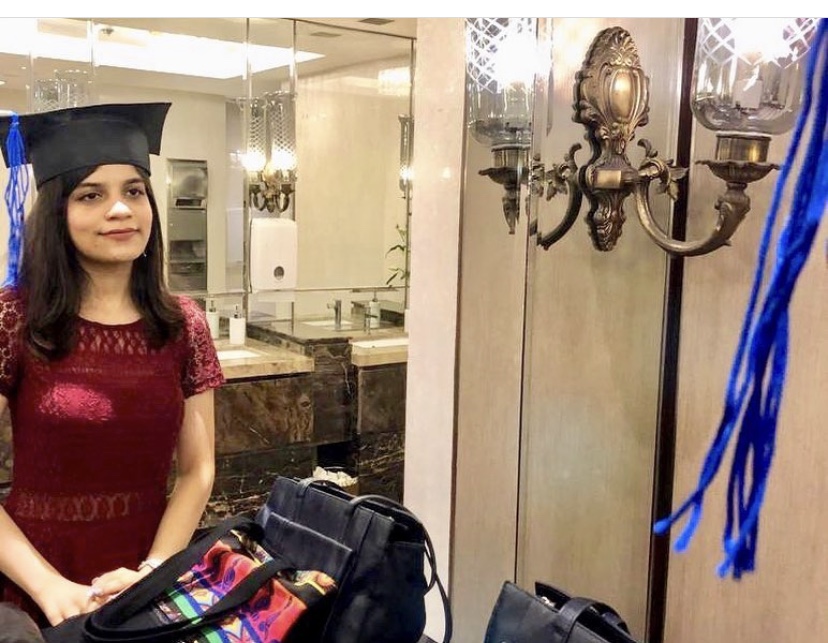
Me on Graduation day, 2019

3. Graduation Day (Letter)

Dear me,

This really had been a long time coming. All the hard work and sleepless nights have finally be paid off with the throwing of a hat and by being handed a diploma. But it was all worth it in the end, all worth the long nights, 7am exam papers, and the dreadful tears. The performance anxiety, nervous laughter before presentations, and leg shaking stops here. Now, you may follow your passions and work hard for what you believe in, what you love to do truly with your whole, entire heart. You’re lucky, you know that?

Sincerely,
You

Week 3 | August 12th | Meenal Sutaria

“I cannot make you understand. I cannot make anyone understand what is happening inside me. I cannot even explain it to myself.”

-Franz Kafka, Metamorphosis

In the third week of our seminar class, we discussed Metamorphosis by Franz Kafka. We explored the themes, symbols and metaphors within the novel. George Samsa, who turned into a vermin when he woke one morning from bad dreams shares strong parallels with the author of the novel. We gauge how Kafka personifies themes of isolation, abandonment, dysfunctional family relationships, and miscommunication. The bug is used as a catalyst to convey these themes and motifs.
After understanding the use of metaphors in Metamorphosis we were given the task to create metaphors about ourselves and then turn them into art in the studio.

Cover of Metamorphosis by Franz Kafka

These were the metaphors I created about myself:

I am a spiral in the eye: I am a very confused and indecisive person

I am a kaleidoscope of butterflies: I am lively, cheerful and flamboyant

I am an unguarded castle: I open up to people very easily.

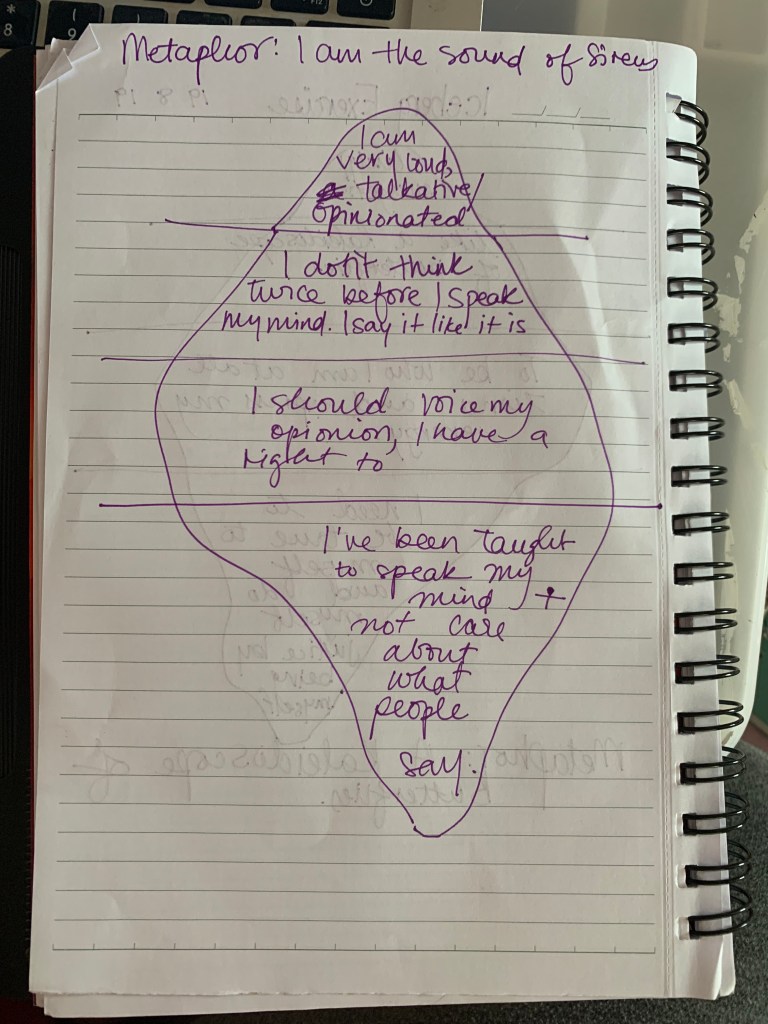
I am the sound of sirens: I speak up loudly and proudly about what I believe in and am unapologetic about it.

I am the wind: I am calm, yet relentless and unpredictable.

I am a raven: I am confident and free.

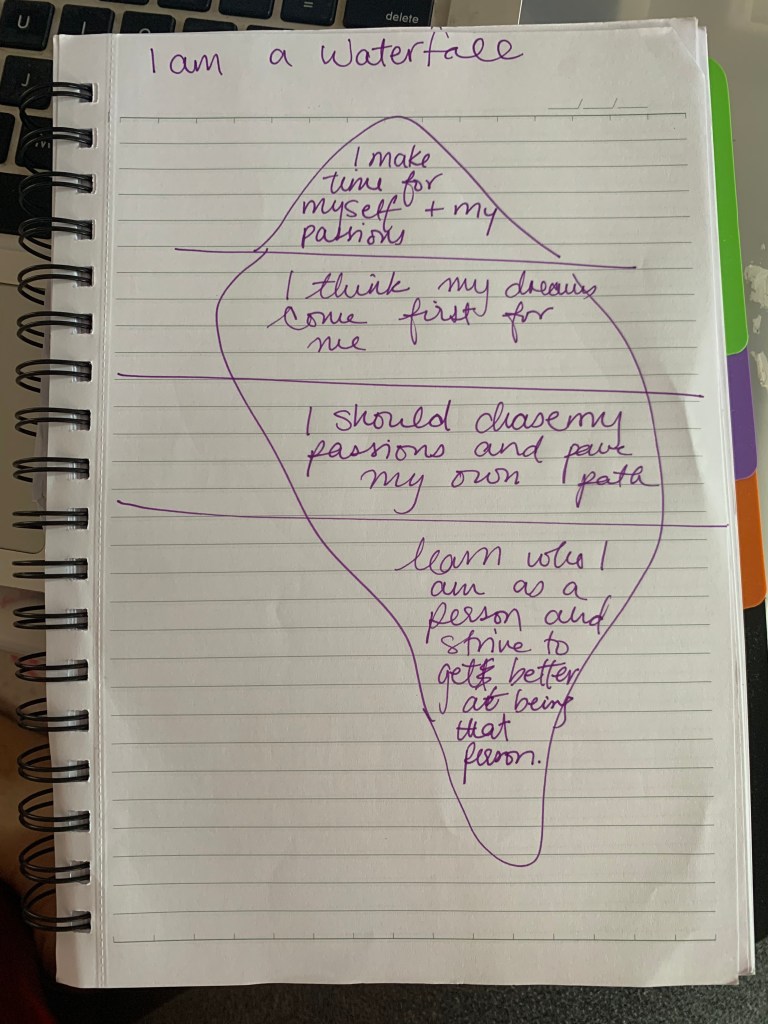
I am a waterfall: I pave my own path and am ambitious.

I am an unfinished: I am uncertain.
I am a constellation: I am very organized and I have figured myself out

I am the tide: I am impatient.
This exercise made me question who I am not in the literal way but in a figurative manner, and ironically somehow, this helped me make more sense of myself and who I am.

Week 4 | August 19th, 2019 | Meenal Sutaria

This week in our integrative seminar class we learned to take ourselves less seriously and more figuratively. The metaphors that we came up with in our previous class were evaluated and we were instructed to break down our thought processes, beliefs, and values behind those metaphors through the iceberg exercise. We were told to portray one of our metaphors as the tip of the iceberg and then break it down from there on.

At first it was hard to differentiate between my values, thoughts and beliefs, but the more I dwelled on who I am as a person, the better I got to understanding my metaphors and the reasonings behind them.

Below are a few of my icebergs for my metaphors:

Week 5 | 26th August, 2019 | Meenal Sutaria

As we discussed sections 2 and 3 of The Metamorphosis in class today, I learned how similar certain aspects of a book can be to our real lives. I realised that just like Gregor, we all manifest our characteristics and traits by relating it to something. We, as humans, are complex and multifaceted creatures. We all are the same, yet so unique. We seek figurative definitions and metaphorical concepts to define who we are more clearly. It’s astonishing to see how these can be used as catalysts to better understand who we are.

One other thing that I learned was also perspective. Despite the state Gregor was in, each family member in his house had a different perspective on his sudden appearance. The father was distant, which can be a symbol of the mislaying bond between him and his son. The mother was sympathetic towards Gregor and didn’t lose hope for him to turn back into his old self, which can show how she as a mother is sensitive and shares a strong bond with her son. His sister, Grete on the other hand had a very complicated perspective on Gregor’s appearance. At first, she tried to connect with him and fend for him, but then later grew to despise him. This can be a symbol of how superficial, conditional and fleeting love can be in a family that bases a person’s worth on how much they earn.

This novel also explores the materialistic nature of love within some conservative families, and the bitter truth about it. In a way, Kafka could draw the readers into the novel and make them sympathise with Gregor.

Week 6 | 9th September, 2019 | Meenal Sutaria

The WHO AM I? exercise helped me take myself less seriously and be content with who I am, more. Ironically, this also made me understand myself a little bit more, but in a figurative manner, rather than a literal one. It made me realise, “I am who I am, and shouldn’t that just be enough?” Instead of pining over other personalities, I should be happy with the one I have and not seek for happiness in others’ validation. Writing this essay also helped me delve deeper into the complicated mess of a girl that I am, a mess that makes me, me.

I learned that just like Gregor, I am complex, and people view me differently. Some may think I’m shy, some may think I’m outgoing, but these opinions don’t matter to me, as long as I know who I am deep down and truly understand what makes me who I am and be proud of it.

Week 7 | September 16th, 2019 | Meenal Sutaria

In this week, we gave a peer review of our essays. I realised how crucial it is to learn about other people and read about them and what makes them who they are. Peer review is also a great responsibility to reflect on yourself and contrast your ideas with others’. Its important to give constructive feedback in order for people to reflect on their work. We as humans improve with critical comments as it can help improve not only the way we create our work, but how we can create it in the future. Therefore, reviewing is really significant.

When I got my peer feedback back, it helped me immensely. I learned about the areas that I might excel at and be good at and areas I might still need to work on a little bit more. I really got to understand how to make my work the best version of itself with this exercise. Getting feedback from my peers was effective because we I to discuss and reflect on the aspects I could improve on and the aspects that needed improvement in the future, too.

Week 8 | Meenal Sutaria

In the eighth week of our seminar class, after we settled into our groups for our next project, I, along with the rest of my group got the chance to brainstorm on certain attributes and aspects of any city of our choice and identify and discuss as a group what makes these traits unique to the city. As we brainstormed these ideas, I learned how the same city can be perceived so differently by people. Each attribute is idiosyncratic to its perceiver and therefore unique. Aspects like culture, people, occupation, food, art, music, etc is what makes a city what it is, and discussing this in class taught me the true beauty of perspective and furthermore understanding the different perspectives of my classmates.

Week 9 | Meenal Sutaria

In this week of our seminar class we began discussing how each place or city can be identified differently by different people and how certain experiences of a person in the city are idiosyncratic and personal.

I learned about how research gap is a research question or problem which has not been answered appropriately or at all in a given field of study. It depends on how you gather information (Qualitative or quantitative). Mindlessly collecting information of ideas cannot be considered research, which is why it can be confusing at first.
When people don’t know something, its called “Knowledge gap”, not research gap. And in order to increase your knowledge on all of these aspects, people take surveys, questionnaires, etc to build their knowledge. This information can be unbiased and can lead you to your goal in research or any form of knowledge.

What I gathered from this lesson is that in order to gain credible knowledge, you must know where it is coming from and whether or not the source is reliable or not. Knowledge or a piece of information can be gained in multiple manners and ways, not just one and knowledge and research and two broad aspects that can be investigated widely, too.

Week 10 | Meenal Sutaria

In this week, we learned about our observational skills and how it is crucial to be a good observer in order to be a good creator and designer. When you visit a place, you observe and register things about it that no one else does in the same way. Each and every person observes differently, which is why what makes each experience unique.

When observing a city or any place, we realise that there are key elements that make it unique and observational. We identify New York City because of its wonderous skyline or Mumbai as the city that never sleeps. All of these observations are made by people and humans who decode the city in their own idiosyncratic manner and give it a definition. This is what makes the city different in each person’s eyes.

Week 11 | Meenal Sutaria

As we went about exploring particular parts of our city of Mumbai, our group explored Kala Ghoda. We discussed the questions and the observations we could ask the people in that particular district. The questions revolved around the aspect of occupation. We were interested in the diversity of Kala Ghoda and the different job opportunities it can offer and the different people that it brings along with it. In order to explore this, we created questionnaires in order to understand the different perspective of these people.

This gave us a broader understanding of the place and the different people in it and helped us understand why people choose to do certain things in the area and why certain people chose to not.

Week 12 | Meenal Sutaria

After making several visits to Kala Ghoda, we decided to pick pictures and write poems about these specific places with regard to photos which we ourselves took while we visited the place. This activity helped me gather a better understanding of the city and poetry can help you put broader and more complex ideas and aspects into words that can really resonate with you and the readers as well. I enjoyed writing these poems as they helped me reflect on the different parts of Kala Ghoda and what makes it so unique.

Busy Streets and Busy Lives

Streets lined with cars and lights

Surrounded by buildings standing upright

Doors are jammed, closed on sundays

Taxi cabs and crowded roads, stacked with railways

The walls of the buildings speak of a time before

Victorian-Gothic architecture, seeping from the walls

Readers come here, to get lost in a foreign land

Locals know this place like the back of their hand

Trees arch their branches, yearning for the sky

While the leaves hang from them against the overcast sky

The air is clean and refreshing

Feeling like you’ve gone back in time through a 

Time machine

There’s art that screams of time and culture

Bright and bold and vibrant with colors

Glamorising the melanin in our skins

And celebrating the traditions that come from within

The sarees and kurtas worn in the artworks

Exude one of the most festive cultural perks

They tell a story about each character

Like an artistic metaphor 

Week 13 | Meenal Sutaria

Kala Ghoda is a District in the city of Mumbai, blooming with culture, art, and
diversity, which makes it the perfect place for us to explore a large variety of aspects
such as food, people, architecture, fine arts, and several different landmarks. Below, we decided to record the artistic life of Kala Ghoda by turning our thoughts into questions to ask people:

Questionnaire
1.) How would you describe the culture of this area using 5 words?
2.) Do you think artists in the area encompass the essence of Indian culture and how?
3.) How crucial fo you think art is to the identity of Kala Ghoda?
4.) Street art is being used as a mode of expression more now than ever. Do you think
people are encouraging of this form of art?
5.) How do you think Kala Ghoda has become the hub for artists? Is it because of its
annual festival or vice versa?

I learned how in order the get to know an area completely, it is significant to ask questions and wonder why beyond the surface of things. Because art is a huge part of Kala Ghoda, I was deeply interested in learning about this aspect

Week 14 | Meenal Sutaria

These are the two poems I wrote for Kala Ghoda. Two things that were really striking about the place were the art and its architecture. I loved the Neo-classic and Victorian Gothic architecture in the city which gave the city ironically a very modern, yet archaic vibe. Creating poems about this area has made me not only a better writer but also a better observer and understand what makes an area unique and identifiable.

Week 15 | Meenal Sutaria

As we began wrapping up our final studio and seminar work, we got to reflect on a lot of things we learned about as people. We learned about team work, time management, and work load. We also could grasp a better understanding of the area we were exploring. I personally learned to notice more, begin to understand why people from certain areas act the way that they do and how different aspects like people, food, architecture, fine arts, and landmarks are interrelated and affect each other. This unit taught me how to view things beneath the surface, to observe everything, question everything and not look at everything through a singular lens, but like a kaleidoscope, with different perspectives and viewpoints.

Integrative Studio

Week 1 | 29th July, 2019 | Malvika

Integrative Studio

“Simplicity is not about making something without ornament, but rather about making something very complex, then slicing elements away, until you reveal the very essence.” – Christoph Niemann

Christoph Niemann

The first Integrative Studio class brought about a different perspective for me on the world of art. When people think about the term “art”, they probably picture an intricately made painting with complex colour palettes, shading, and value. However, illustrator Christoph Niemann shows us a different, more simplistic side of art-making in his Ted Talk “You are fluent in this language (and don’t even know it)”. He proposes that as an artist, the onus is on the audience to interpret the artwork and process it in their minds since it is possible for artists to invoke emotions into their viewers. This ted talk proposes the possibility of art psychology and how artists tend to manipulate their work in such a way that it can resonate with their audience and instil thought and emotion, all with less complexity and more simplicity.

Above is an example of one of Christoph Niemann’s artworks called “Roll”. We can notice how Niemann manipulates a common bread roll and appeals to his audience’s imagination by portraying it as a man’s chin and beard. This can suggest how the audience’s interpretation of the artwork is a significant part of the artwork, too.

Lines and Dots (Activity)

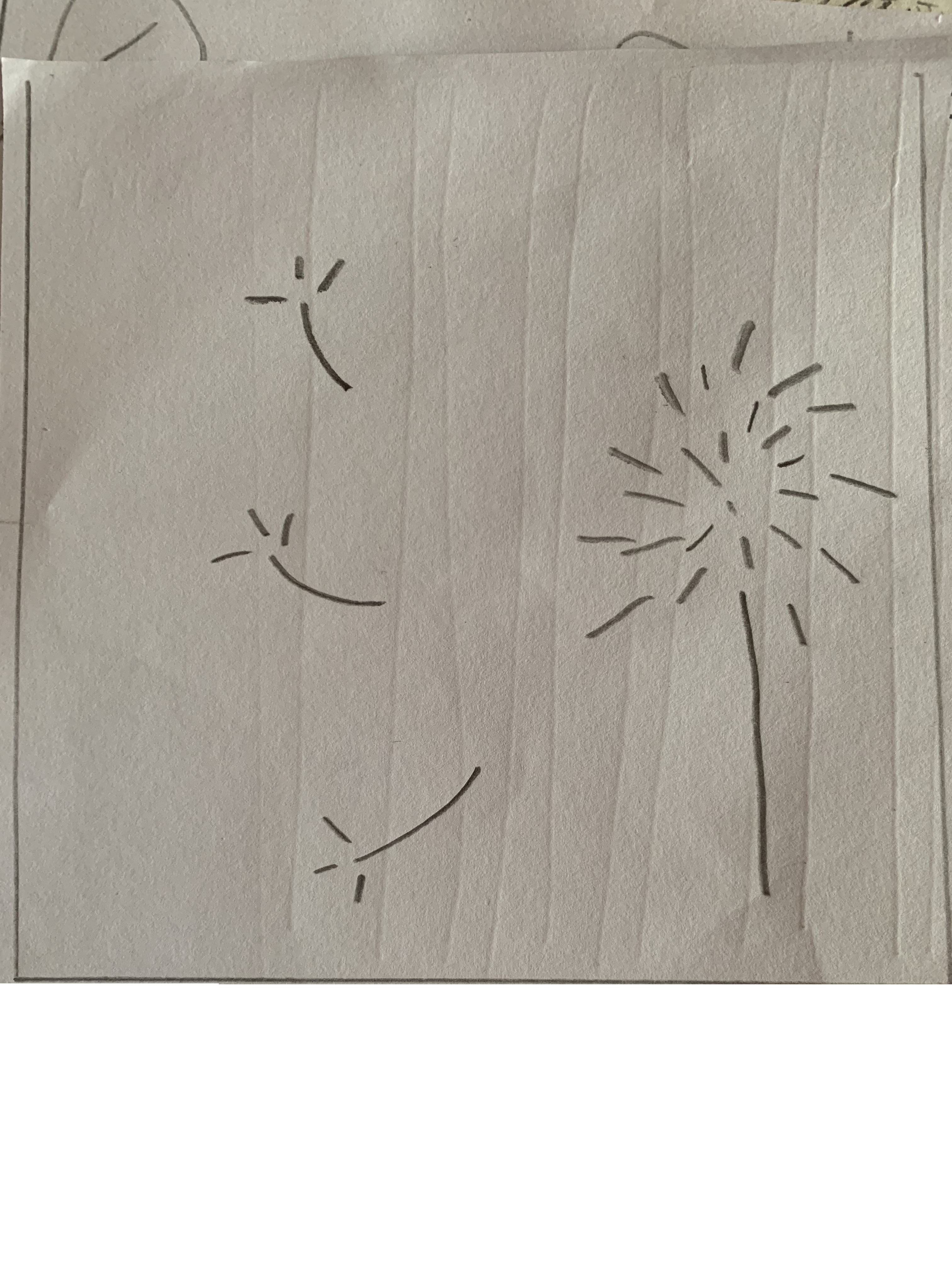
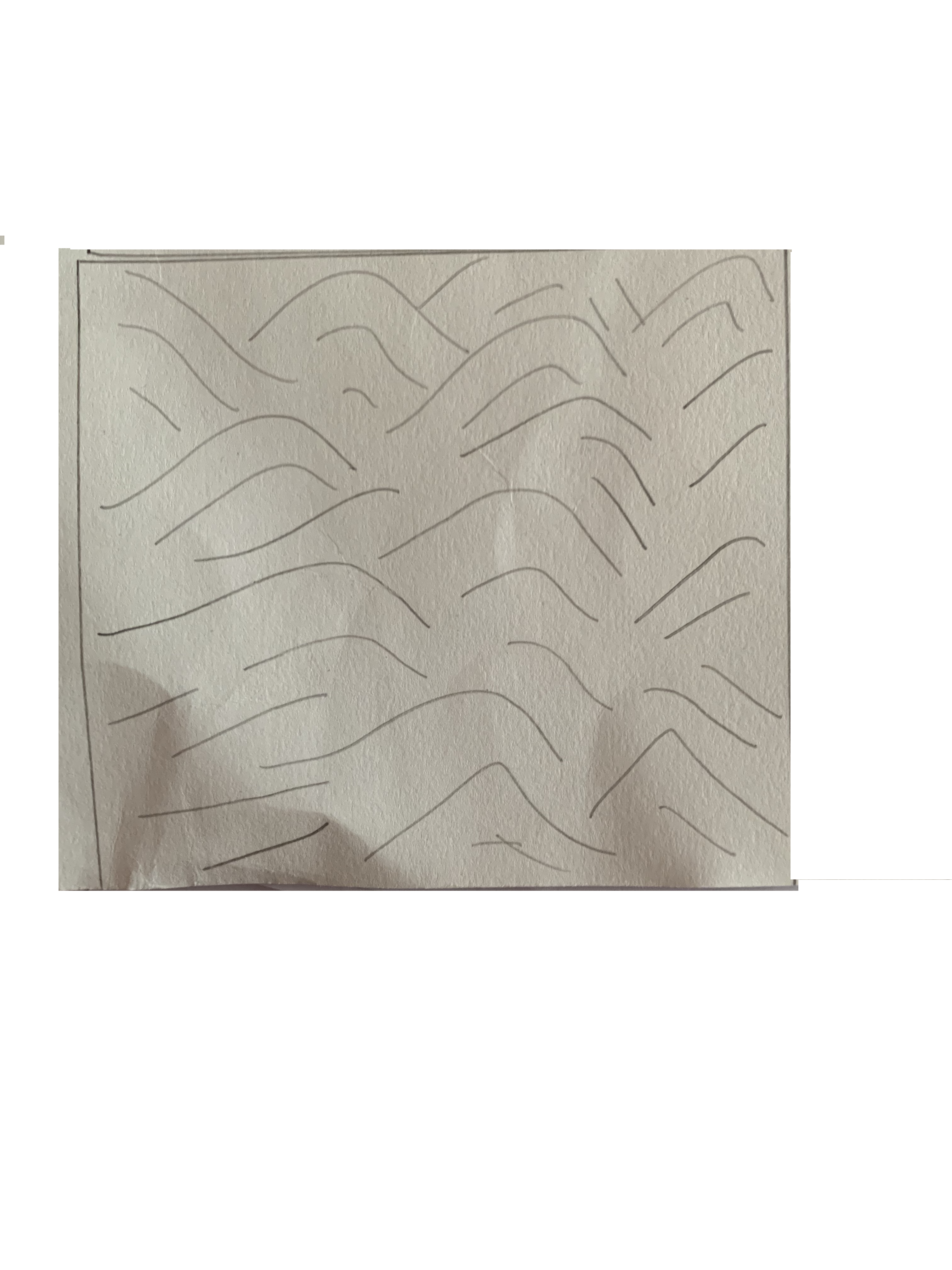
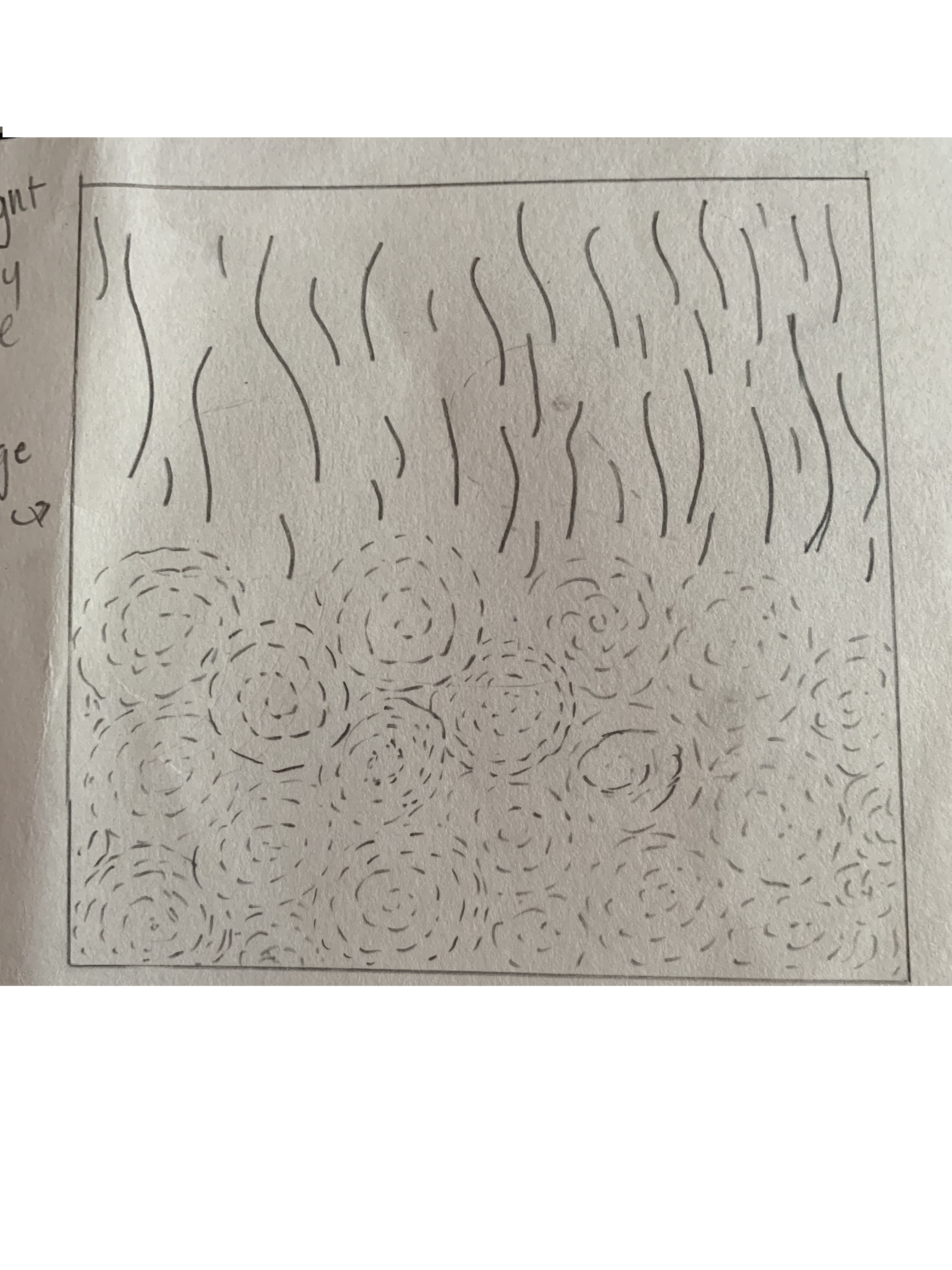
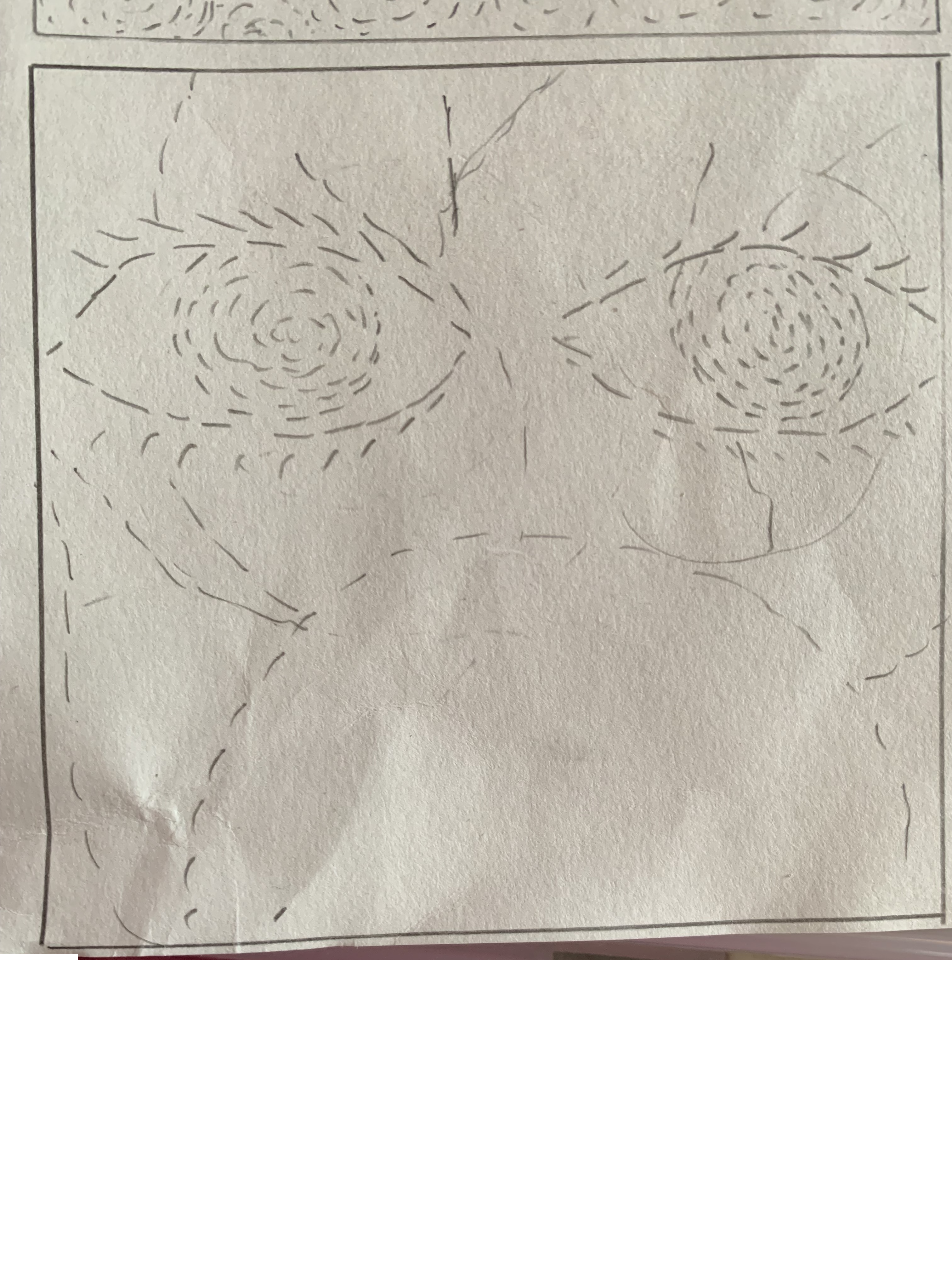
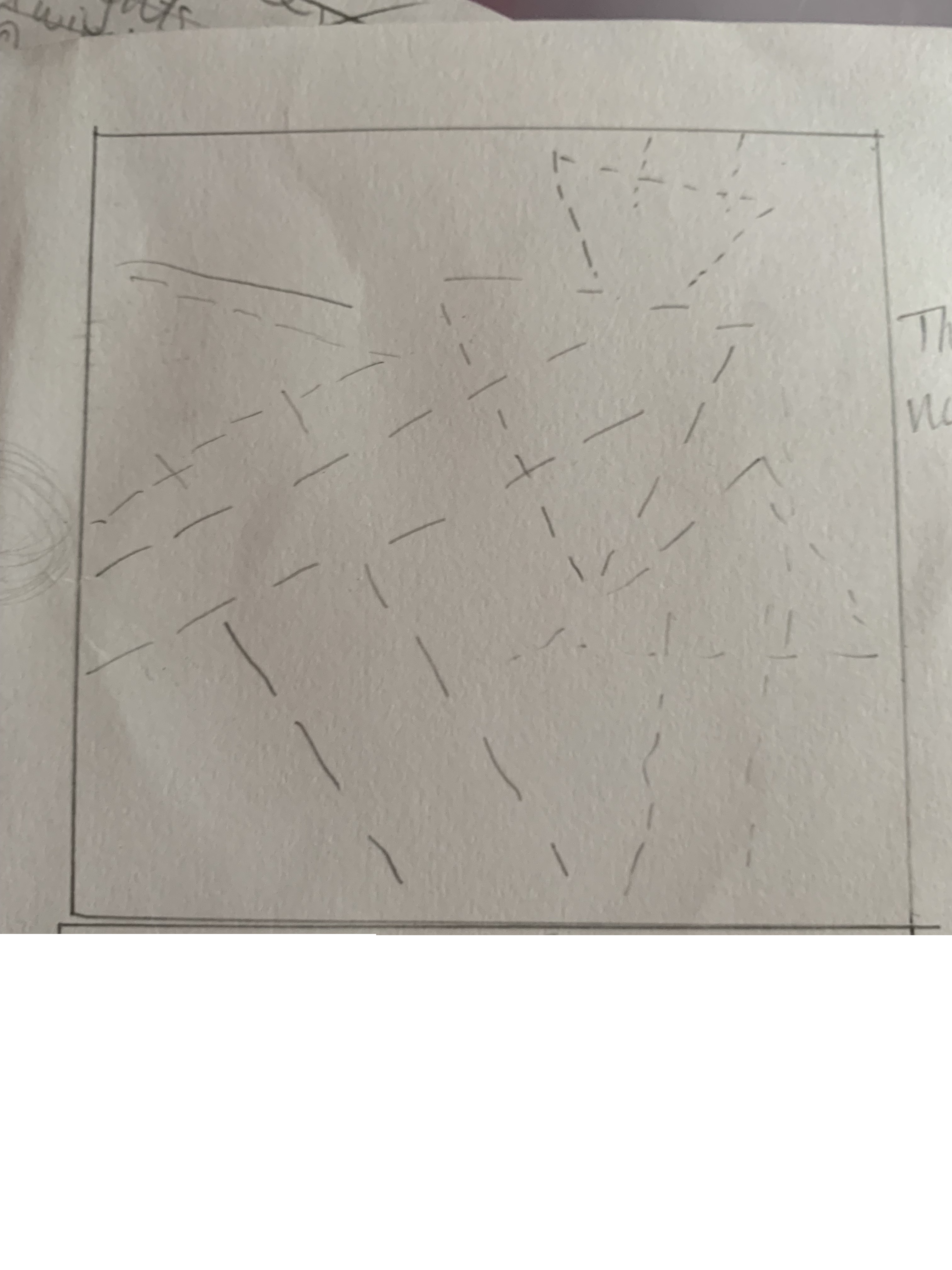
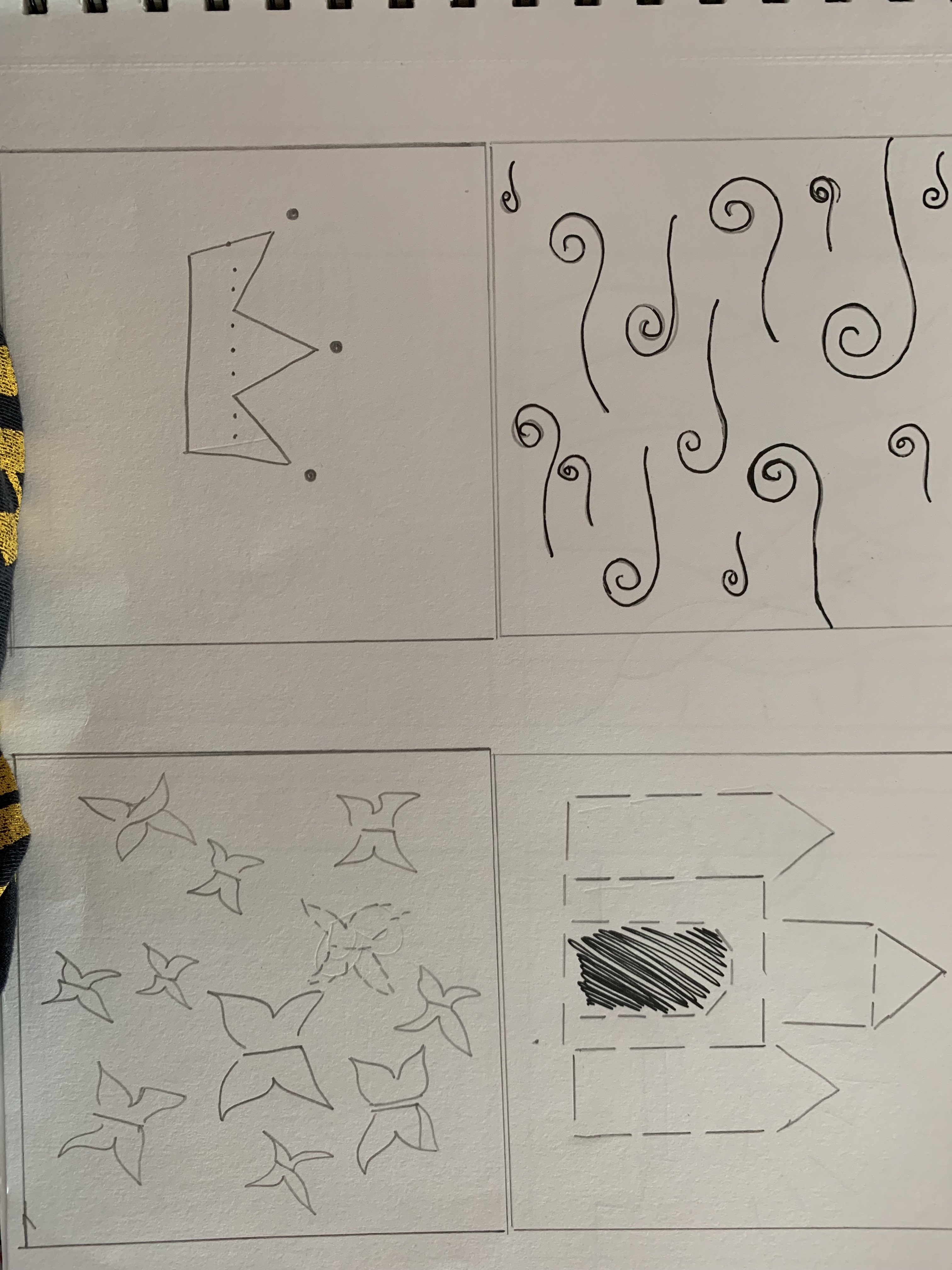
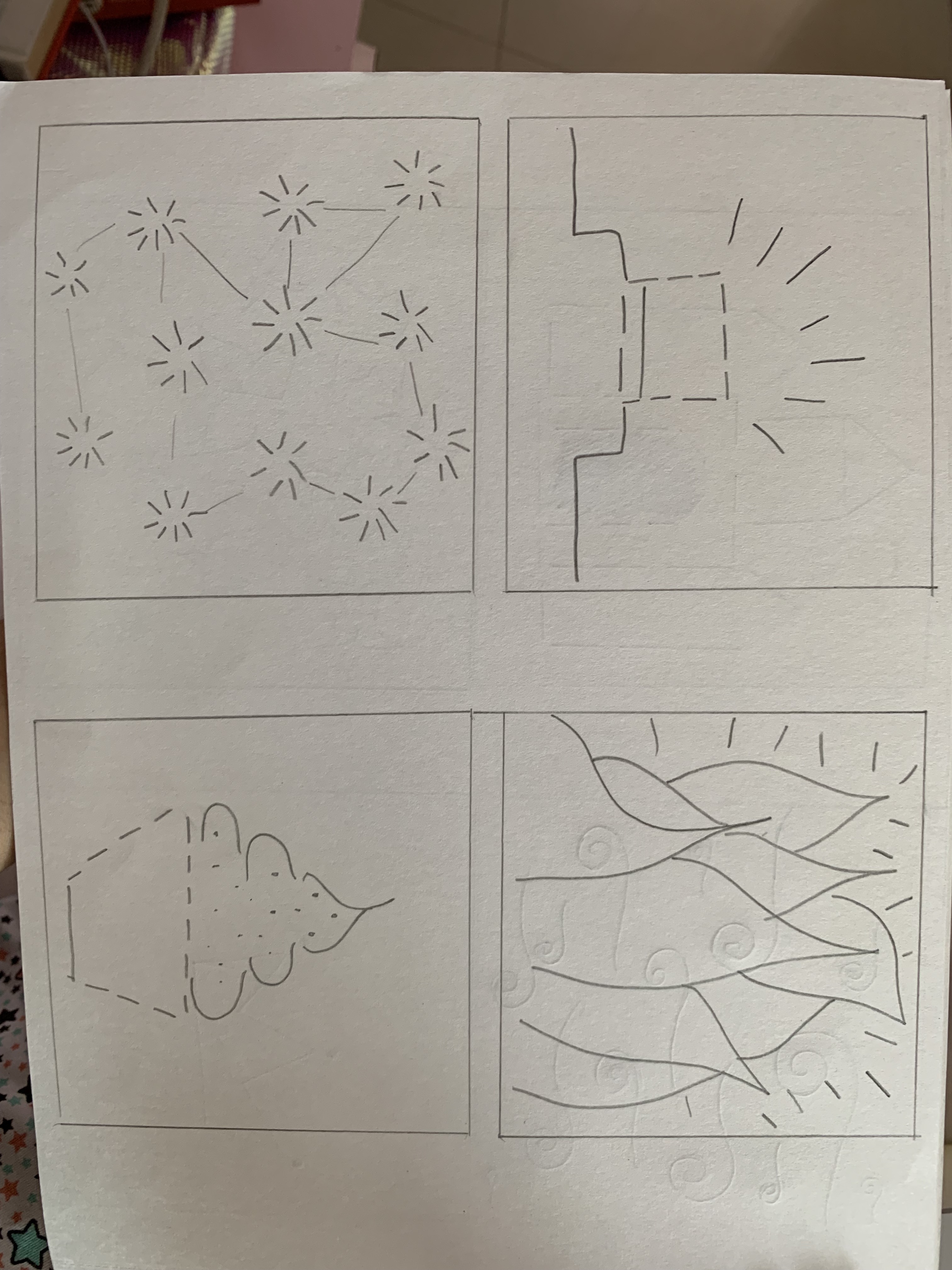
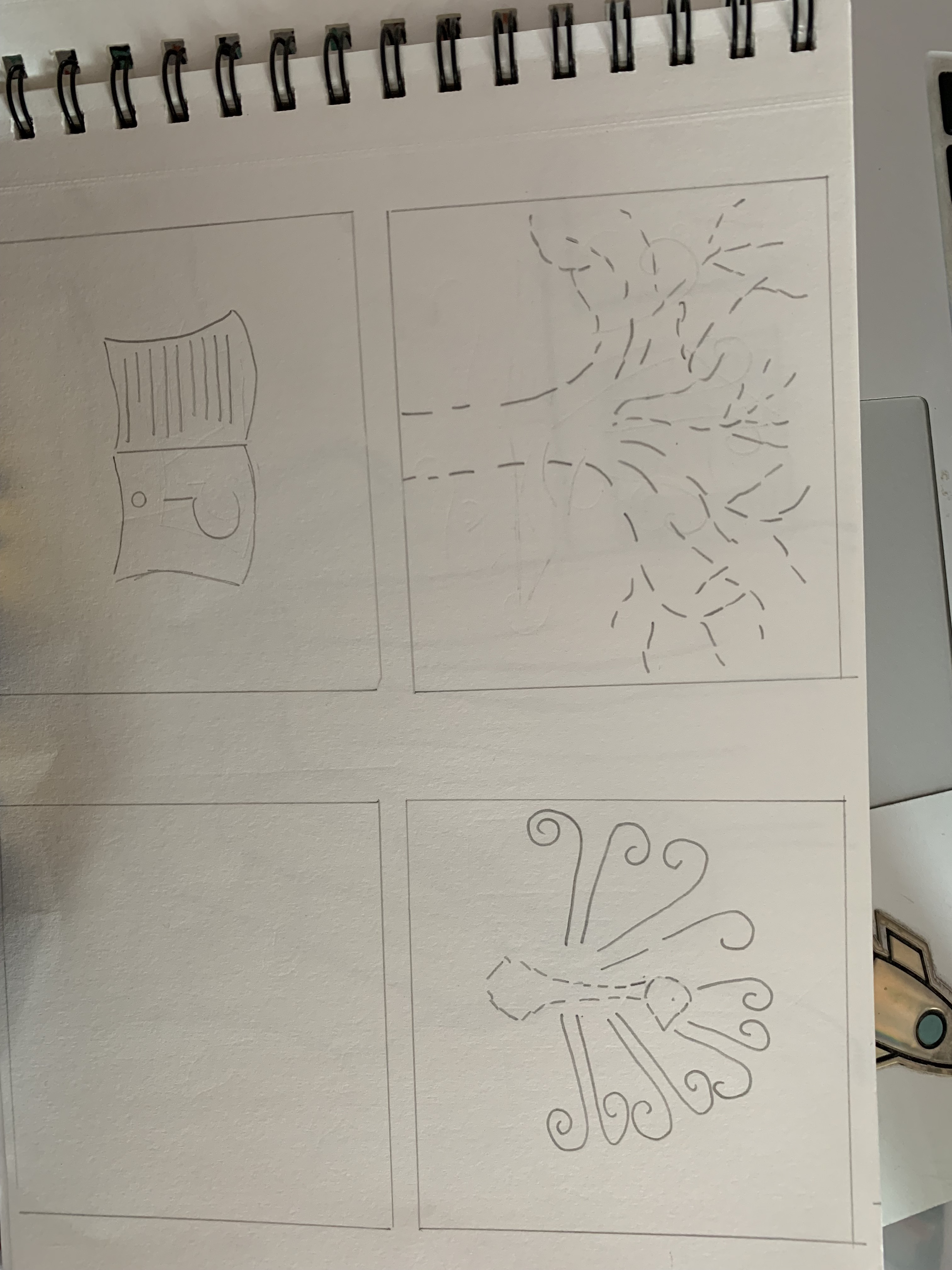
As a way to explore simplicity in art, we conducted an activity with lines and dots. we were told to make 30 depictions within 4×4 inch squares. The depictions had to encompass 5 concepts:

– State of mind in the morning
– Highlight of our journey from our homes to our college
– Thoughts while looking outside the window
– A word to describe your best friend
– Your happy place

Each concept had to have at least 6 drawings.
The objective behind this activity was for us to improve our skills as artists in conveying ideas and concepts with limited options: Lines and dots.

Below are a few examples of my rough work denoting to each theme:

Week 2 | Aug 10th, 2019 | Malvika

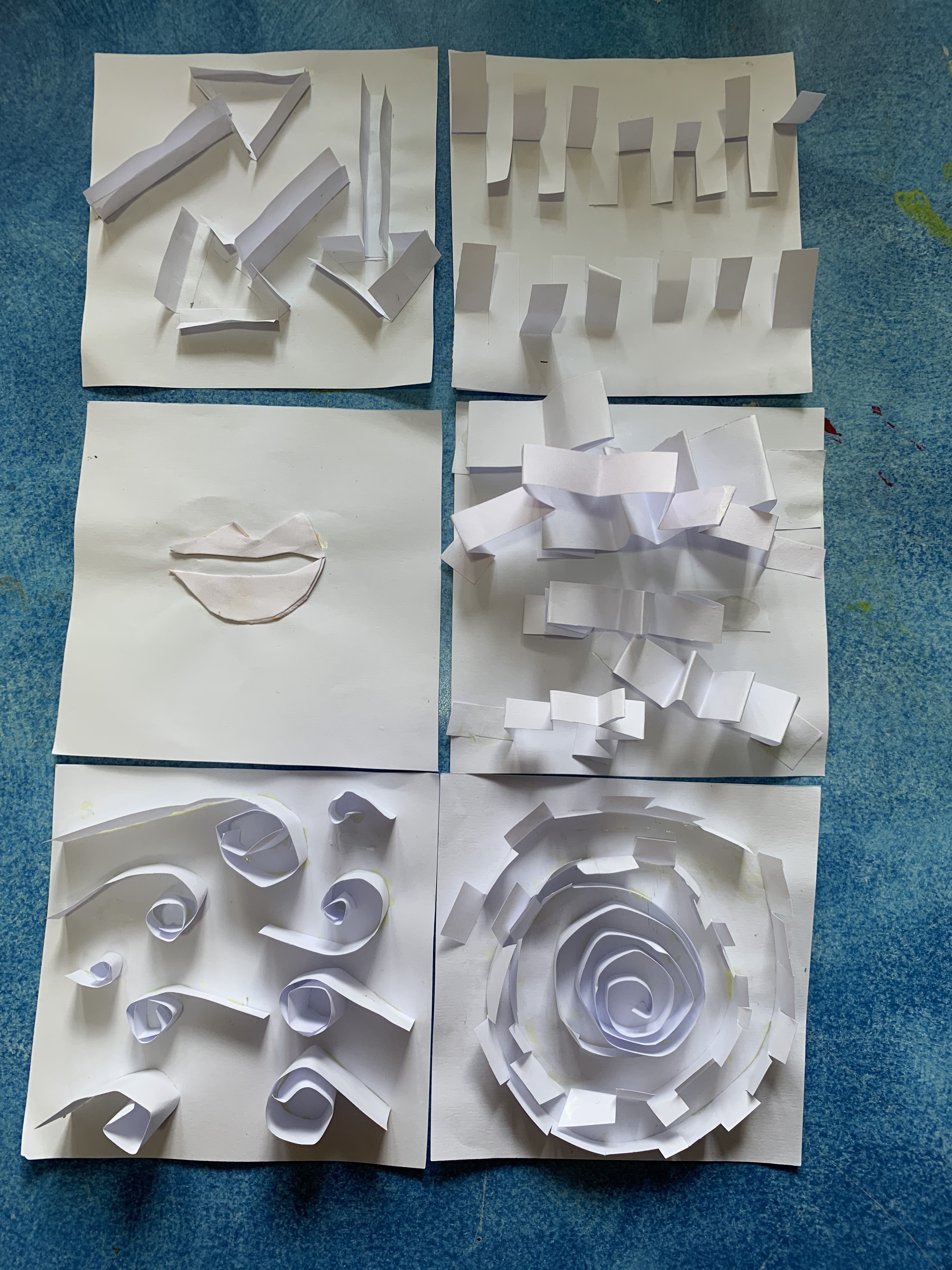
In week two of Integrative studio, we attempted to bring our dots and lines to life on 4×4 inch squares. After we got our designs approved by Malvika, we were given the chance to turn them into 3D depictions. It had to be white on white. We used bond sheets to create 3D depictions of certain emotions, thoughts and ideas. Below are some examples of what I did:

Week 3 | August 12th, 2019 | Malvika

In week three of our studio class we continued listing down 20 metaphors that define us. The ones that got approved by Malvika are these: (In bold, are the metaphors, and next to them are their explanations)

  • I am the wind – I am calm yet relentless
  • I am an unguarded castle – I let people in very quickly and easily.
  • I am a constellation – I am very organised and creative.
  • I am an unfinished book – I am an uncertain person.
  • I am a kaleidoscope of butterflies– I am lively and cheerful.
  • I am the sound of sirens– I am really loud when I have to say something and also very anxious.
  • I am a raven– I am eccentric, colorful and unique.
  • I am a waterfall– I pave my own path and am very ambitious
  • I am a spiral in the eye– I am hard to figure out and am very confusing to people.
  • I am the tide– I am impatient and short-tempered.

Above, at the very top, are my illustrations, denoting to each theme. They are yet to be approved by Malvika. We spent 3 mins thinking and creating each sketch.

Week 4 | August 19th, 2019 | Malvika Mahidhar

Today we reflected on our metaphors and got them approved. After that, we turned our metaphors into 2D depictions using our imagination. After that, we turned them into 3D models on f4x4 inch file cards:

Week 5 | 26th August, 2019 | Malvika Mahidhar

In this week, we continued working on our 3D compositions for our metaphors. I was able to reflect what I learned when we discussed The Metamorphosis by Franz Kafka in our seminar class. The discussion helped me comprehend how to view myself through the magnified looking glass not in a literal manner, but rather in a figurative one. Ironically, relating myself to metaphors helped me gauge a better understanding of who I am as a person and what makes me unique in society and what helps me create my own little niche in the big world that we live in. I learned to not look at myself as if I were a single entity, but more like a kaleidoscope of entities with different perspectives and viewpoints. Creating these metaphors in class enlightened me about who I am and helped me define myself as a person.

I worked on refining my metaphor compositions and adding more elements to them and I also began creating more 3D compositions in today’s class. One of my metaphors, “I’m a spiral in the eye” is one of my very sentimental ones, because it depicts who I may seem like to others. Over the years, I’ve learned that I’m never the same person to everyone. I’m open to some, shy to some, and for some, I’m just difficult to figure out, hence the spiral in the eye. I’ve been battling with which one of these I am, too, then realised that I don’t have to be either one at all. As I mentioned before, I am a kaleidoscope of things.

I also got the chance to tap into some of my less complicated traits. I am fearless, relentless and unwavering like the wind. I am quite capricious, too just like the wind, and very unpredictable in nature, yet extremely hard to move against when I put my mind to something.

Week 7 | September 2nd, 2019 | Malvika Mahidhar

The Kaleidoscope That I Am
In today’s class, as we started refining our final 3D composition models. At first it was a little difficult for me to connect all of my metaphors together because most of them contradict each other, but then I managed to relate them create different sides of who I am.

My final 3D composition

Lionhearted
Several significant parts of my model were inspired by a book called Aristotle and Dante Discover the Secrets of the Universe by Benjamin Alire Sáenz. Despite reading this book a couple of years ago, it has since been a part of me and stuck with me. This novel shook me, and influenced me to become an even better artist. It is a coming of age story which chronicles the lives of two Mexican-American boys battling topics surrounding identity. One of the protagonists, Dante, personifies a chair into his friend Ari by drawing it. The way Dante depicted the chair, in a lonely, isolated, and misunderstood manner, drew a line between who Ari showed he was to the world in comparison to what he really was. The honesty in Dante’s artwork really resonated with me and made me want to become a good enough designer to evoke similar emotions in my audience. The metaphor that I chose to put at the very top of my model was an unguarded castle. I’m a very insecure person at times, and can let people get to me easily, but at the same time, not show it. On the outside, a castle seems like a lavish, grand, and overwhelming sight because of its size too, but on the other side of the spectrum, a castle (mine is on the top of a mountain) is also isolated and remote from the far away cities, yet it stands tall and can brace for whatever is coming for it despite its unguardedness. This is what makes me lionhearted, my ability to fight back despite letting people in.

Week 8 | Malvika Mahidhar

In our eighth week of studio I learned how to visualise certain aspects of a city and depict certain themes in the form of logos and symbols. Every city has its own characteristics and therefore is unique in its own way. I decided to brainstorm on the city of Madrid and what makes it individualistic in its own way. I chose to focus on the architecture of Madrid. Madrid is one of the cities in Spain that is full of boulevards, this is what makes the city so distinguishable. I brainstormed on how to show this by practicing drawing architecture and boulevards. This activity made me delve deeper into stopping in order to notice what makes a city unique to its people and the world around it and capture key elements and details on way, as these key elements and details is what makes a city whole in itself.